HITACHI D-X10: The Eccentric
Submitted on: 19 Mar 25
Category: Analog recorders/players
Website Rating:
Author's Description:
Zoki’s Introduction
After a long time, I finally managed to organize myself during my free days and write a few more texts, the first of which is part of this series. Considering that every deck I’ve presented here was first studied and serviced—which takes a lot of time—then photographed, and only afterward had a text written about it, you can imagine how much time is required for all that—sometimes more than 40 hours in total, which is practically a full workweek.
However, this device is particularly dear to me—it’s a relatively rare cassette deck that I managed to bring back from the dead, just when I thought it was beyond saving. So, let’s begin the description…
Moving On…
In the 1980s, cassette deck manufacturers tried to combine convenience, functionality, and playback quality into one. It turned out to be a much harder task than it might have initially seemed.
As I have said many times before, the compact cassette was a budget-friendly medium that was never intended to compete with Hi-Fi standards. Moreover, the practical idea of using half the tape width for playback and then flipping the tape over to the other side—though convenient at first—eventually became an additional challenge for both users and manufacturers aiming to improve quality and ease of use at the same time.
With this in mind, since the 1970s, companies have been trying to develop auto-reverse systems. ChatGPT once told me that the first auto-reverse deck was the Sansui SC-700, which is obviously incorrect and an example of unreliable sources used for AI training (I couldn’t resist pointing that out! 😃).
So, which deck was actually the first auto-reverse model? Honestly, I don’t know. One of the earliest was the fascinating Akai GXC-65D from way back in 1973, but I can’t say for sure if it was the very first.
In general, several solutions were used to save users from the tedious task of getting up from their chair to flip the cassette. Some of these included:
- Mechanical rotation of the entire cassette, as seen in the aforementioned Akai GXC-65D or Nakamichi’s UDAR system in the RX series decks (505, 303, and 202).
- A movable stereo head, shifting linearly along one axis while reversing the channels (left becomes right and vice versa), like on the Akai GXC-75D.
- A four-channel record/playback head, similar to those used in auto-reverse Walkmans and car stereo cassette players, such as the Nakamichi Dragon (its head actually has more than four channels, but that’s because of its automatic azimuth correction) or the Sansui D-770R.
- A rotating record/playback head, probably the most common system, used in decks like the Teac R-555X, Technics RS-B78R or RS-B501, and Sony TC-RX70.
At one point in Hi-Fi history, Japanese manufacturers attempted to combine two things that were hard to merge: the quality of three-head decks and the auto-reverse function.
Traditional auto-reverse posed a challenge in maintaining precise head geometry relative to the tape. While this could be adjusted reasonably well in three-head decks, especially with a dual-capstan closed-loop system, the most commonly used auto-reverse mechanism—rotating heads—often couldn’t achieve the same level of precision as classic three-head systems.
Realistically, the only truly high-quality system where performance didn’t suffer was UDAR, the unidirectional solution in the RX-505 where the cassette itself rotated instead of the head. Another was the Dragon, which featured a stationary head with a sophisticated mechanism, including two independent direct-drive motors in a closed loop—state-of-the-art technology for its time that redefined the concept of an auto-reverse three-head deck, pushing its limits almost to perfection. However, it should be noted that the Dragon only records in one direction, not both.
But these high-end solutions (UDAR and the Dragon’s mechanism) were beyond the price range where most manufacturers wanted to compete, so most stuck with conventional rotating heads.
This led to the emergence of a lineup of decks that combined both three-head design and auto-reverse functionality. Some notable examples include:
- Pioneer: CT-9R and 8R, later the CT-90R
- Akai: GX-R99 and 88R
- TEAC: Perhaps the most advanced in this area, with models R-999X, R-919X, and R-9000, the latter being produced even after other manufacturers had already abandoned the concept.
Some of these decks featured rather exotic transport mechanisms (e.g., the Akai GX-R99 and TEAC R-999X) and were flagship models at the time, offering rare features such as auto-calibration (found in Pioneer CT-9R and Akai GX-R99, for example).
To back up my claims, I’ve personally owned the CT-9R, 90R, and GX-R99, and I still have the TEAC R-999X and Nakamichi Dragon in my collection—truly magnificent machines.
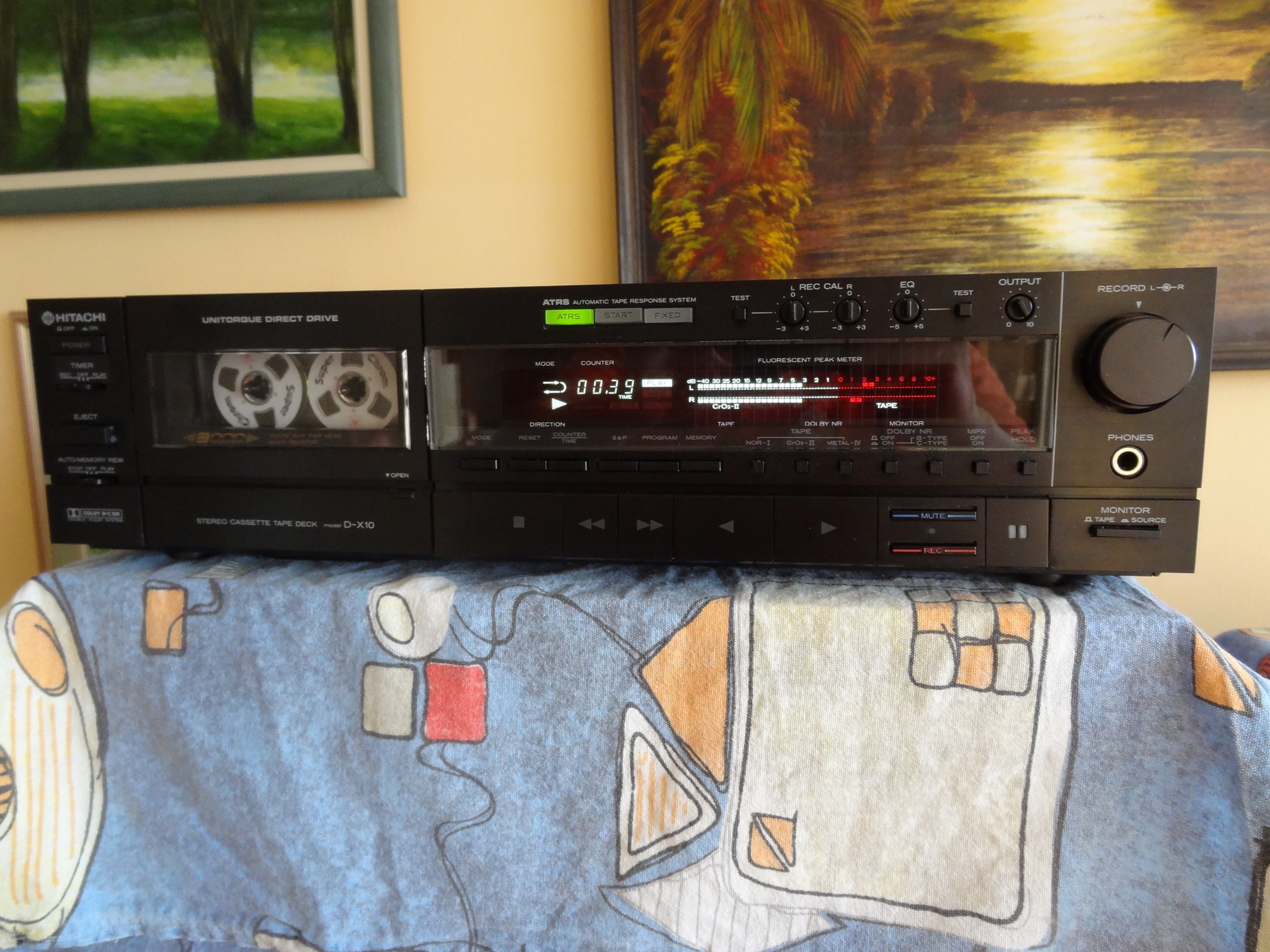
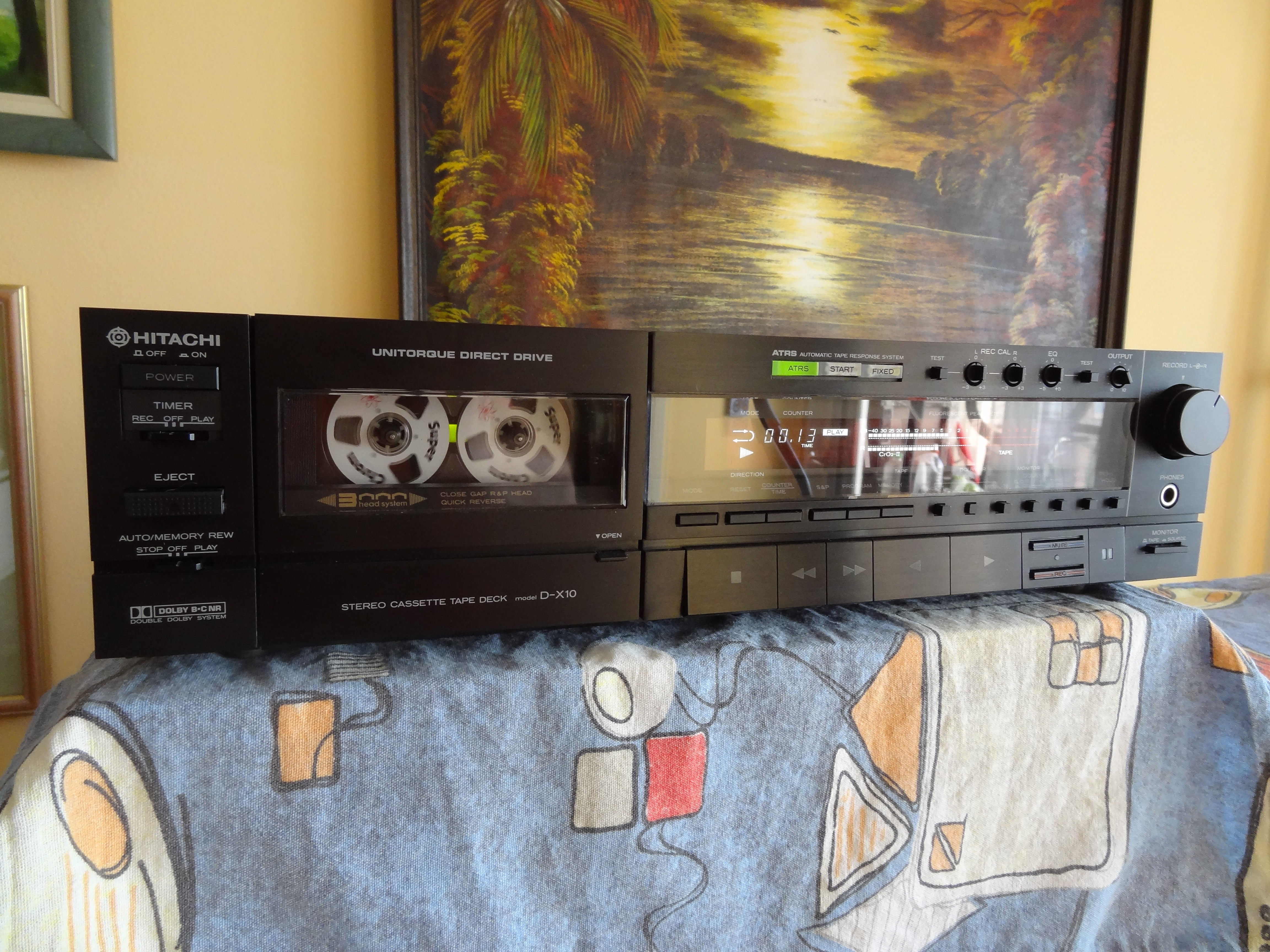
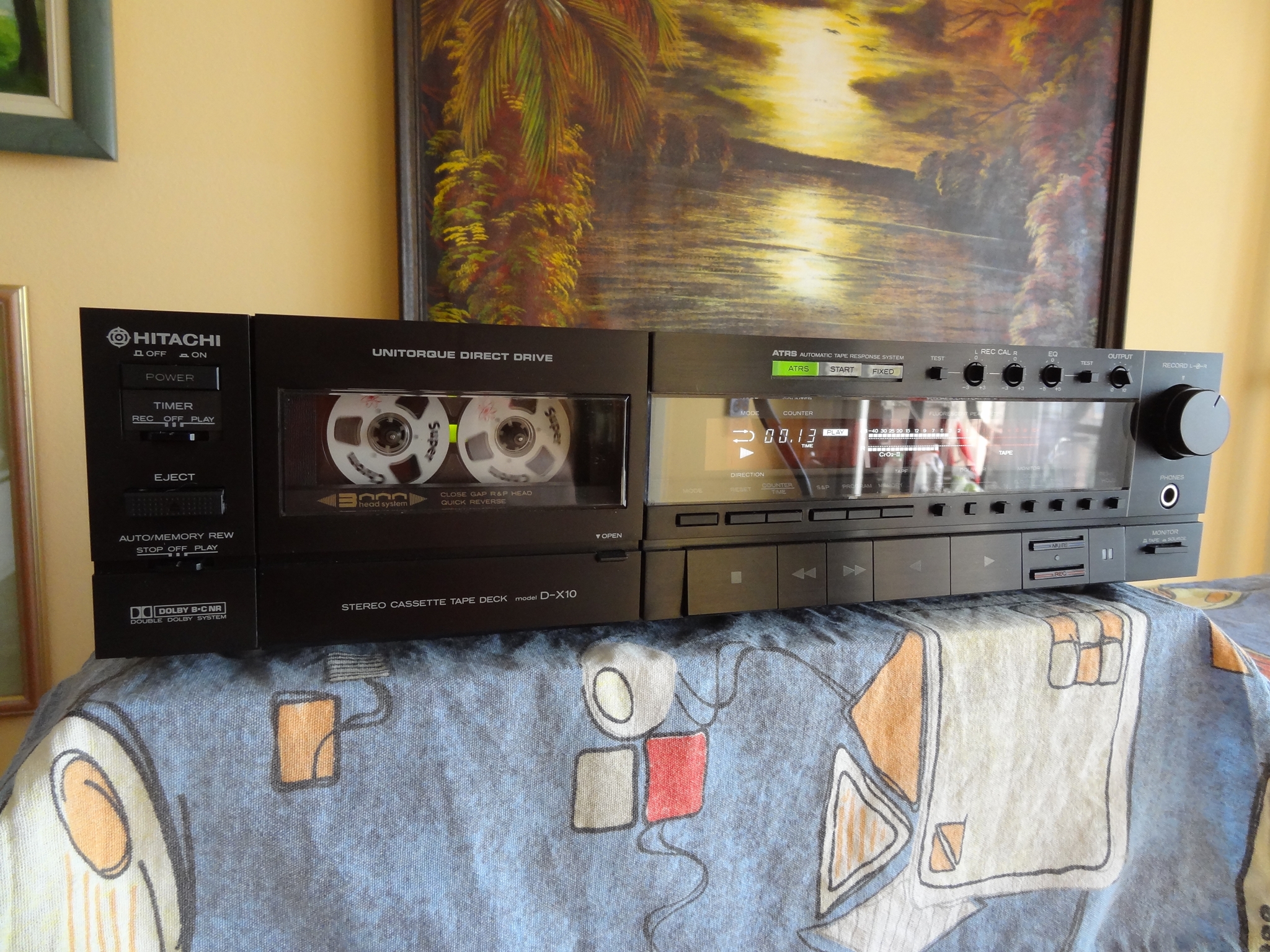
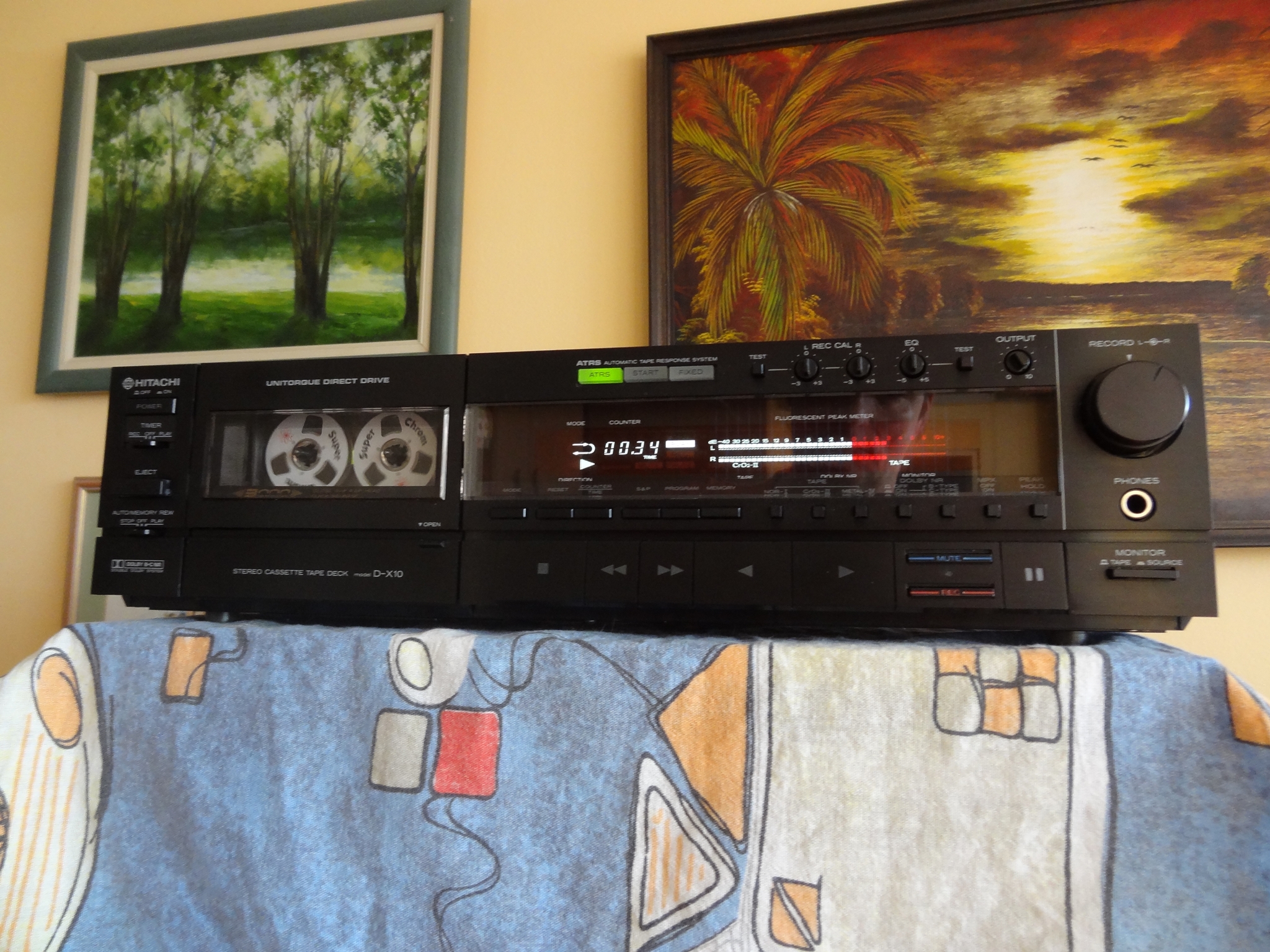
Now, let’s return to the hero of this story—the Hitachi D-X10, an auto-reverse, three-head deck. Although its designation might suggest that it is a basic model, it was actually Hitachi’s top device from 1984. It was later succeeded by the D-909 and D-707, which looked very similar but were “classic” three-head decks.
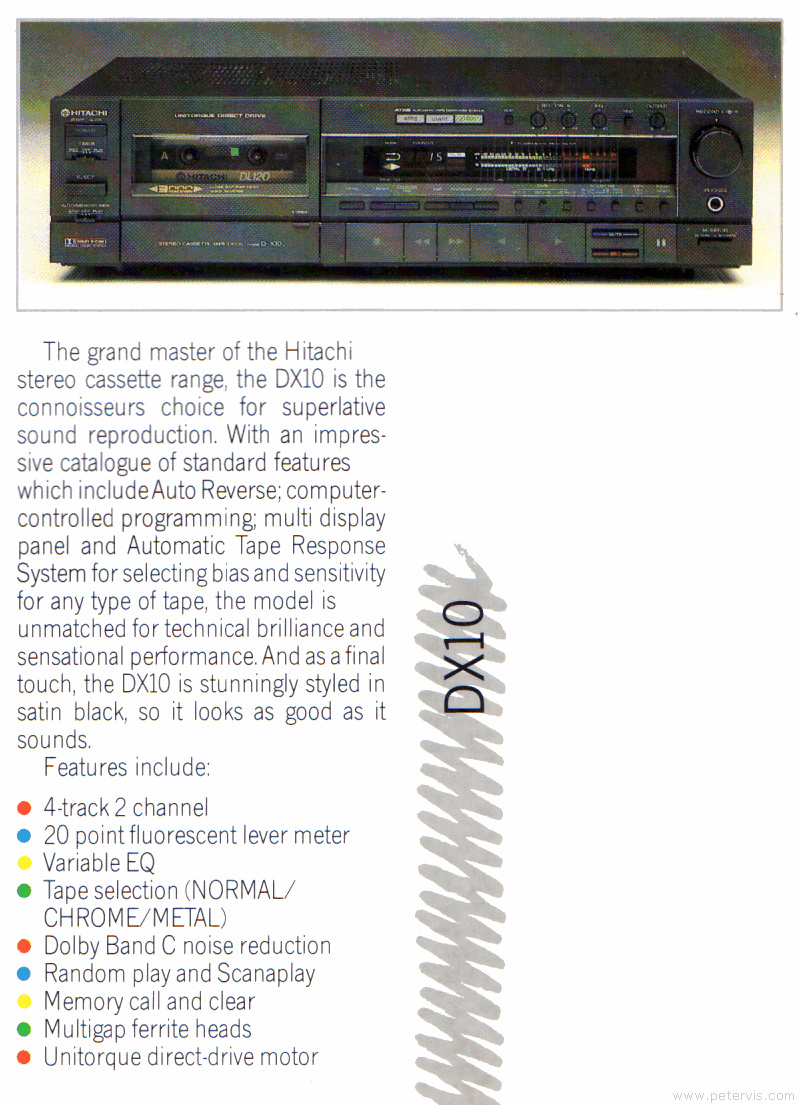
Over the years, Hitachi developed some interesting patents related to these devices and produced some excellent models, including the D-5500(M), followed by the D-3300 and D-2200. However, the D-X10 is nowhere near as robust as the massive D-5500; instead, it is much closer in design to the D-2200. The reason for this lies in the cost-cutting measures that Japanese manufacturers widely adopted in the 1980s.
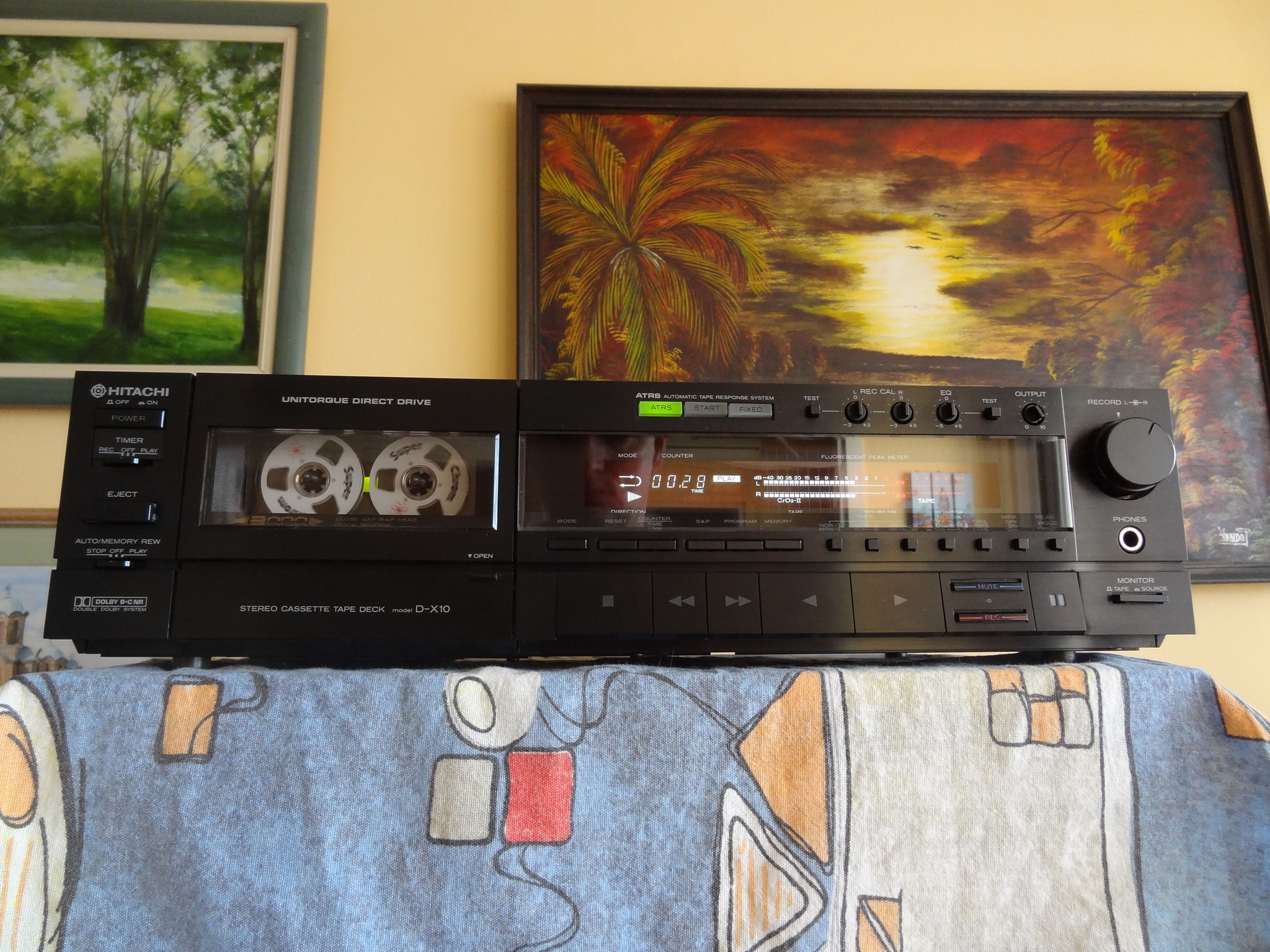
To be precise, the D-X10 closely resembles the one-year-older D-9, in terms of electronics and the layout of components on the main circuit board, but the mechanism is different. This includes a direct-drive (DD) motor, which, in the D-9, was implemented in a way rarely seen in Hi-Fi decks.
As part of this cost-saving trend, the Hitachi D-X10 contains very little metal—for example, only the covers and a thin front panel that rests on a plastic base, along with some transport buttons. The rest is plastic, albeit high-quality. The cassette holder is also made of good plastic, but it looks modest—typical for many decks of that era when anti-vibration stabilization systems were not yet widely used.
The Hitachi D-X10 was only produced for one year (1984) and cost a hefty 1,500 DEM (750 EUR). Just a few years later, for the same or even less money, you could buy the best Aiwa (AD-F990) or the top Akai (GX-9).
Unique Features
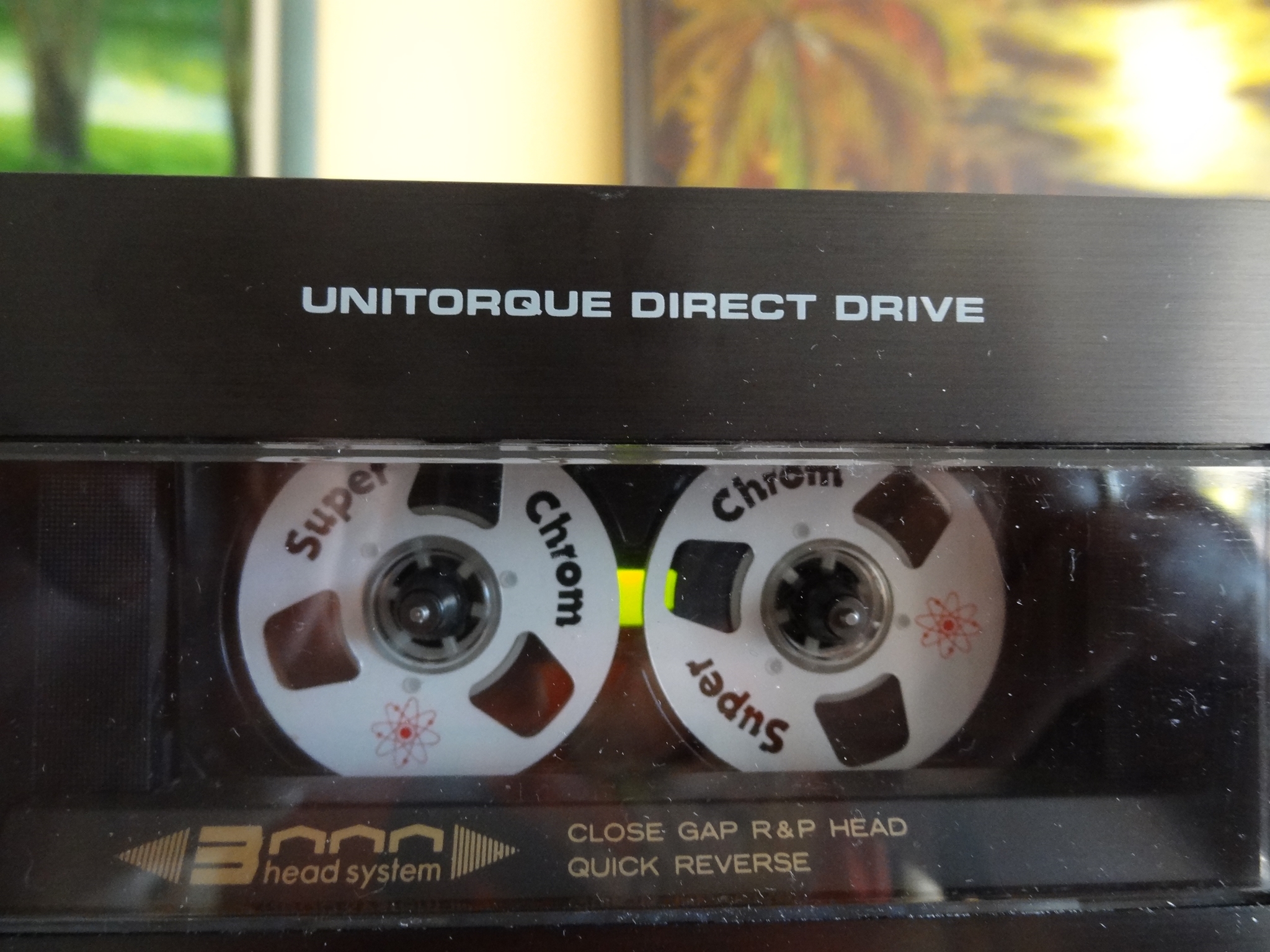
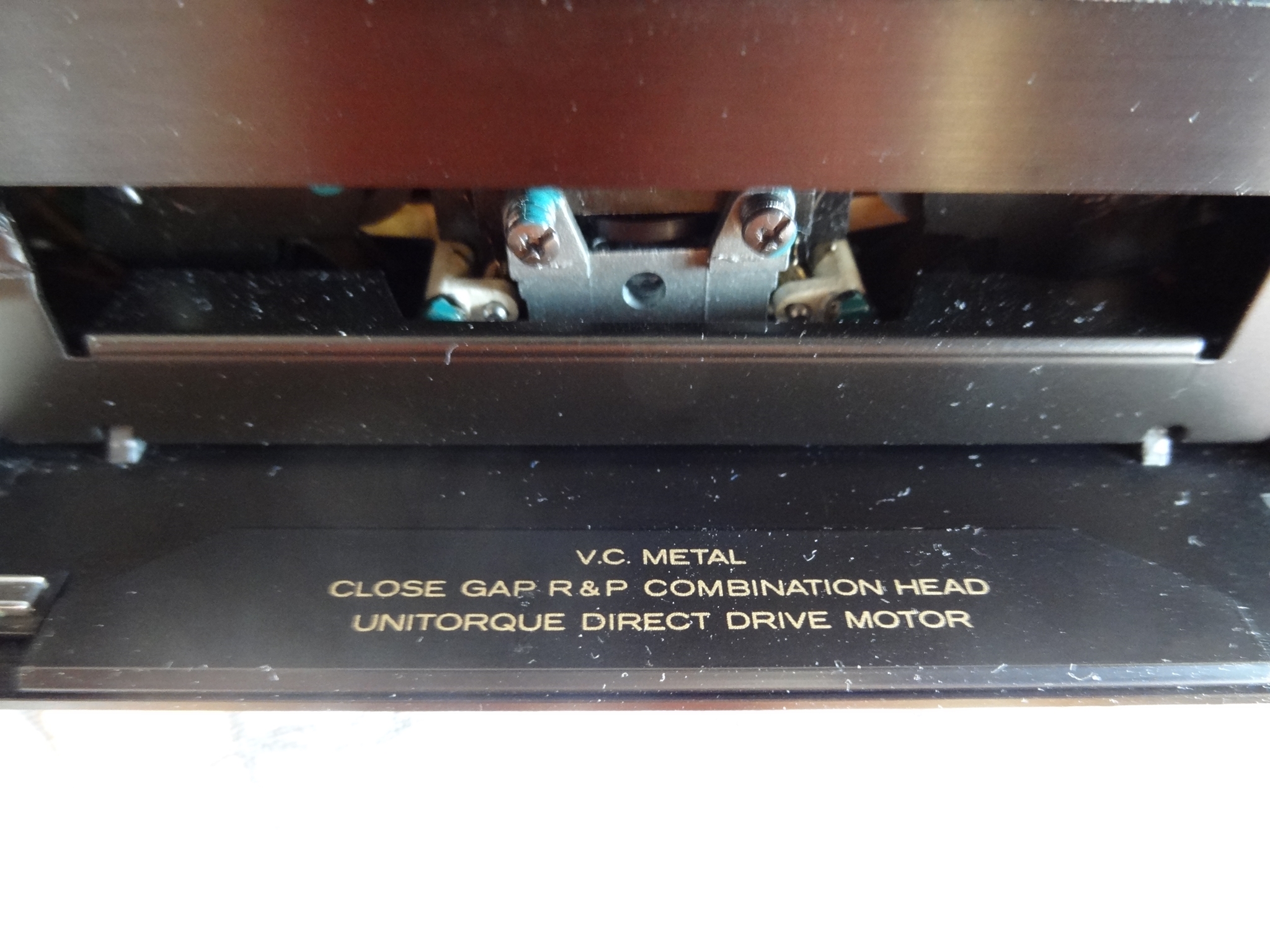
The D-X10 features a playback/recording head that Hitachi called HitaSenritte, a name derived from Hitachi, Sendust, and Ferrite—a reference to the company and the materials used for the head. What makes this head unique is that it is coated with a layer of titanium, making it extremely resistant to wear—one of the hardest heads I’ve ever encountered. A closer look reveals an almost completely black surface.
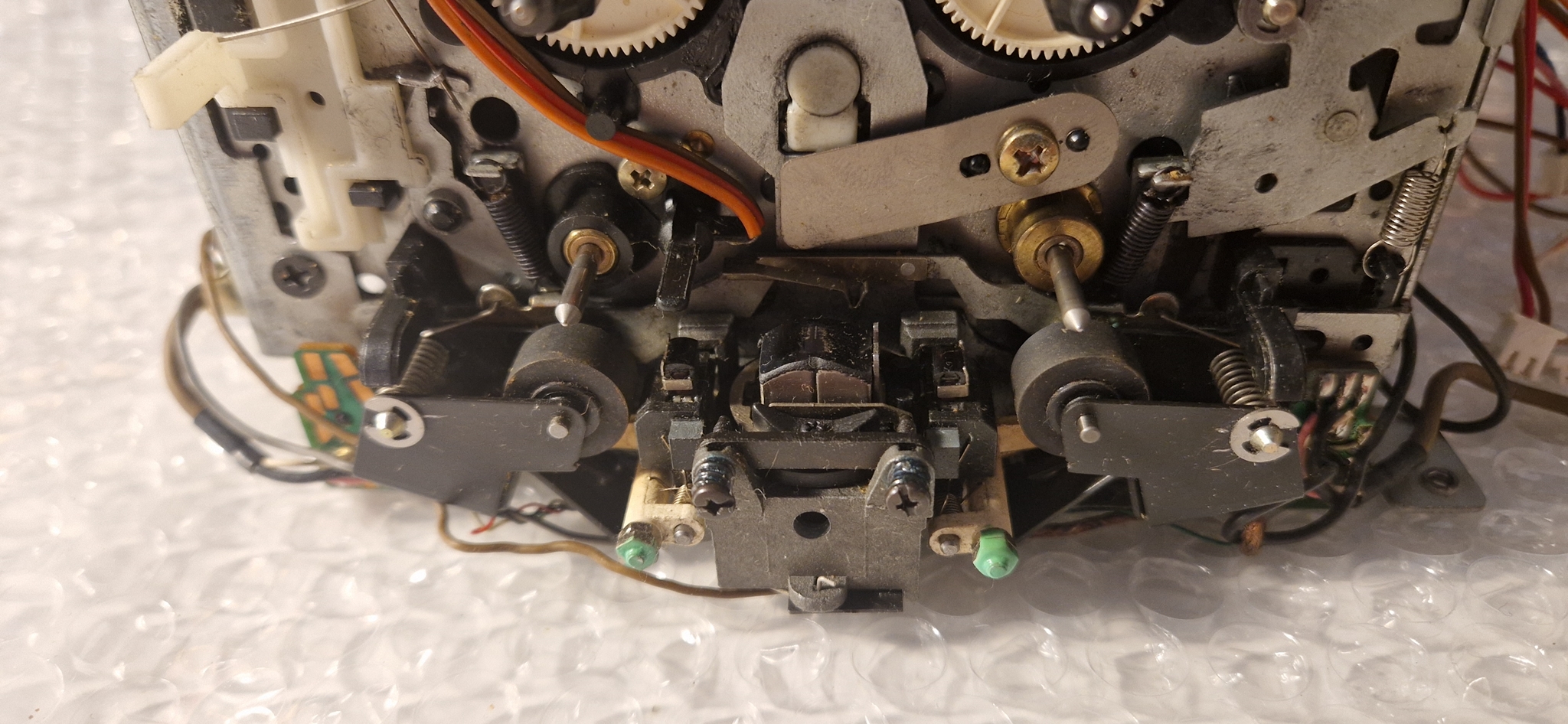
Beneath the cassette door, there is an additional small panel with a magnetic latch, which, when opened, provides excellent access to the heads and pinch rollers—a clear inheritance from the D-9 model. A fantastic and praiseworthy feature!
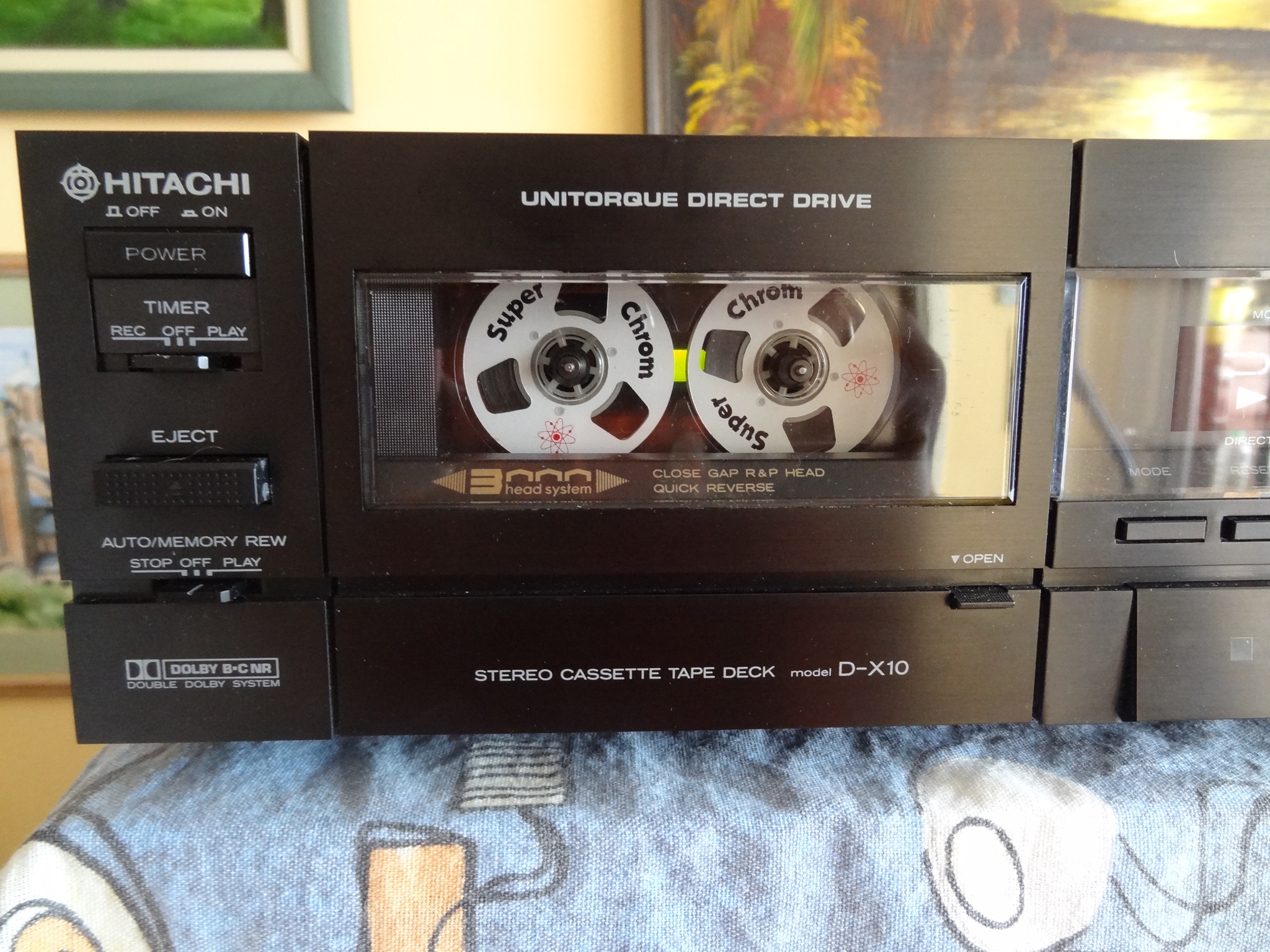
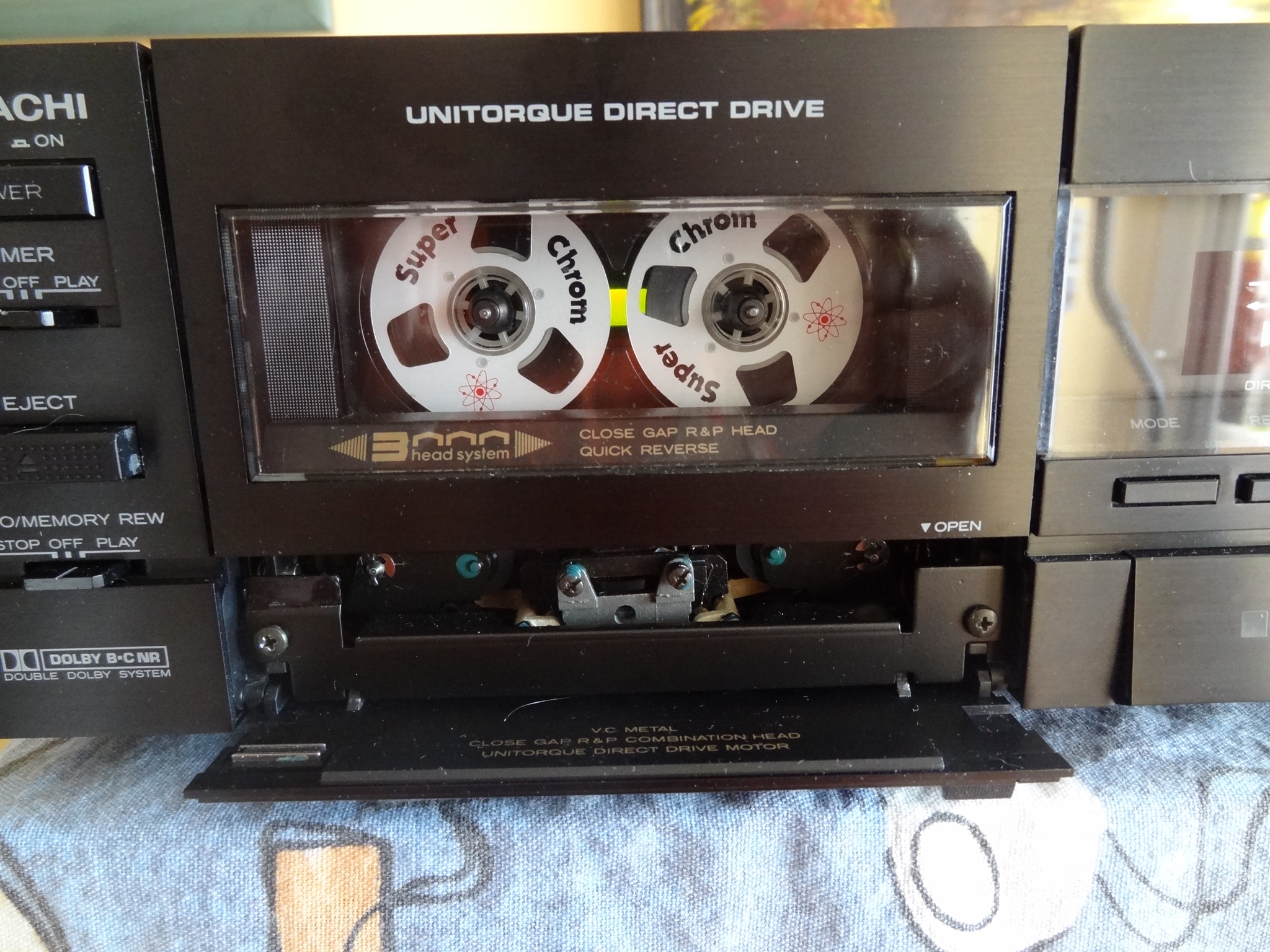
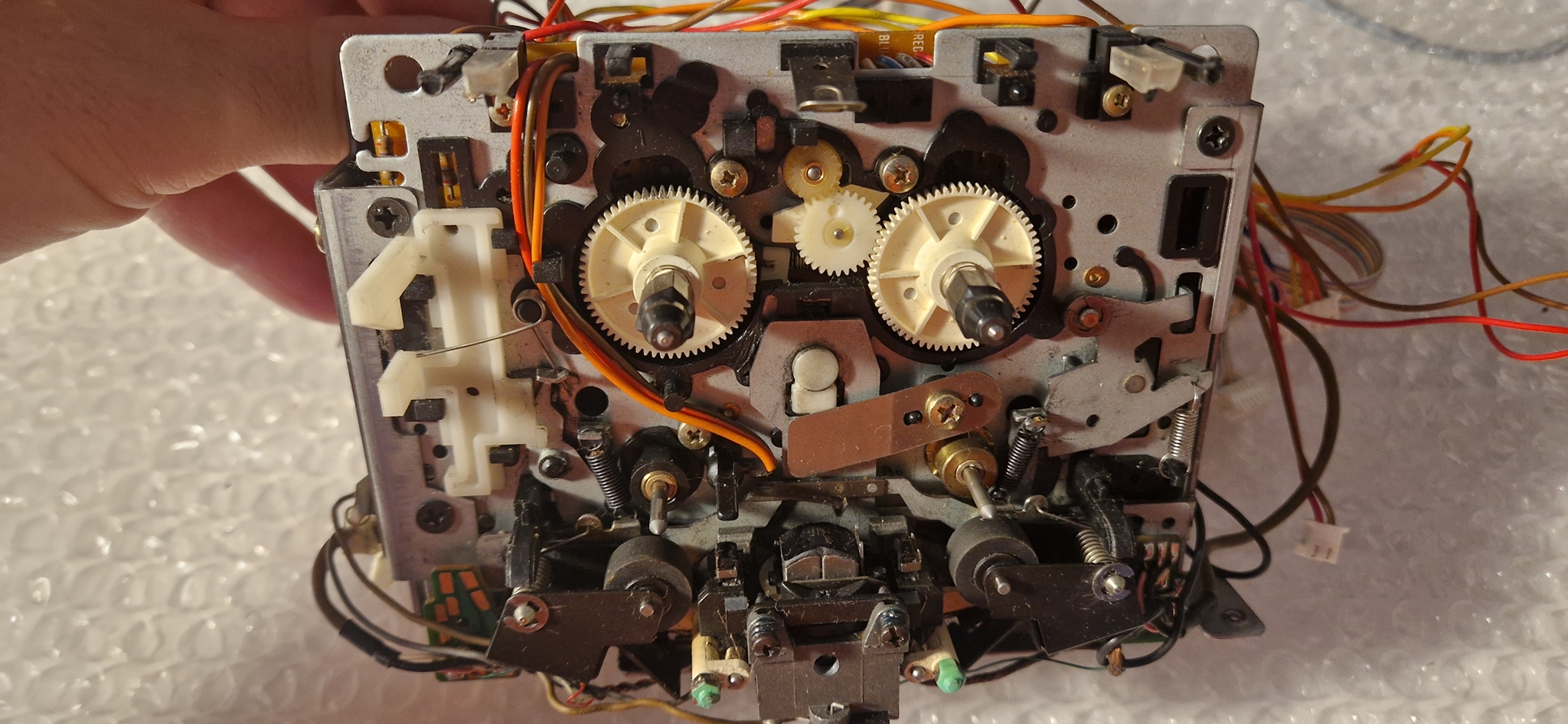
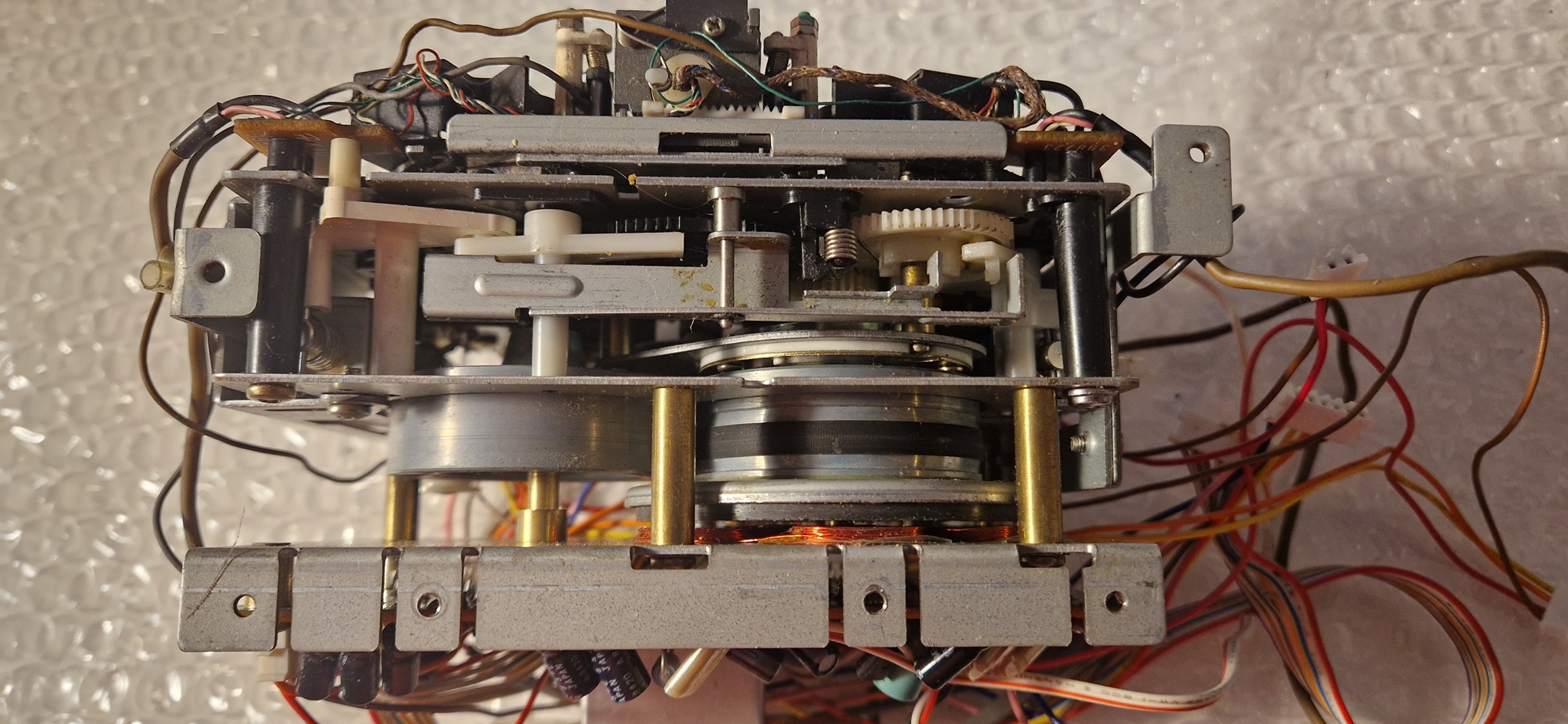
The transport system is quite robust, featuring two flywheels, one of which is driven by a Unitorque Direct Drive motor, the core of this transport system. The mechanism consists of electromagnetic actuators and servo gears, which are integrated with the main motor. A secondary motor handles fast-forward and rewind, and the entire deck has only one belt and no idlers. The gears are slightly noisier and vibrate a bit more, but they are generally more durable.
In contrast, the D-9 used a more audiophile approach, where a motor drove the gears and idler via a belt, ensuring minimal vibration during playback. While excellent for vibration control, this system became problematic as the deck aged, since replacement parts are practically impossible to find, often requiring improvisation. Fortunately, the D-X10 avoids these issues entirely.
Display and Features
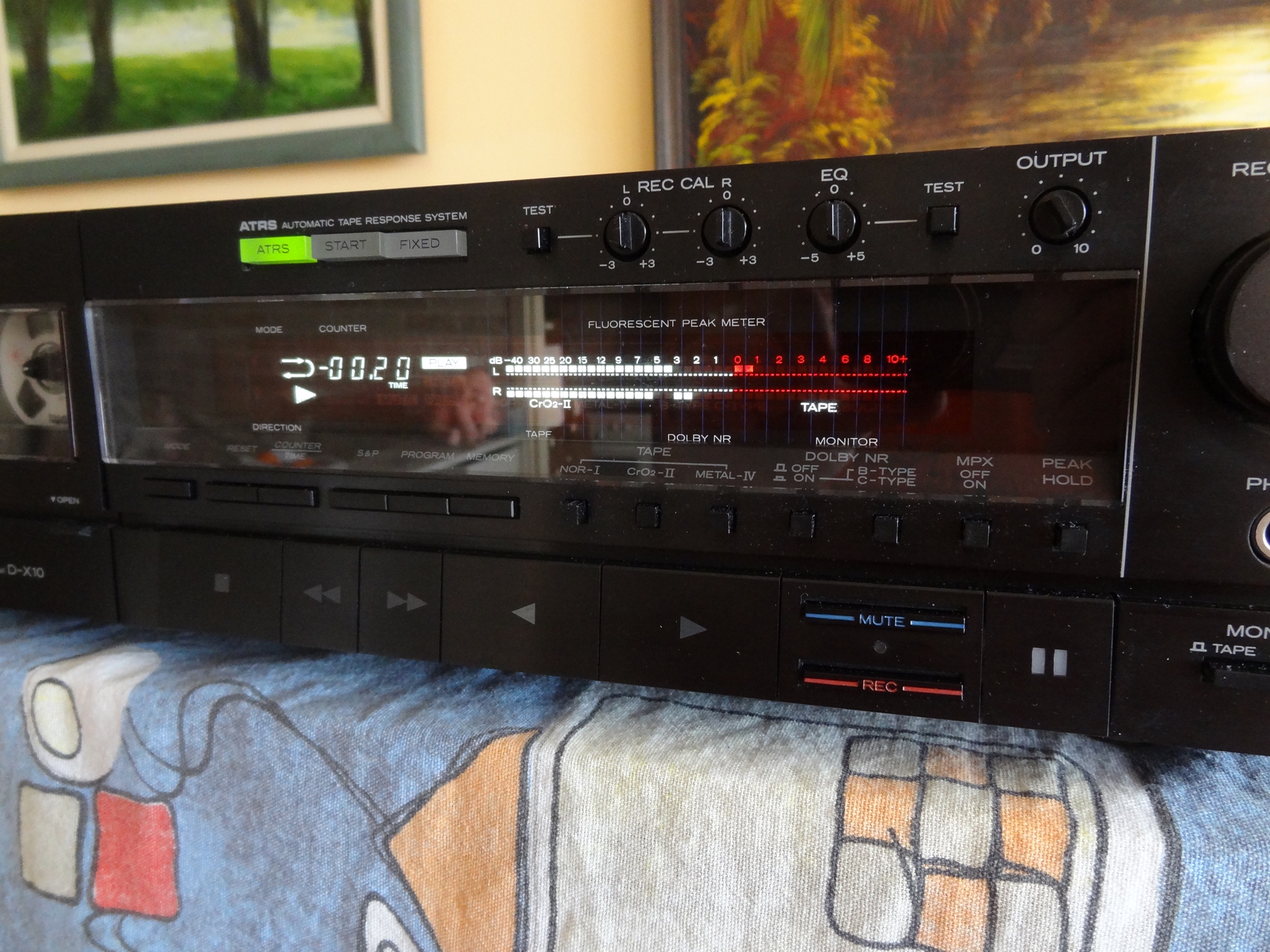
The elegant display on the D-X10 has 20 segments per channel and allows the user to select between three different peak meter modes:
- Standard mode
- Peak hold mode (with temporary or permanent peak retention)
- Real-time mode (without peak hold)
For convenience, the Hitachi D-X10 includes:
- A standard counter, as well as a pseudo-real-time counter (but without an estimated time-remaining function)
- Track-skipping functionality (jumping forward or backward by one track)
- Programmable track playback
- Index search (briefly playing each track for about 10 seconds)
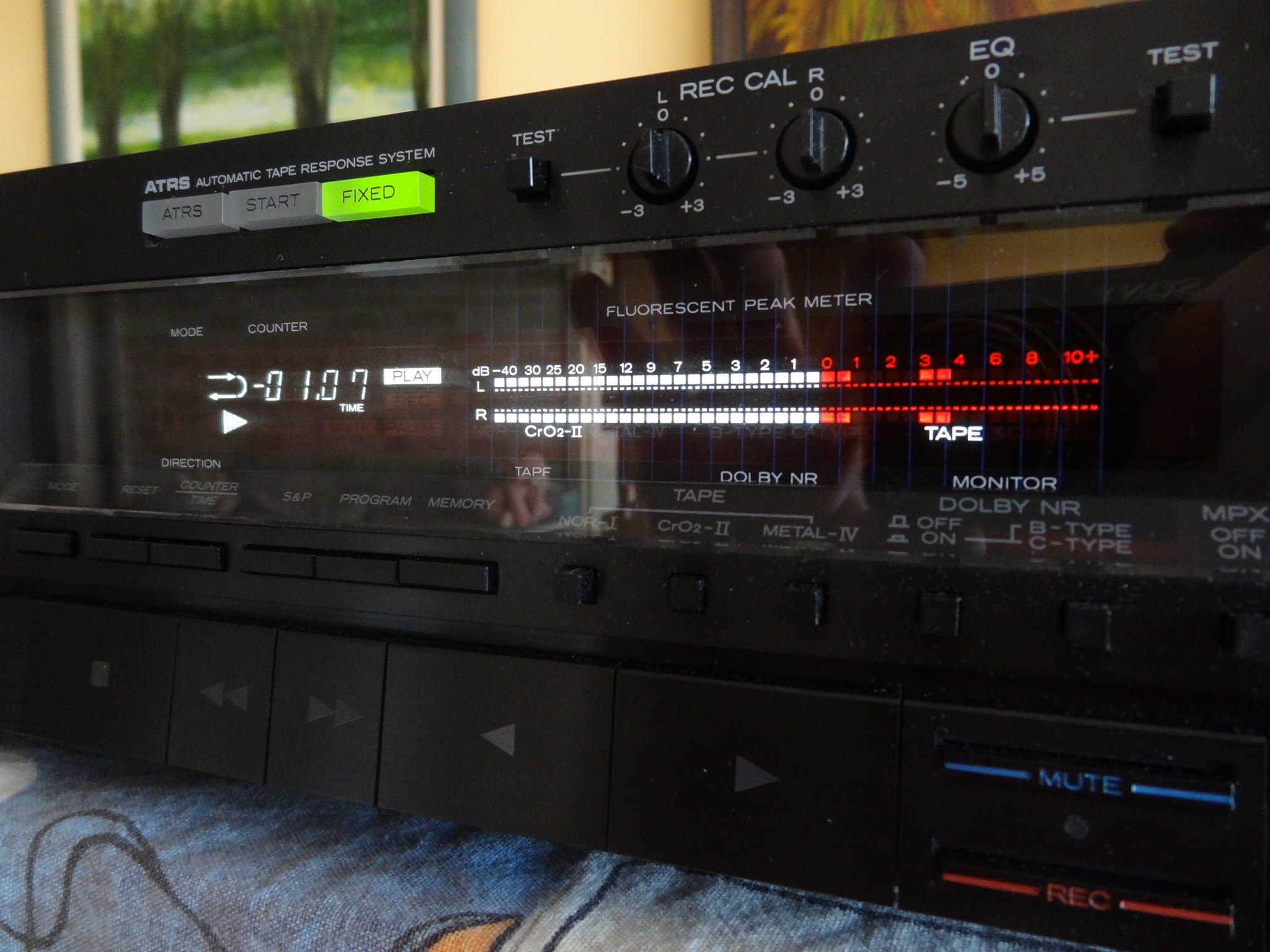
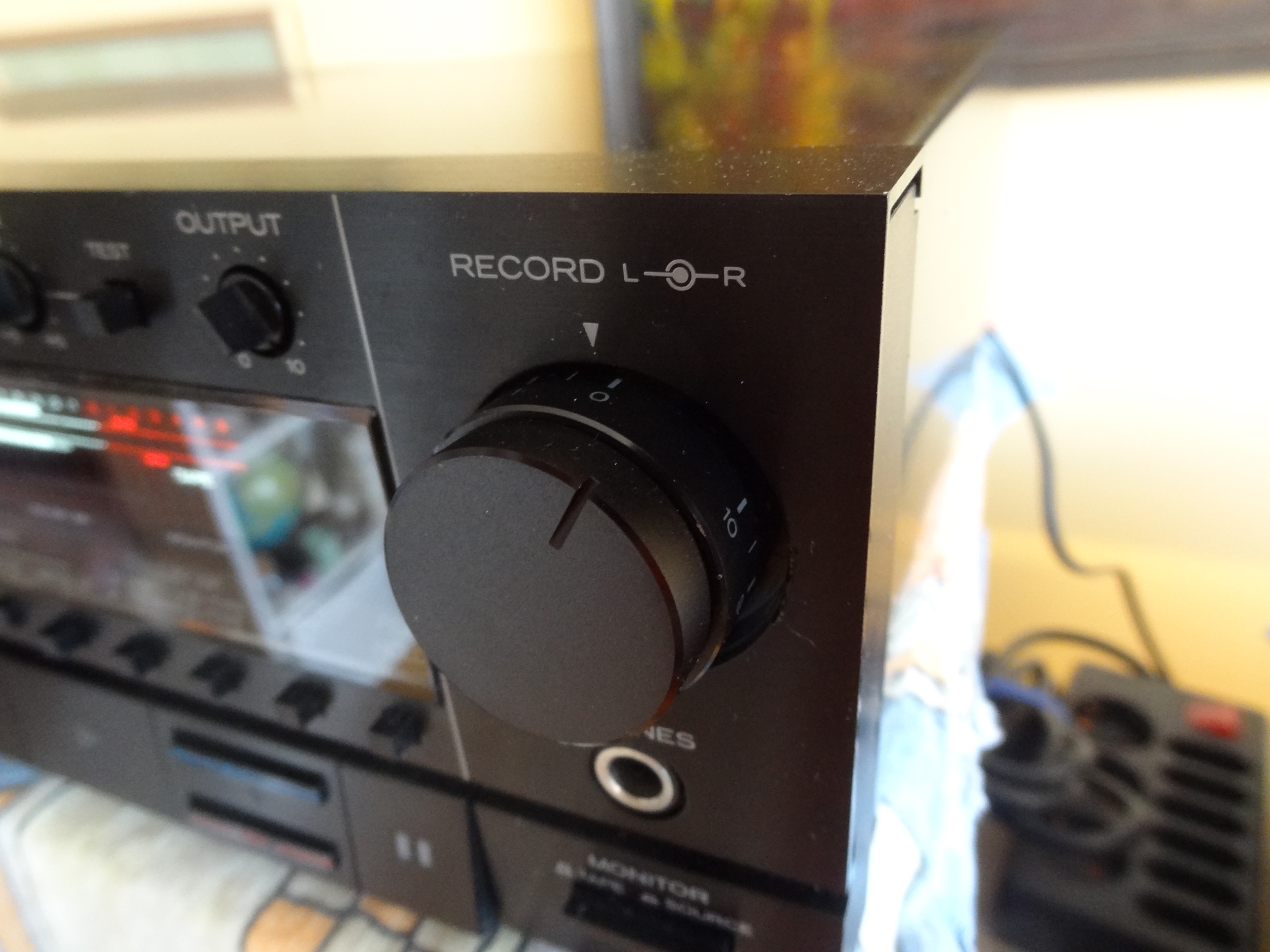
Ergonomically, the primary transport controls are large and well-positioned, while the buttons for additional features (except the monitor switch) are somewhat small and understated, likely to maintain the deck’s elegant appearance, which reminds me of the Technics RS-B905.
Automatic and Manual Calibration
The D-X10 uses the ATRS system (Automatic Tape Response Search system) for auto-calibrating sensitivity, bias, and equalization based on the tape formulation. The acronym is somewhat unusual, especially the word Search, which seems misleading in this context. The system has a memory powered by a CR2032 battery inside the deck when turned off.
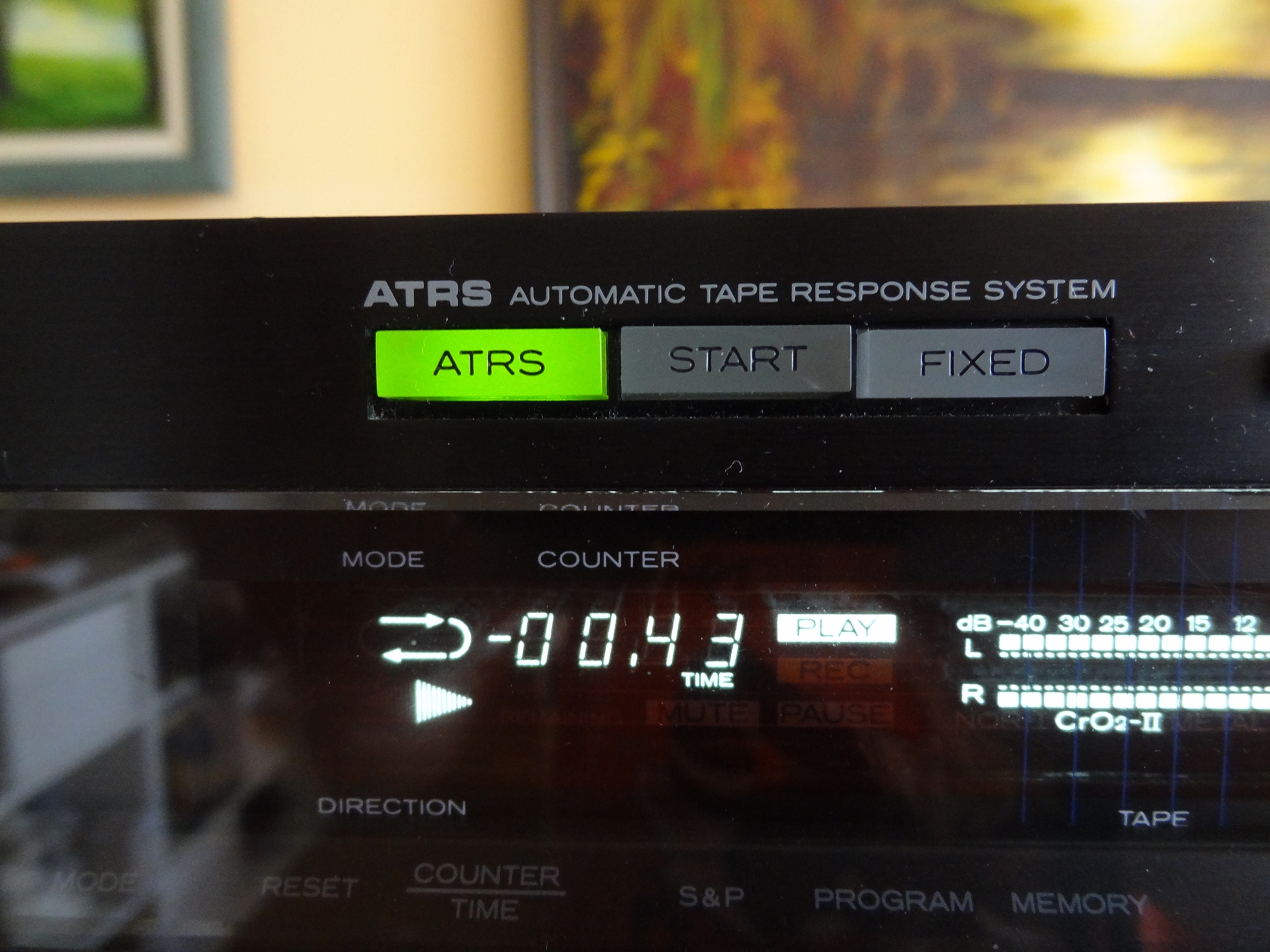
The ATRS calibration process appears quite sophisticated, based on how it cycles through different test frequencies, taking 10–20 seconds to complete. While I don’t have detailed specs, I’ve determined that it uses 400 Hz, 7 kHz, and 13.5 kHz test tones.
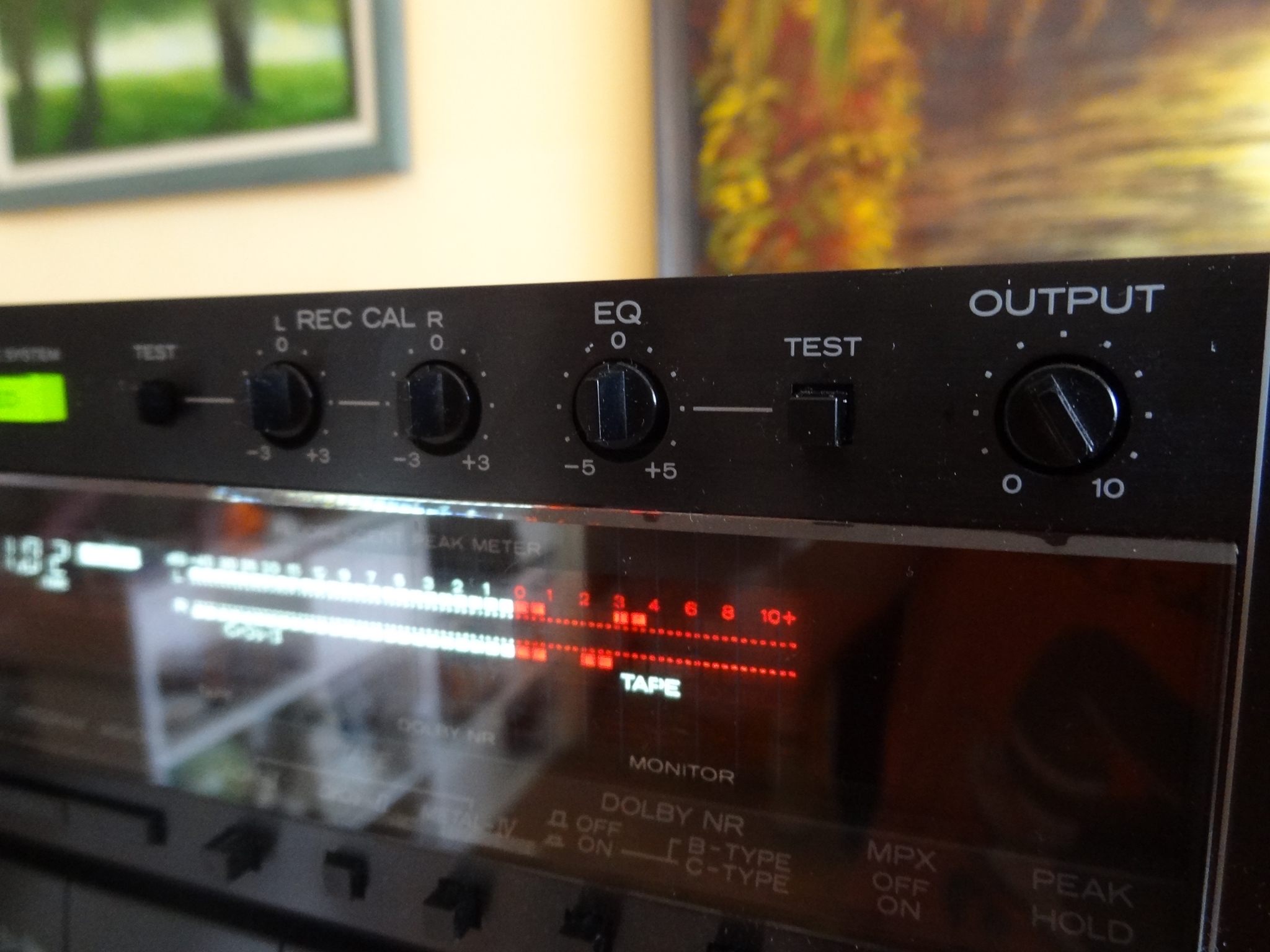
A rare and remarkable feature of the D-X10 is that, in addition to automatic calibration, it also offers near-complete manual calibration. This was something Hitachi had already implemented in models like the D-9 (1983) and D-909, though the D-707 was different.
Typically, when decks offer both automatic and manual calibration, manual adjustments are limited to fine bias tuning—either with a single potentiometer (e.g., Alpine AL-90) or dedicated buttons (e.g., some Pioneer CT-S series decks, Onkyo TA-6711, etc.). However, the Hitachi D-X10 allows for manual adjustment of both sensitivity and recording equalization (interestingly, instead of bias).
A Quirky User Manual
The D-X10’s user manual is quite unusual. It instructs users to calibrate by ear, rather than using a display or indicators.
- Sensitivity calibration: Done by comparing the playback and source levels using the Tape/Source switch.
- Equalization calibration: Adjusted based on the tone color of the generated noise, using the internal white noise generator (which sounds like the static between FM radio stations).
The manual does not mention any visual calibration methods, but after analyzing the circuit I discovered something interesting. If the recording level knob is not at minimum, the generated signal is injected almost directly at the deck’s input, and the display remains active. By turning the recording level to maximum, I found that at 400 Hz, the generated signal displays 0 dB, which is perfect for setting the deck visually instead of by ear—strangely, this is not mentioned in the manual at all.
For equalization, the process works at -20 dB. On decks that support display-assisted manual calibration, the display sensitivity automatically increases by 20 dB, so the 0 dB mark actually corresponds to -20 dB in reality, making adjustments easier. However, the D-X10 lacks this feature, meaning that unless you use external measuring tools, you are left to rely on your ears.
Inside the Hitachi D-X10
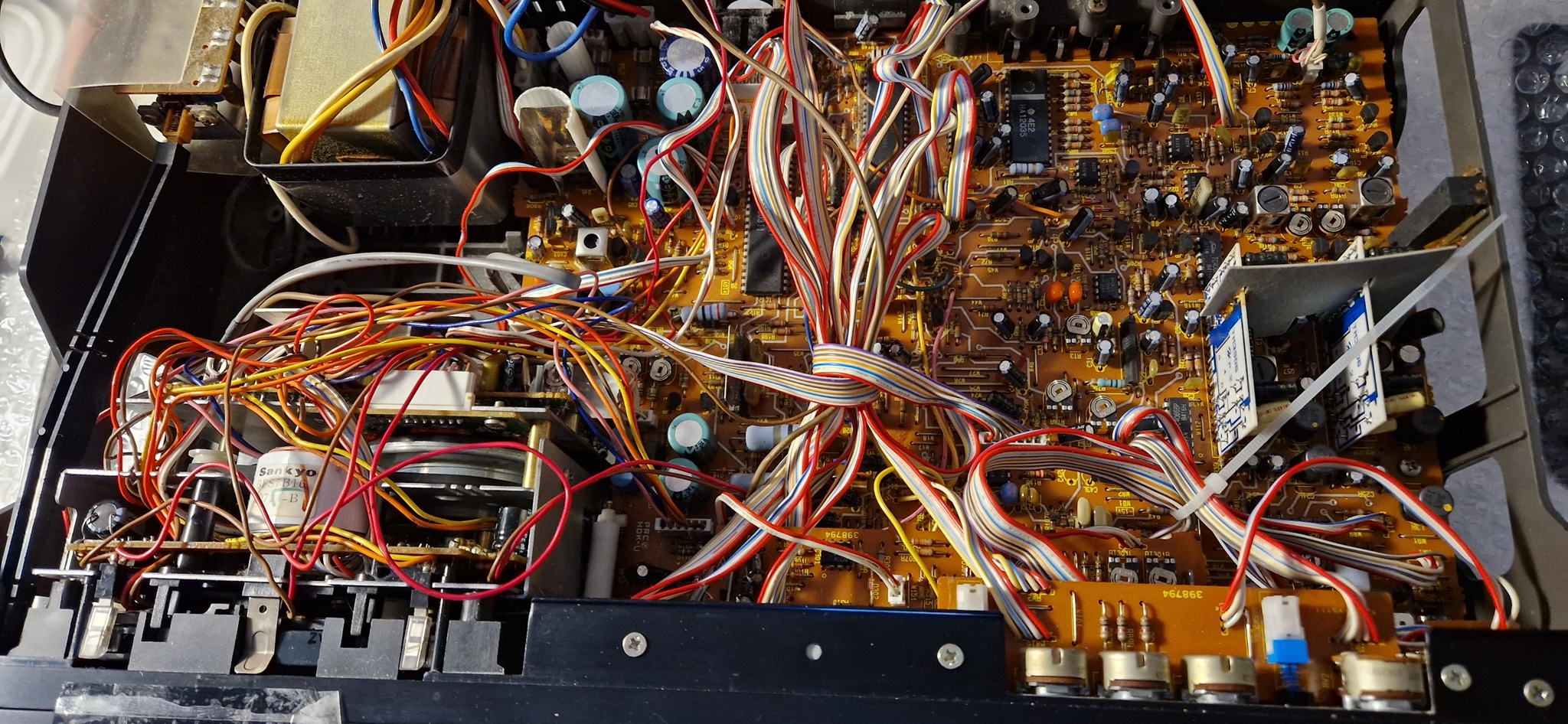
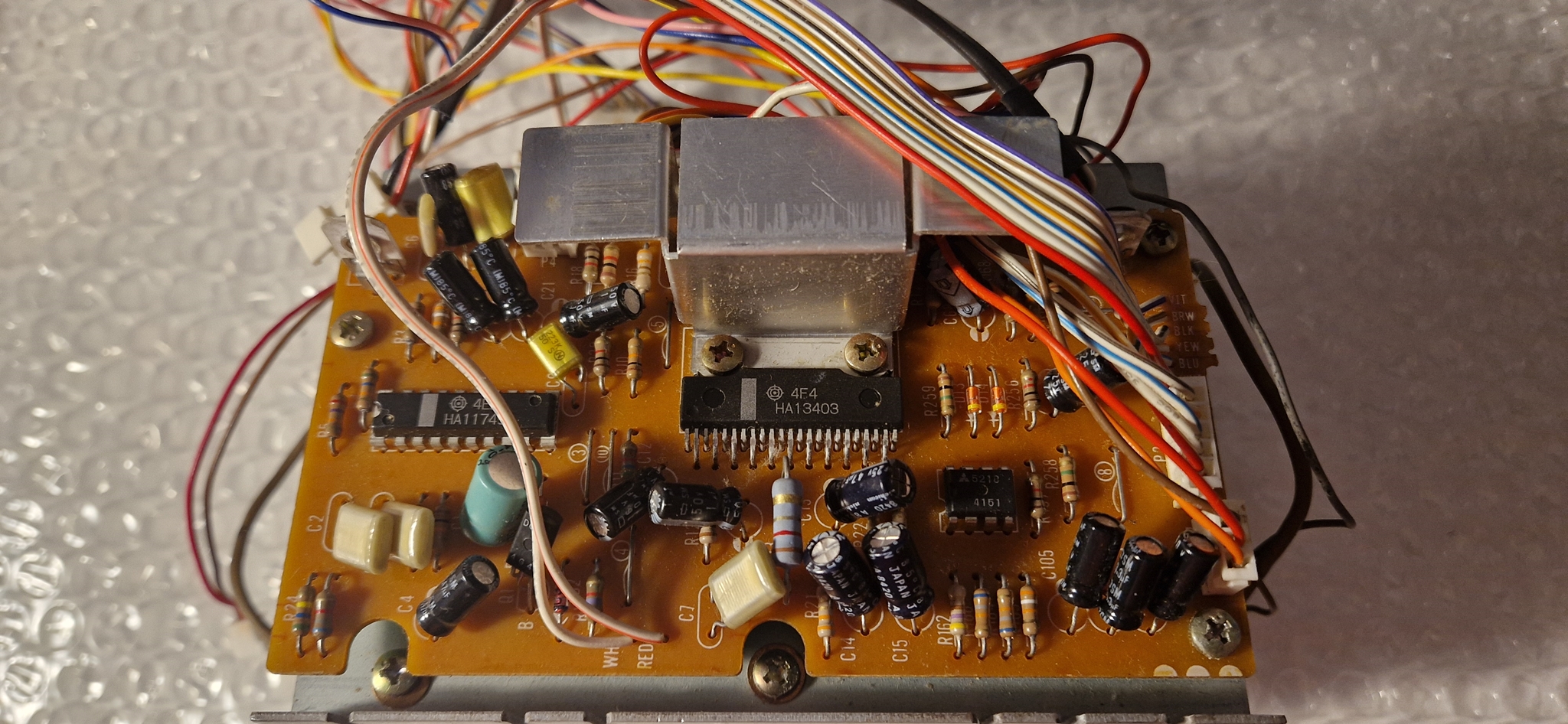
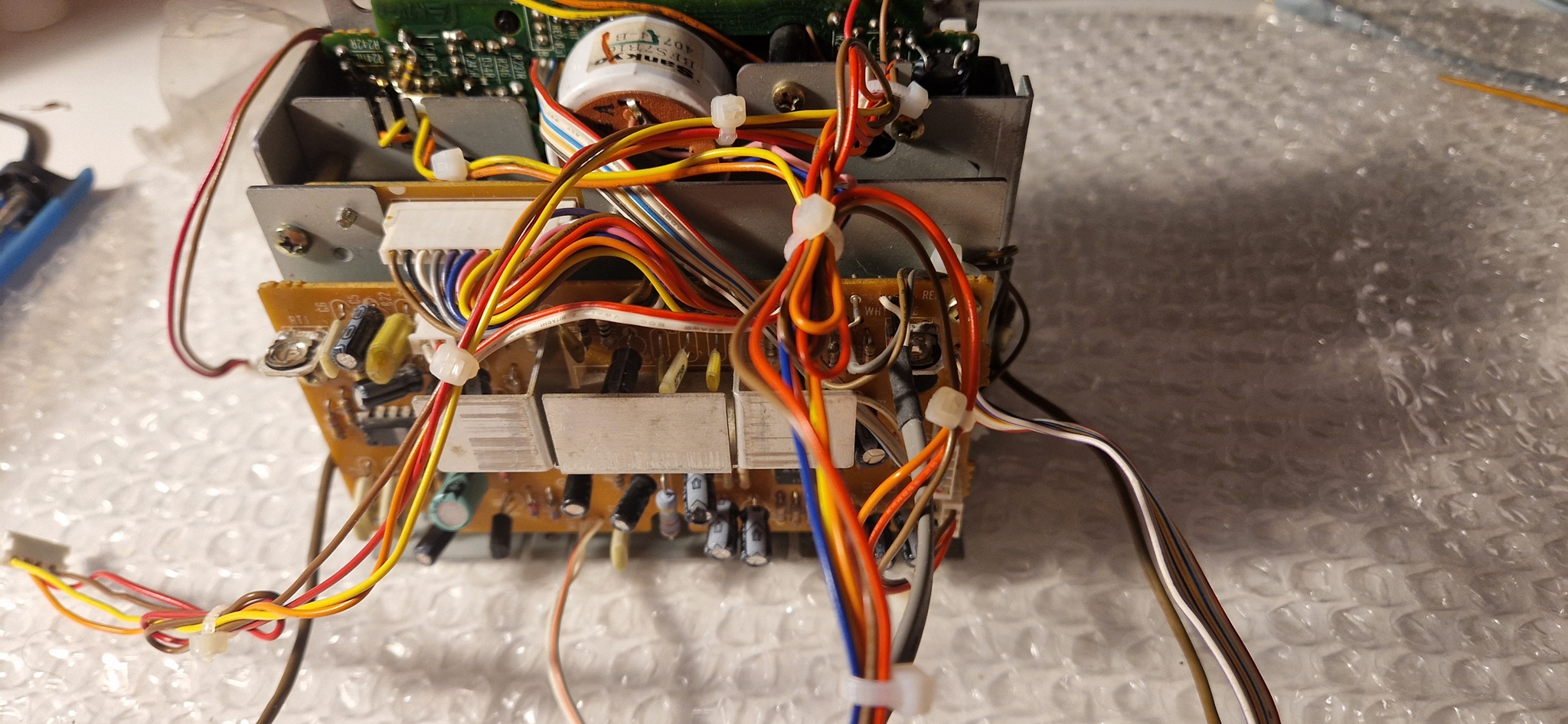
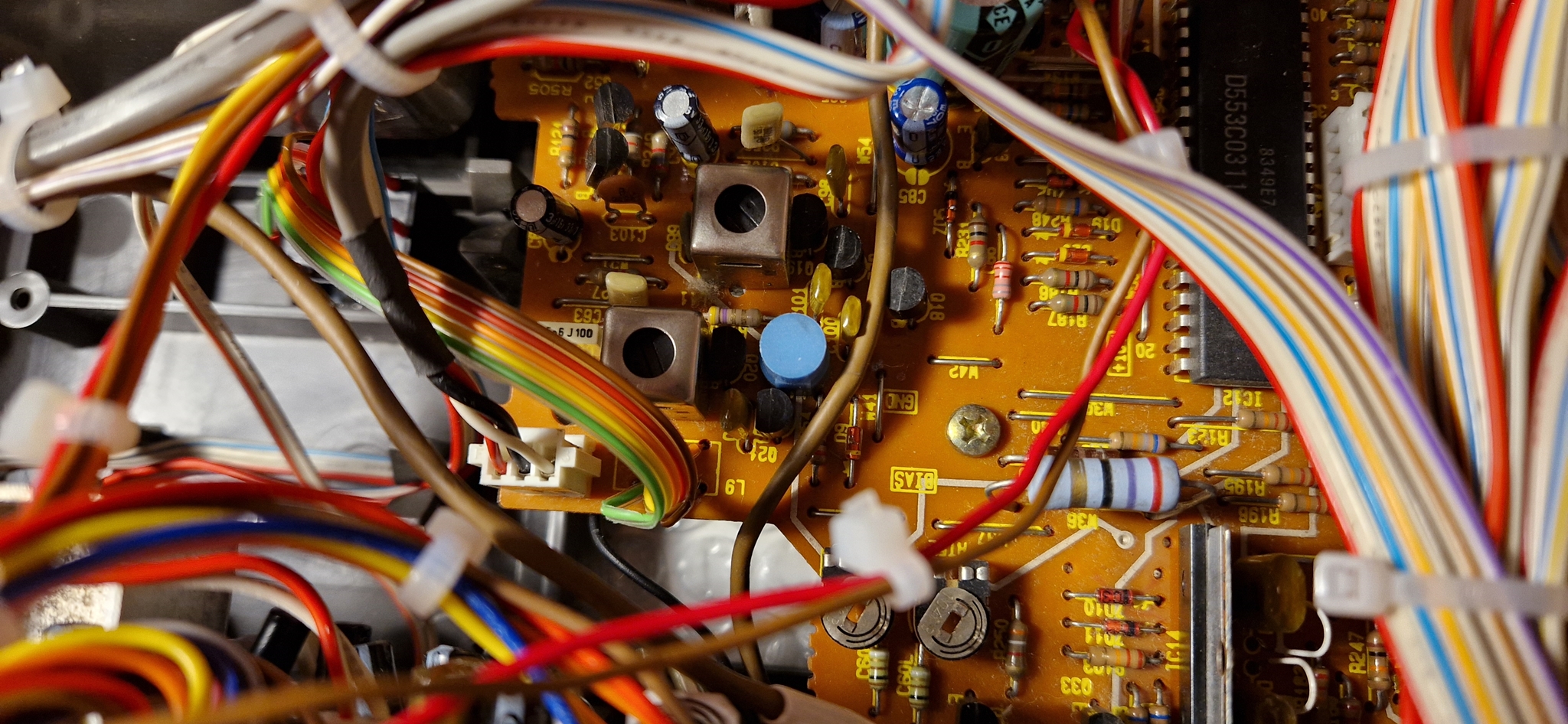
The Hitachi D-X10 is quite packed with various connectors and wires, which were scattered around due to someone attempting to repair it. I eventually grouped them together to make everything look as neat as possible. Most of the electronics are on the main board and the display board, alongside the direct-drive motor control board and some additional functions.
This deck has three processors: the main processor (for mechanics), the ATRS processor, and the display processor. These are actually microcontrollers, as they have built-in software. Additionally, there is a specialized IC that serves as the ATRS equalizer, along with many other ICs responsible for transport control and both automatic and manual calibration. This makes the deck much more complex than it initially appears when the cover is removed.
Looking at the bottom of the unit, there are numerous modifications—components added as patches after the mainboard was designed and put into production. It appears messy, but it still works. Unfortunately, I forgot to take pictures of this.
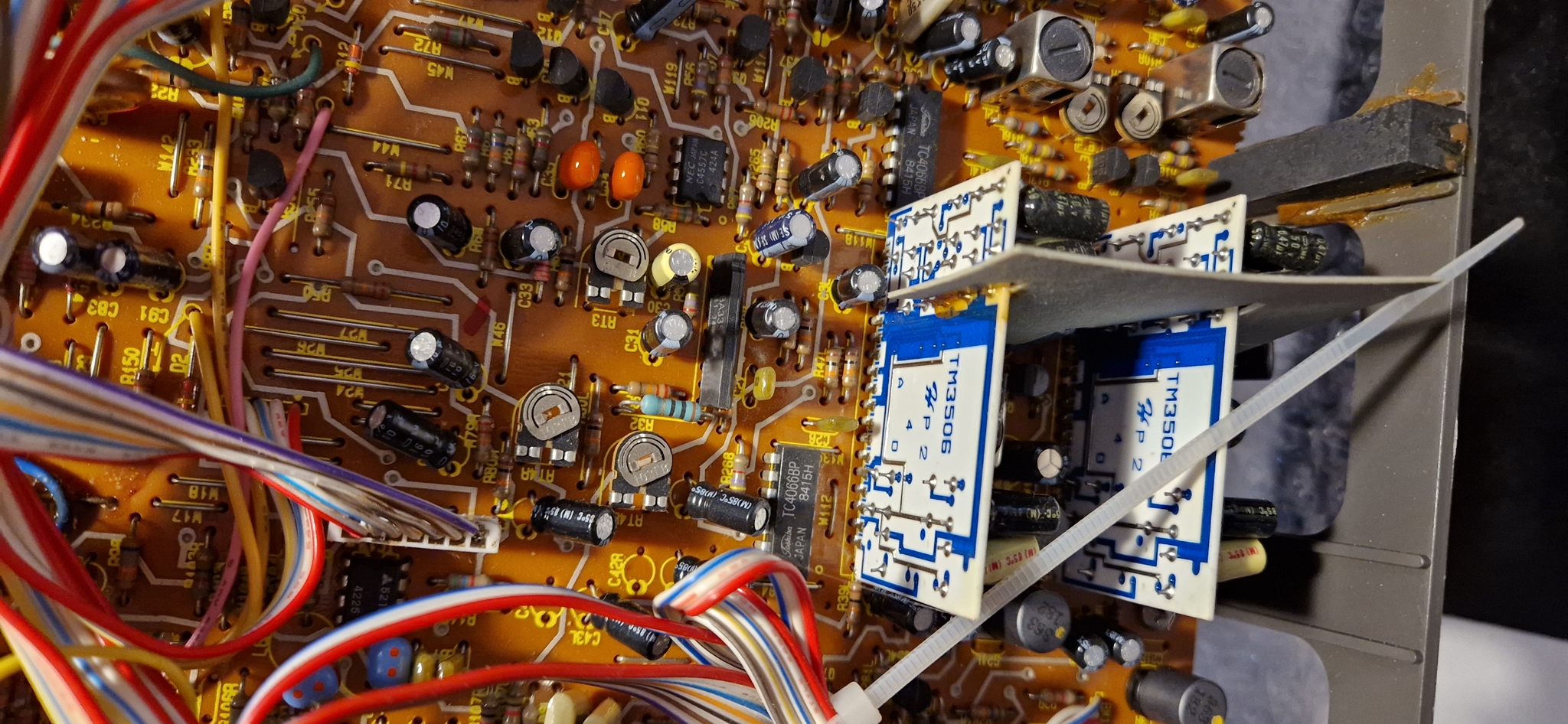
What caught my interest the most were the Dolby modules. Back then, Dolby C was implemented in more expensive models and required large, specialized ICs from the market. Three-head decks needed double ICs to ensure real-time monitoring—compressing the recording while simultaneously decompressing it during playback. The Hitachi D-X10 achieves this with two separate modules, each smaller than a matchbox. They contain SMD Dolby ICs of a size I had never encountered in any 1980s deck—something similar only appeared in a few 1990s models. In this regard, Hitachi was about ten years ahead of its competition. These modules also reminded me of the custom-developed electronics found in the D-5500 model.
Repairs
The unit arrived defective—the display and direct-drive motor powered on, but the transport mechanism didn’t respond to commands. After a brief inspection, I suspected that the seller had sold me a deck with a dead processor, so I shelved it in my collection of decks for about 5-6-7 years without any desire to repair it.
Over time, finding good or rare cassette decks became a costly and tedious hobby, and I decided to start clearing out my collection. Honestly, I thought the D-X10 would end up being recycled, but I felt bad about it since it’s a fairly rare and uniquely designed device.
I started with basic troubleshooting: most decks with logic controls have a micro switch that detects whether a cassette is inserted—without it, the mechanism won’t engage. I looked for it both in the mechanism and in the schematics but couldn’t find it.
Next, I checked the main CPU, measuring voltages, and noticed that they didn’t match the values listed in the schematics. Additionally, the power supply voltage was 5.1V instead of the specified 10.1V. Tracing the signals led me to the voltage regulation circuit, where I found that while the transistor’s input voltage was correct, the reference voltage was too low (around 5.6V). The culprit was a Zener diode.
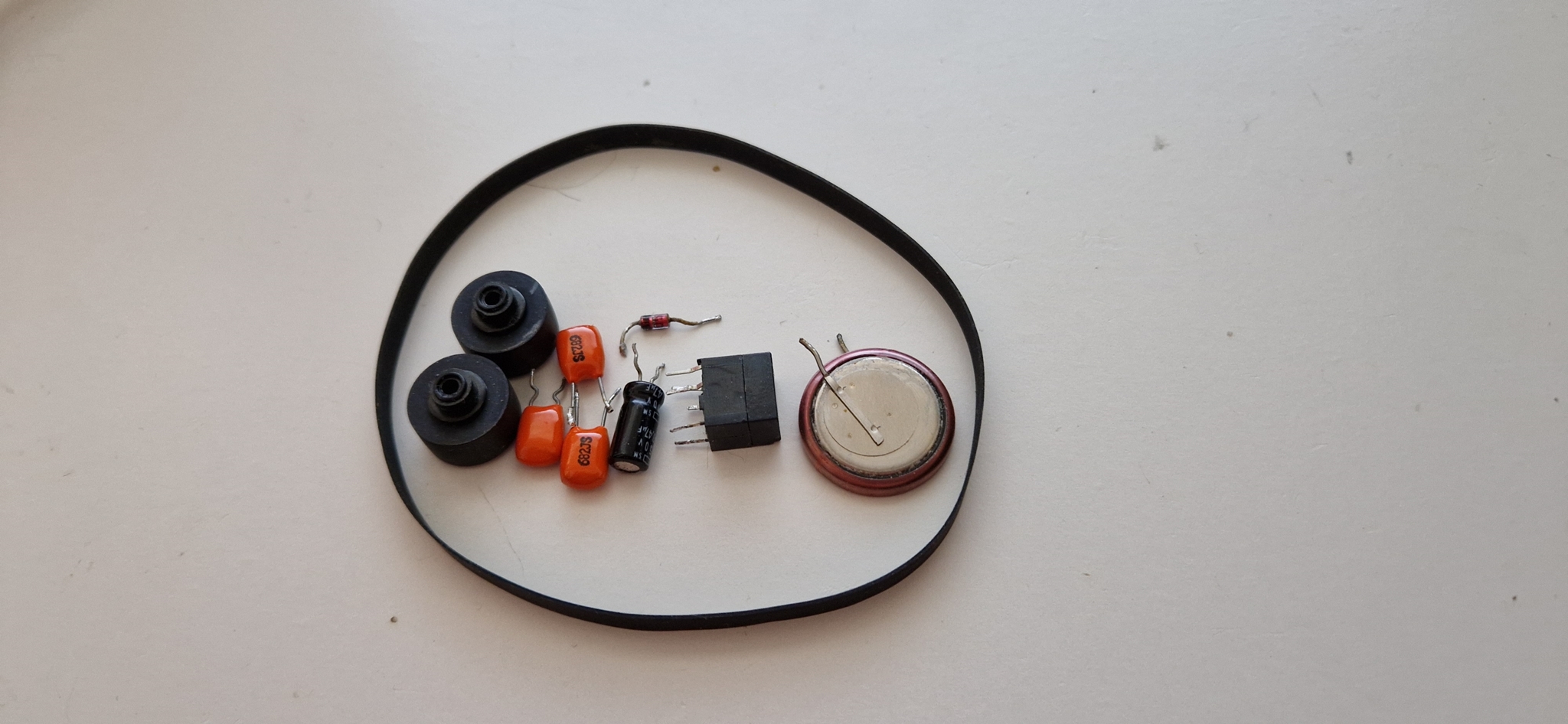
I removed the Zener diode and an electrolytic capacitor connected in parallel (in case it was partially shorted, dragging the Zener diode voltage down). However, the capacitor, despite being 40 years old, was in good condition—though I replaced it anyway. I also noticed that someone had previously soldered the Zener diode’s leads. Since the markings were unclear, I replaced it with an 11V Zener diode… and the mechanism started working, giving me a rush of excitement!
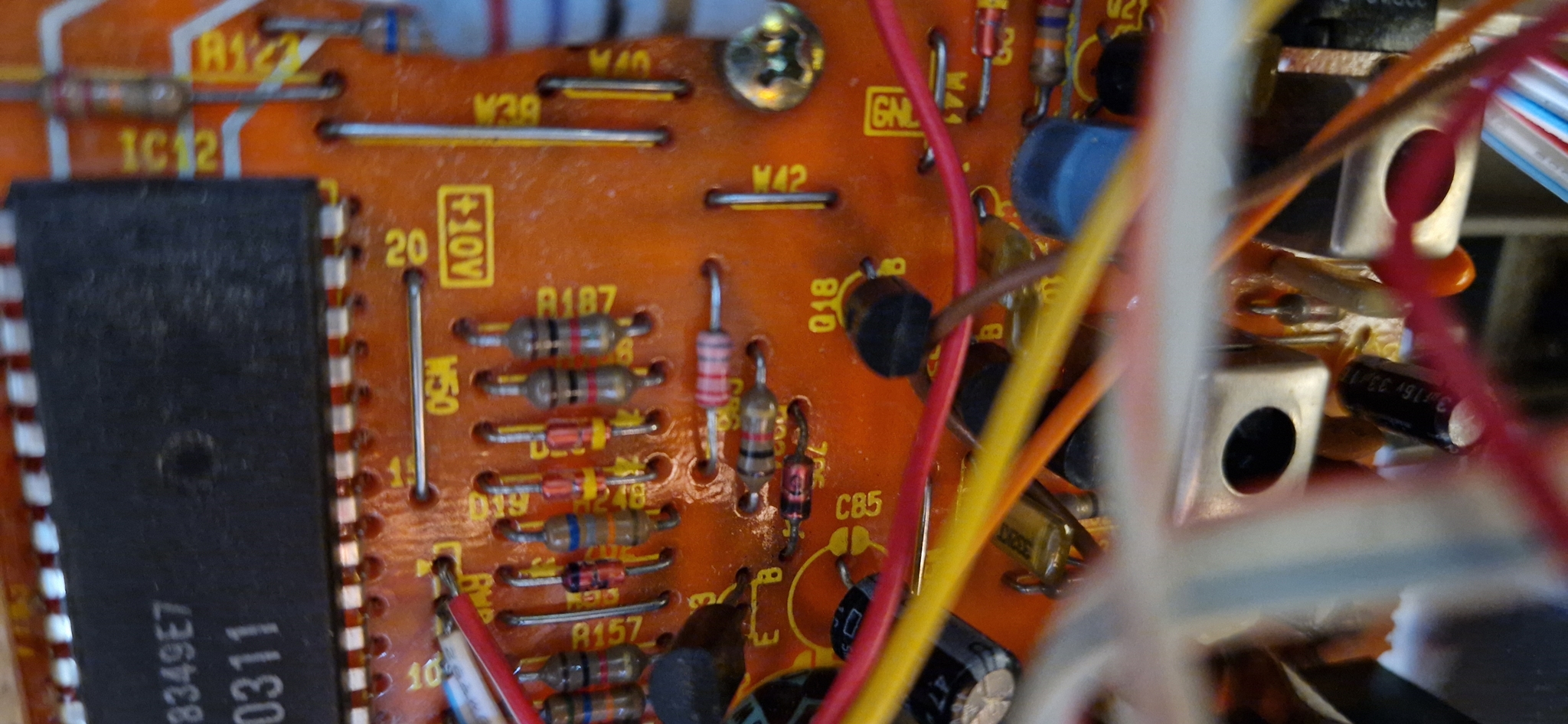
I suspect either the original factory-installed Zener diode degraded over time, or someone replaced it with an incorrect one, assuming the processor ran on 5V instead of 10.1V—preventing it from functioning.
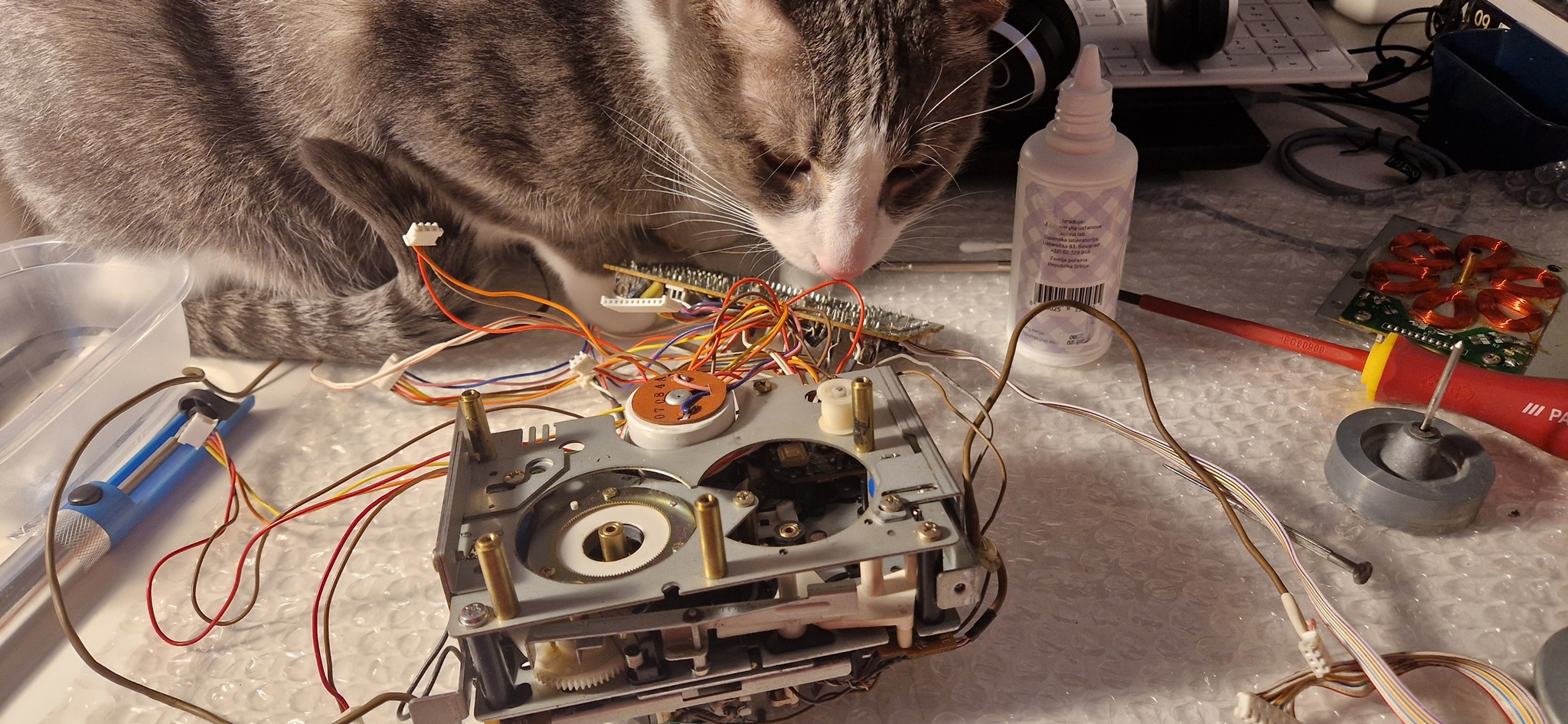
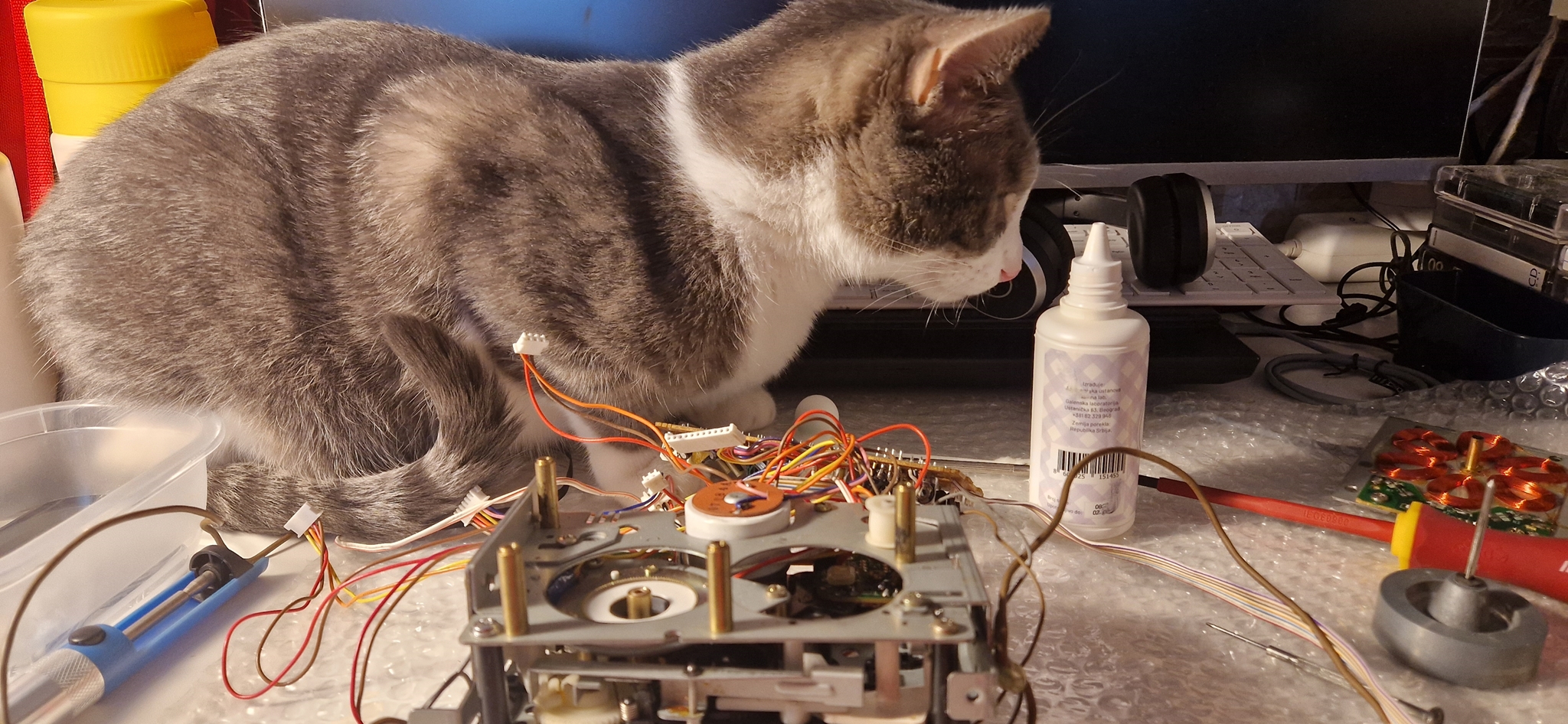
I then performed a basic service of the transport. I didn’t fully disassemble it, as that would have been a Sisyphean task, especially since the mechanism was already functioning properly. I replaced the belt, lubricated the flywheels, and cleaned the transport system. The pinch rollers looked brand new, as if the deck had never been used or they had been replaced. However, after some testing, I realized the rubber had hardened slightly, so I decided to replace them.
This process is not exactly simple because it first requires removing both erase heads, which I did. Reinstalling the heads involves adjusting their height, which requires a special, simple tool.
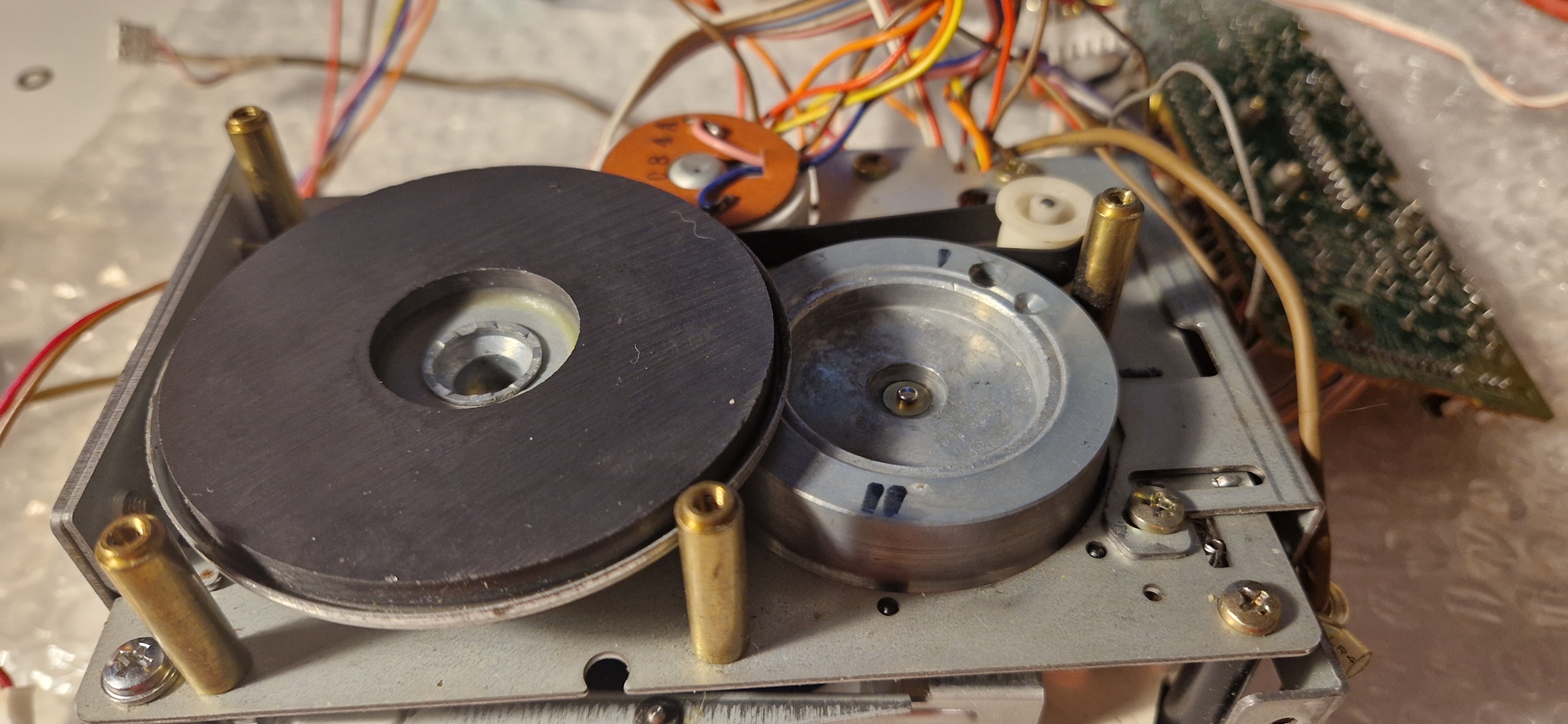
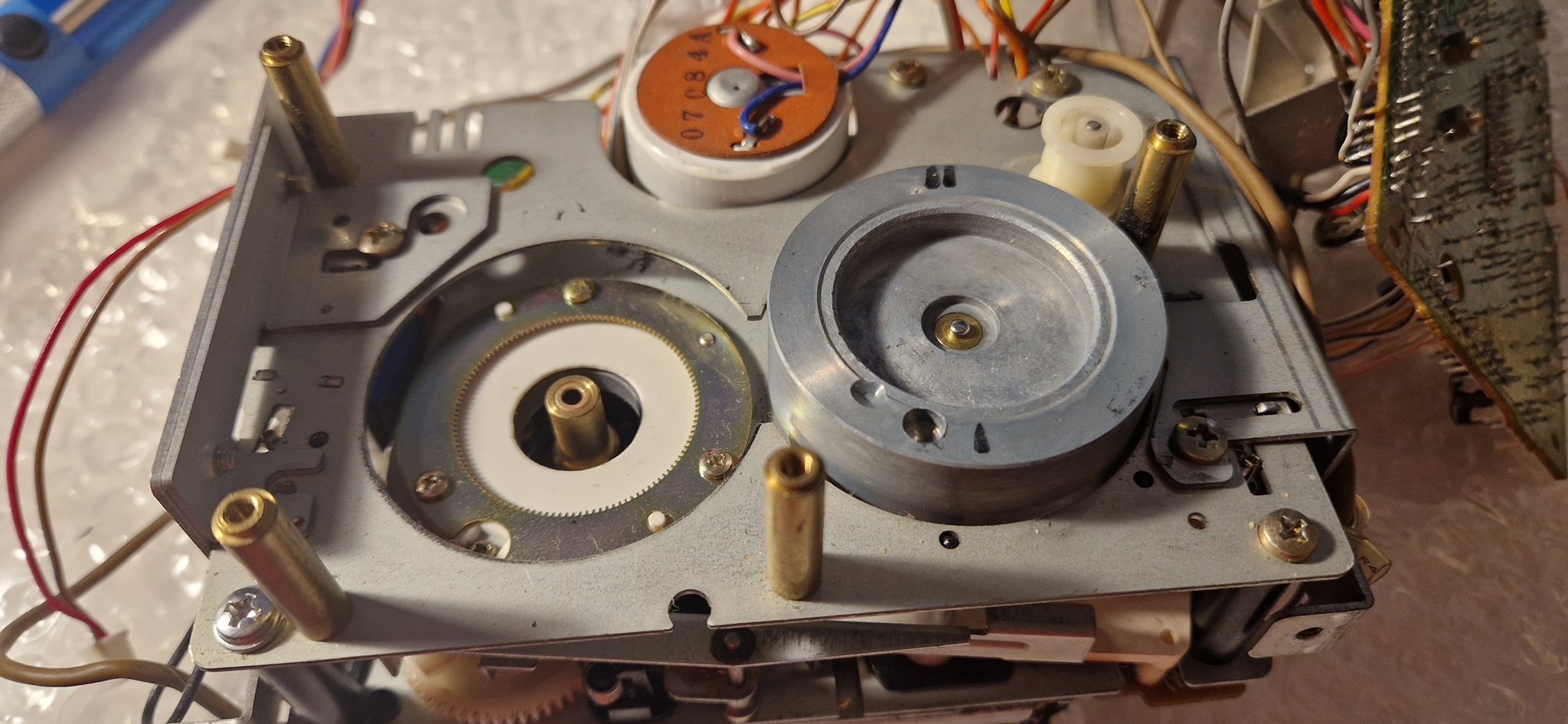
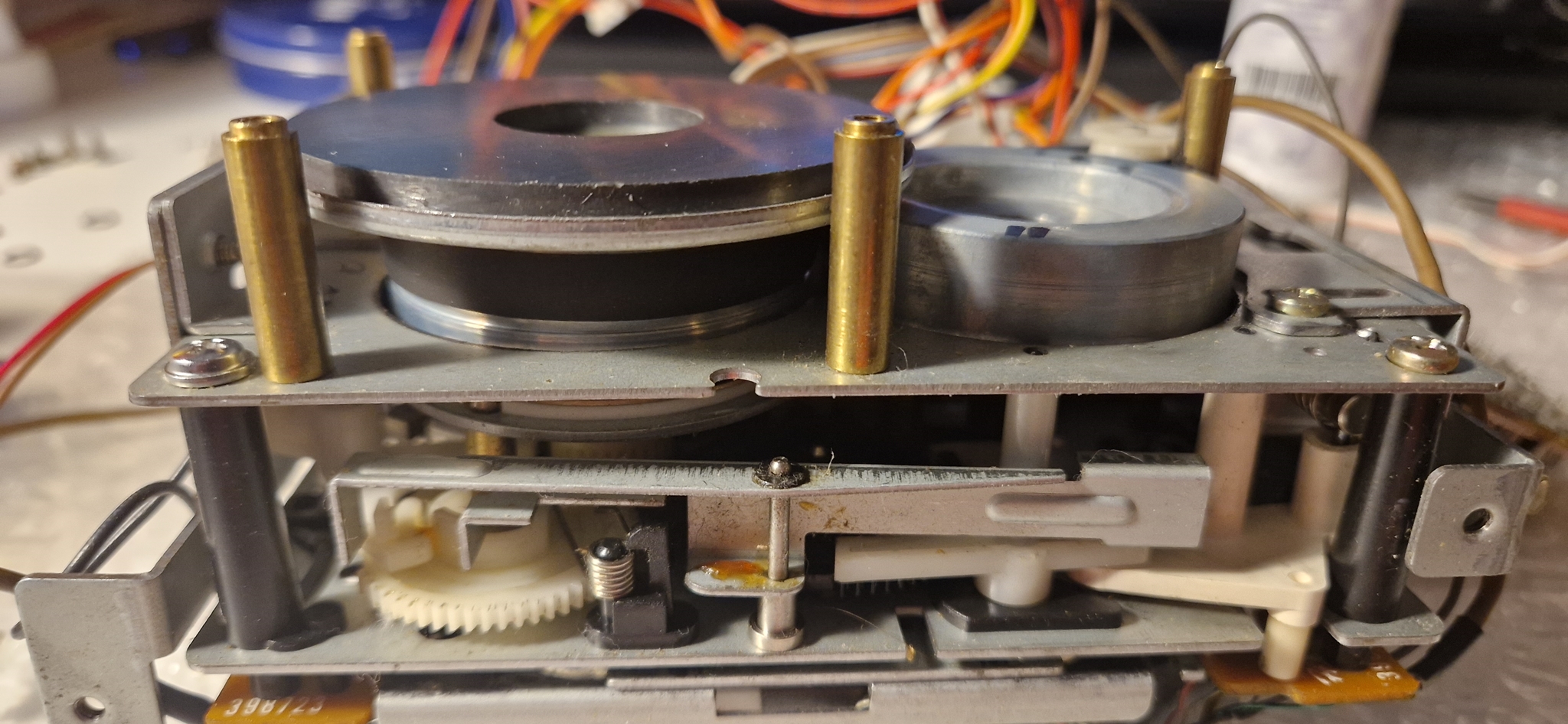
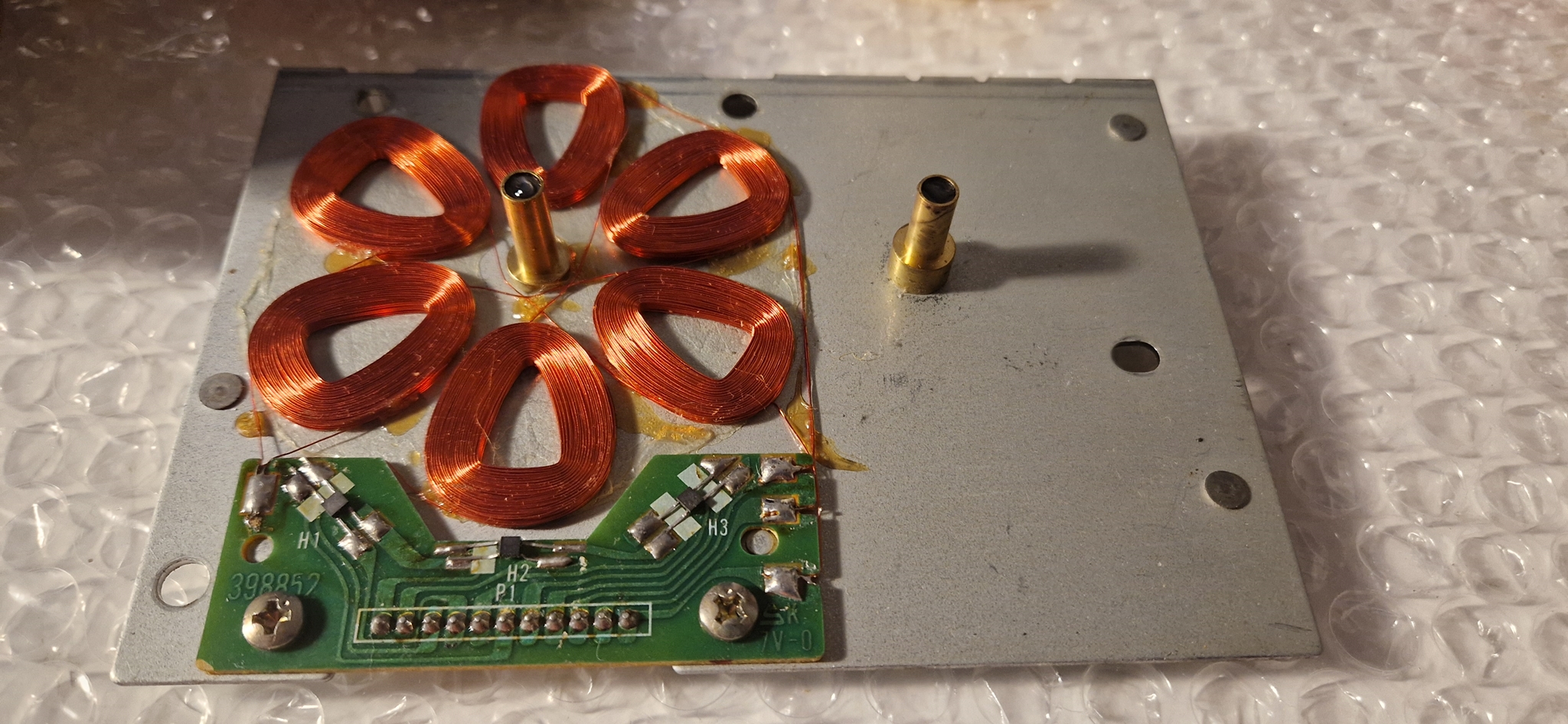
Removing the pinch rollers revealed a surprise: although they looked standard, they were unique and not easily replaceable with off-the-shelf parts. Finding new ones online was impossible. I needed a standard pinch roller plus a precisely measured spacer to ensure proper operation.
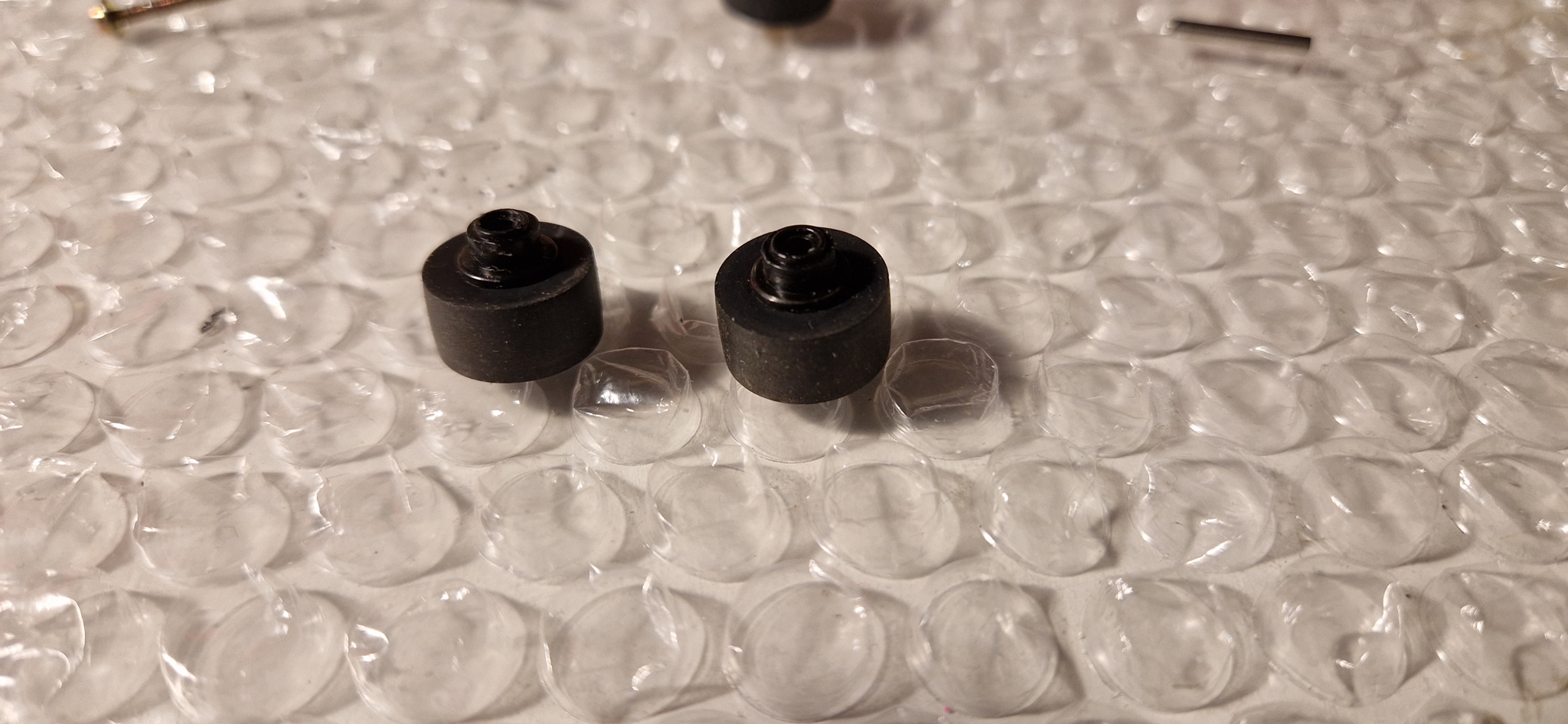
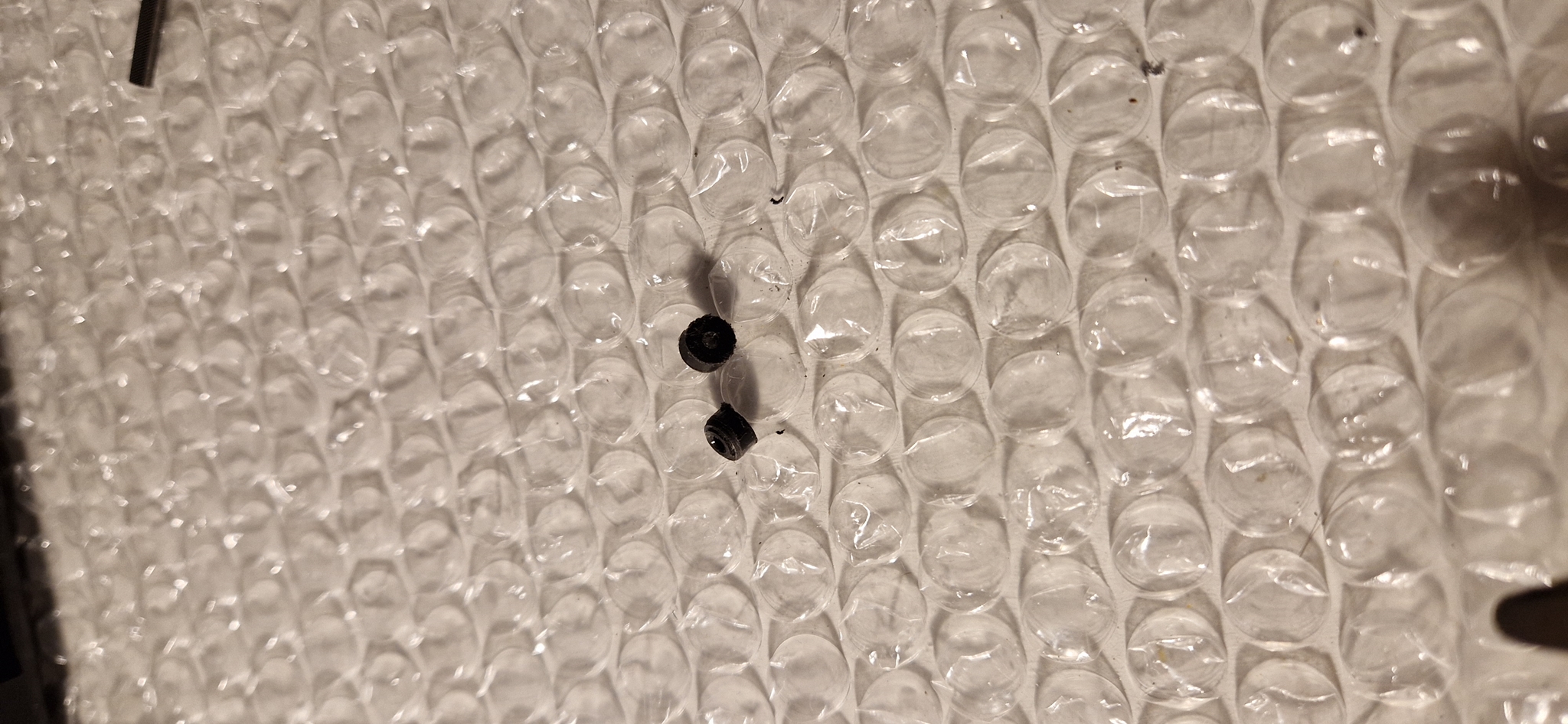
After an unsuccessful online search, I decided to repurpose an old roller from my collection—removing its rubber and modifying the plastic core to the correct dimensions. It was a lot of work but much cheaper than custom manufacturing a new one.
Next, I tackled a recording issue—the deck wasn’t erasing tapes properly. This typically indicates a fault in the oscillator circuit, which generates the bias and erase head currents. Seeing a small orange polypropylene capacitor in the circuit, I immediately suspected it. Replacing it didn’t solve the issue. Reviewing the schematics, I found it odd that the deck could record but not erase. At one point, erasing started working intermittently, which suggested either an electrical or mechanical issue with the head alignment.
Further investigation revealed that the deck had a rare design—two separate oscillator circuits, one for bias and another for the erase head. This explained why it recorded but didn’t erase—only one oscillator was faulty.
I noticed that the deck would sometimes erase in one direction, but when switching to reverse playback, it either started erasing correctly or stopped erasing altogether. Returning to the normal playback direction wouldn’t restore erasing.
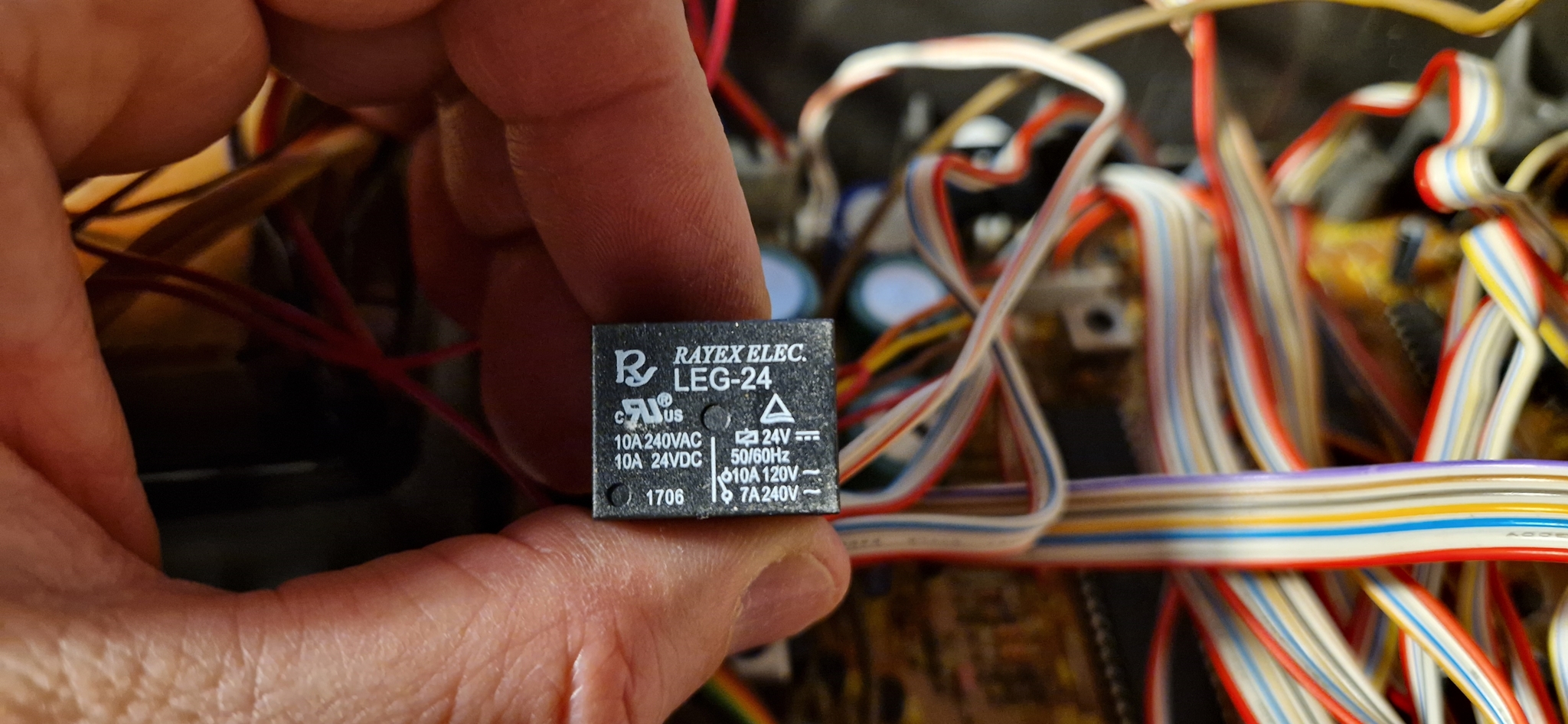
I suspected the micro relay in this circuit—it was tiny, resembling a block capacitor, just under 10mm long and half as wide. I managed to open it but decided not to repair it, as such fixes are often temporary. Being 40 years old, it had started sticking mechanically.
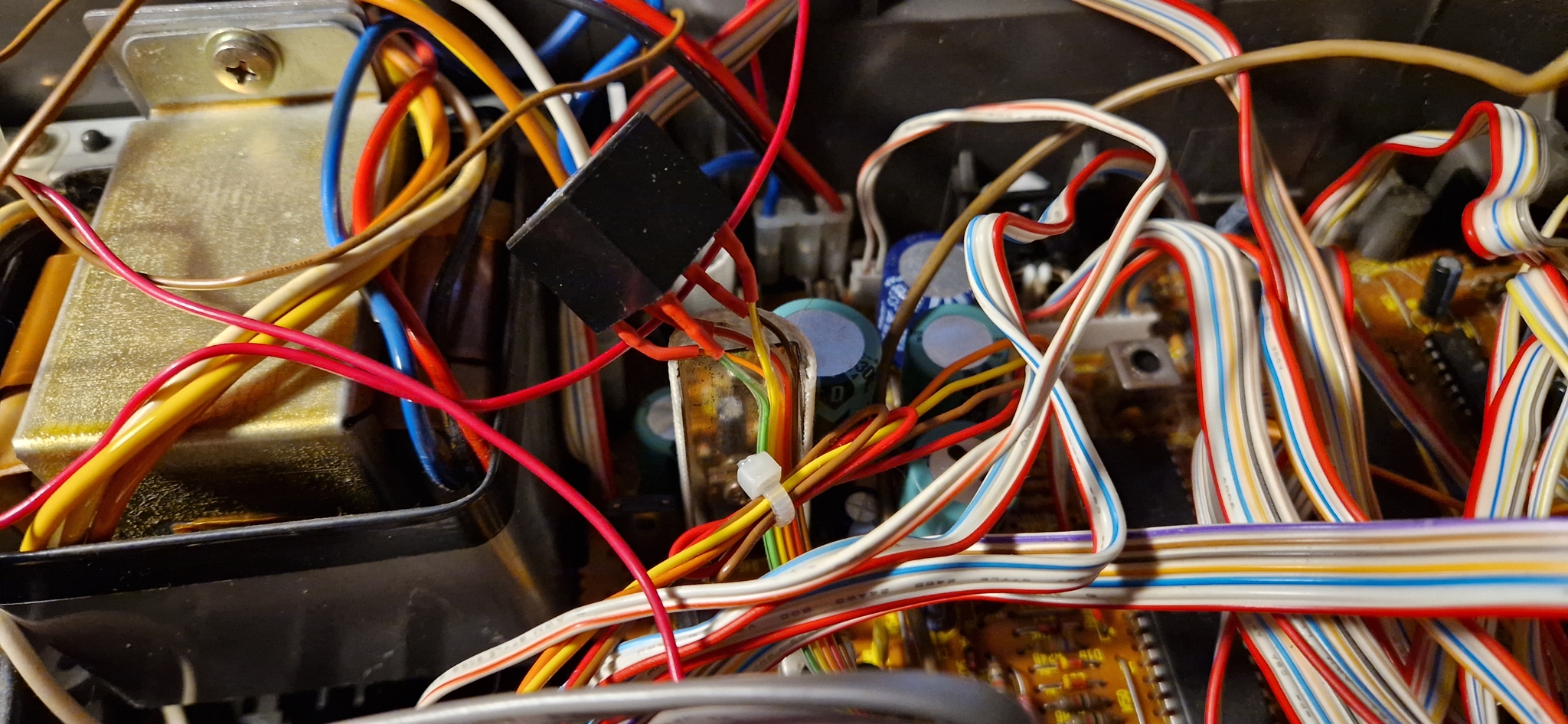
Since I couldn’t find an identical replacement, I used a similar relay rated at 24V instead of 12V. The voltage on the contacts varied between 17.5V and 20V, depending on the mode. I relocated and secured it to the chassis since there wasn’t enough space on the circuit board, then wired it back in. It worked perfectly, and the erasing issue was resolved.
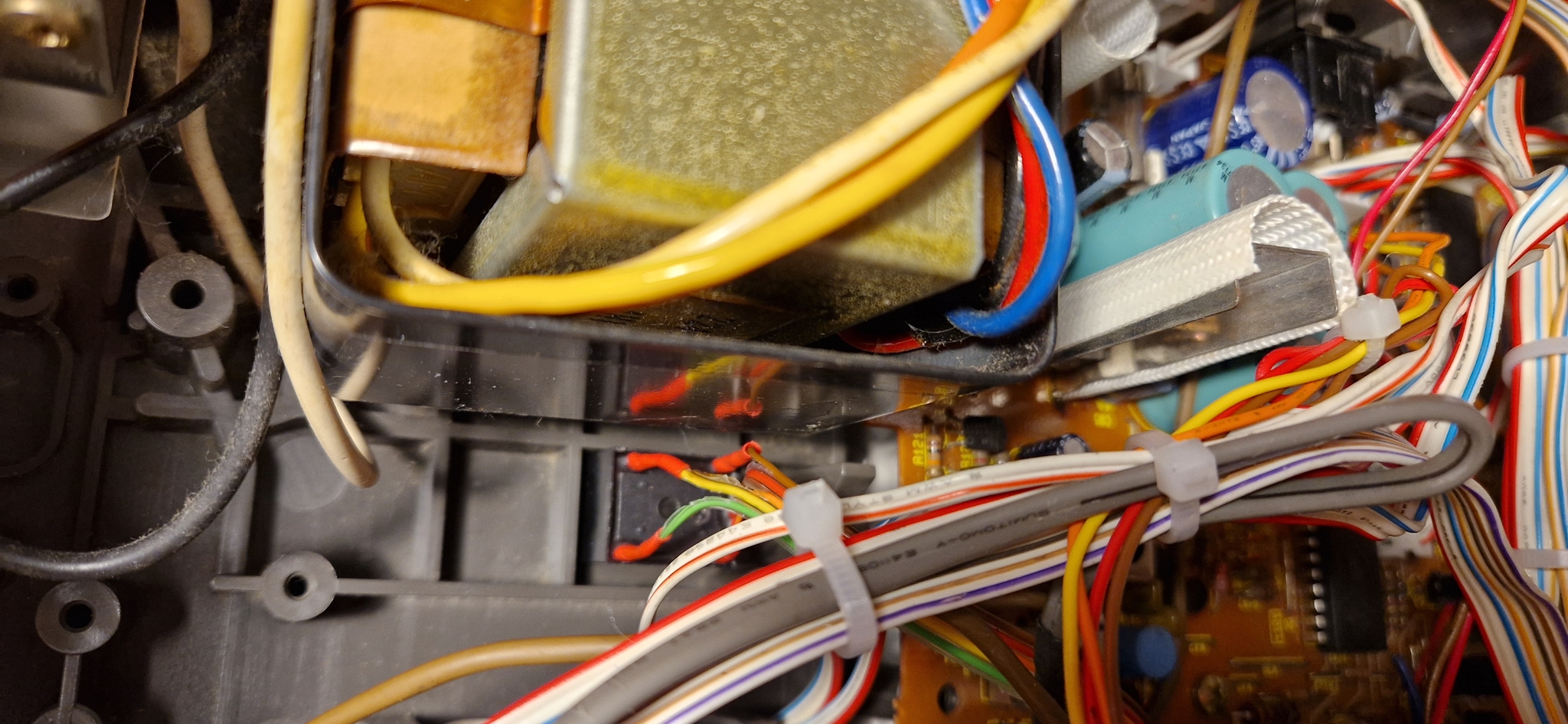
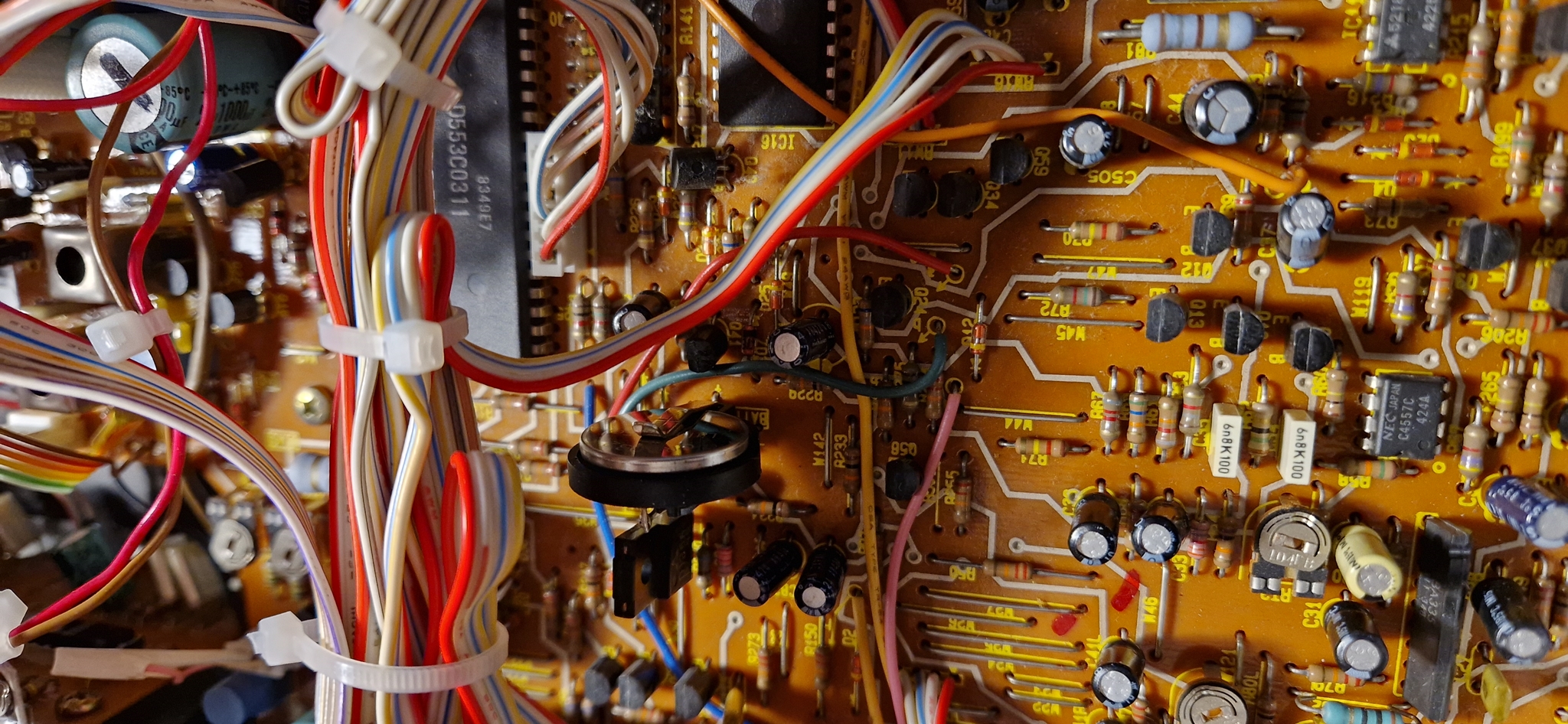
Additionally, the Hitachi D-X10 has a backup battery (around 3V) that powers the ATRS calibration processor to retain its memory settings for different tape types. The original industrial lithium battery was non-rechargeable and completely drained. Since it was a CR2032, I replaced it with a regular version and installed a battery holder for easy future replacements.
One issue I didn’t fix was the Quick Reverse function—it seems the infrared LED in the tape sensor failed. This prevents the deck from reversing at the transparent tape leader, instead reversing a few seconds later at the end of the tape. Replacing the LED (or possibly the phototransistor) would be a tedious task with some risk of further complications, so I left it as is.
In total, I spent about 30-35 hours restoring this deck—not a small amount of time.
Evo zamenjenih delova:
Sound quality
The Hitachi D-X10 has a soft and warm sound character, with good dynamics and detailed highs. Its strength lies in its pleasant midrange reproduction, making vocals particularly expressive. The overall sound is full and powerful, though the bass, while strong, lacks some detail compared to other decks.
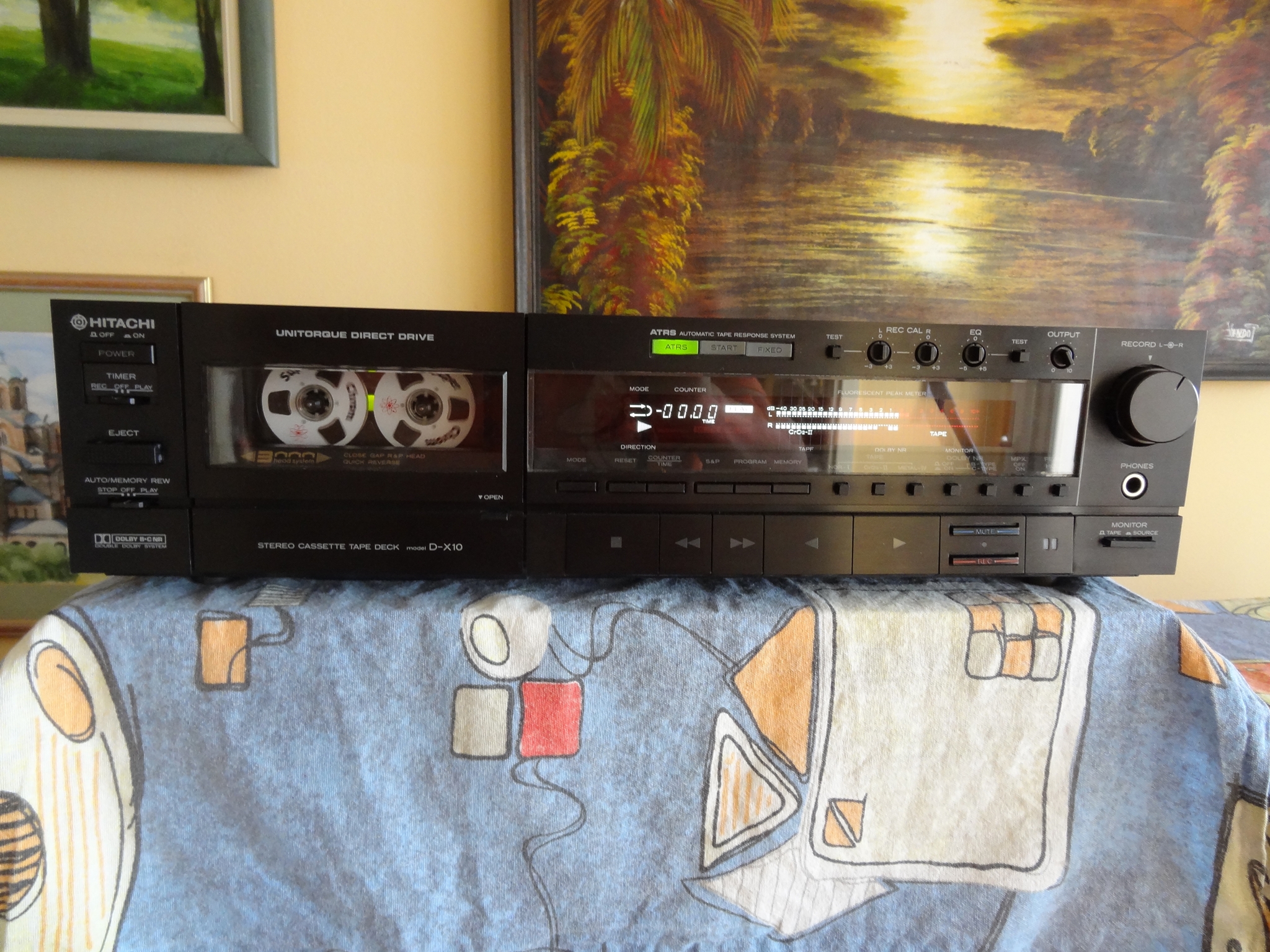
Switching from normal tapes to chrome or pseudo-chrome tapes improves the sound—not drastically, but noticeably. The audio becomes clearer, more precise, and more detailed.
Playback of pre-recorded tapes was very enjoyable, providing hours of listening pleasure. While the D-X10 doesn’t belong in the top tier of three-head decks, it holds its own against models like the Pioneer CT-9R or Aiwa AD-F770.
Conclusion
The Hitachi D-X10 strikes a great balance between sound quality and features. It offers auto-reverse, auto-calibration, and advanced Dolby processing, all in a solidly built transport with a high-quality direct-drive motor.
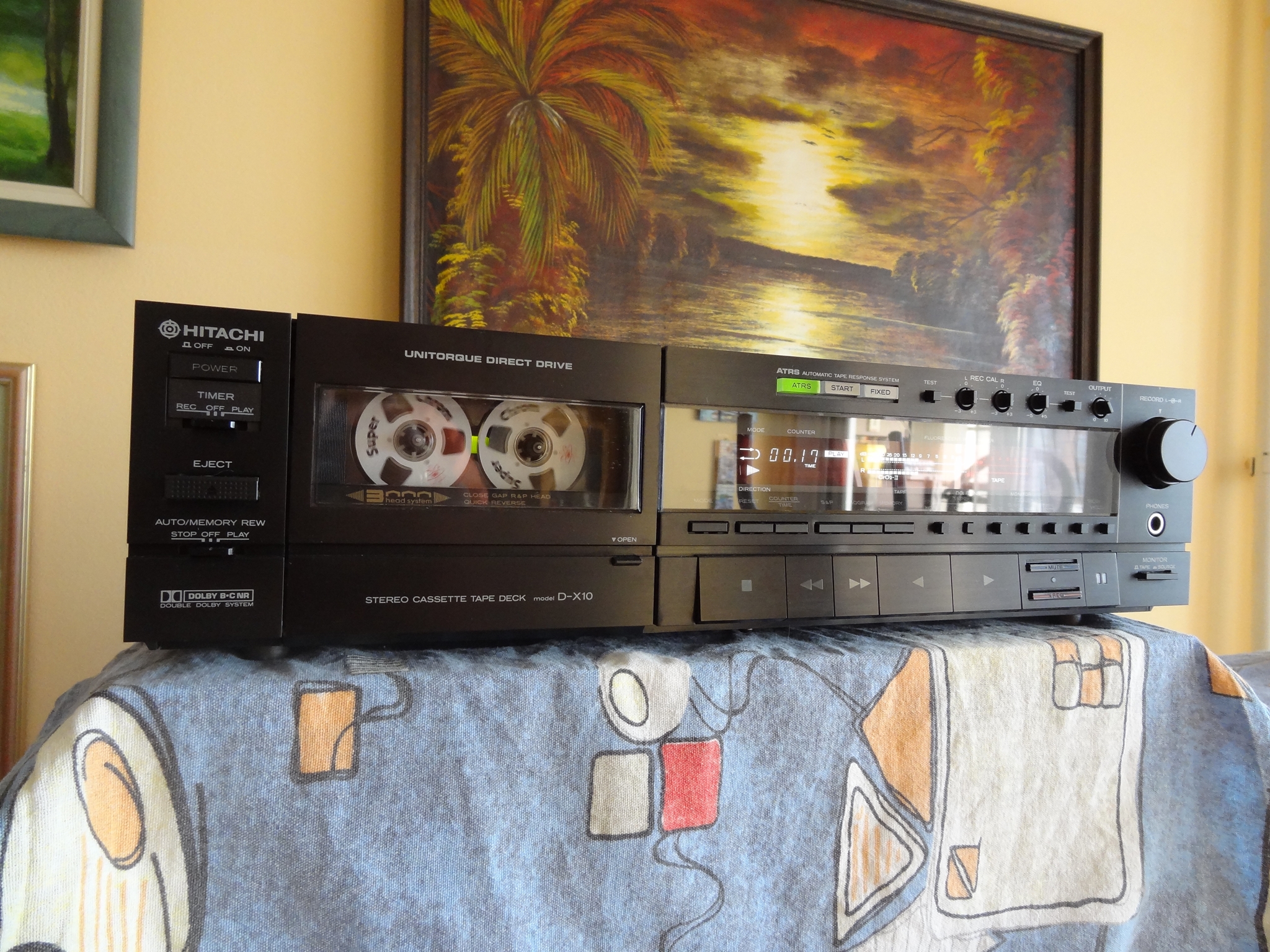
It’s extremely rare on the market, but if you find one, it’s not too difficult to maintain. I’d recommend it for collectors or cassette enthusiasts looking for a reliable auto-reverse deck that can also make very good recordings.