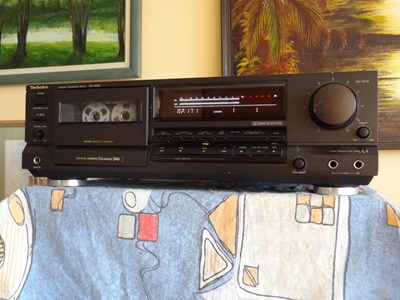
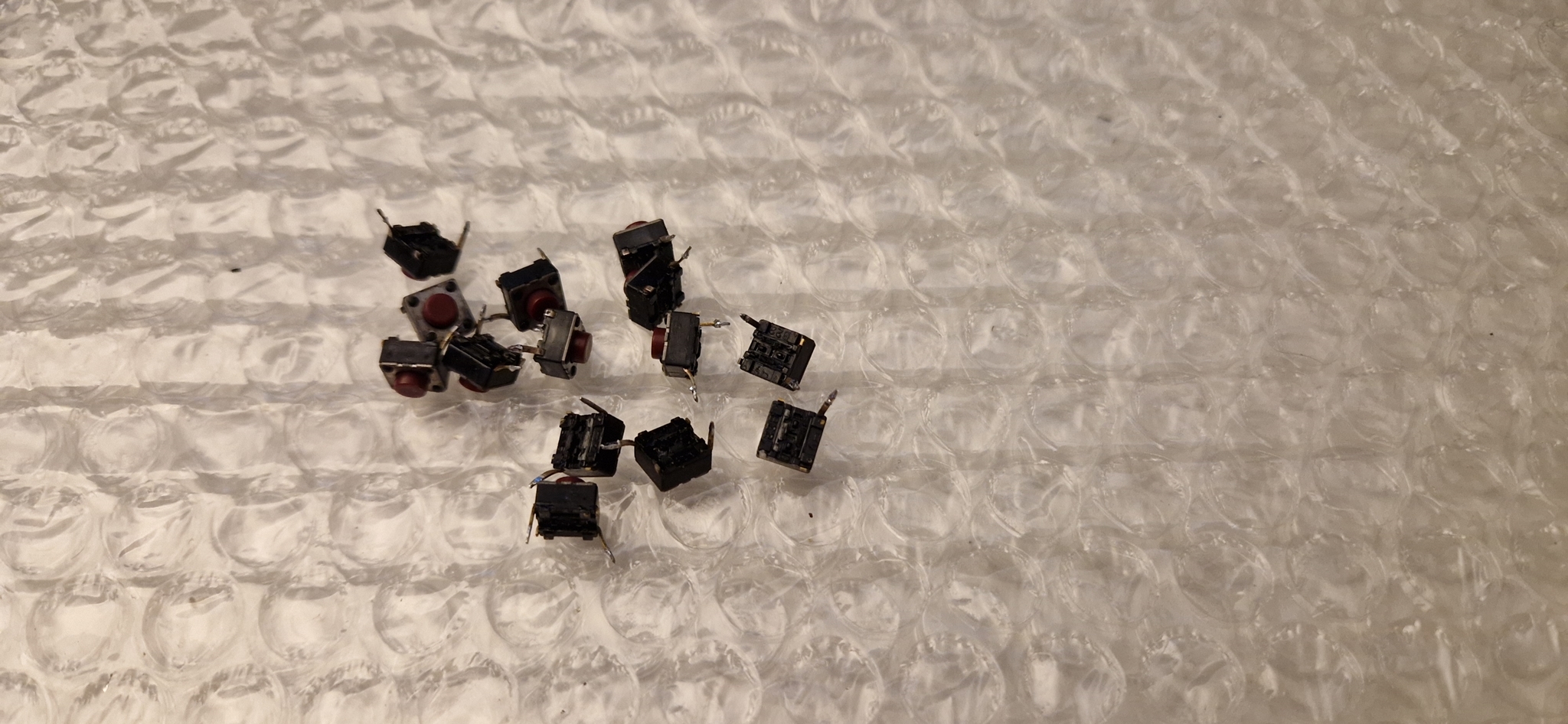
I replaced all the buttons with new ones, as 3-4 of them had already started to fail.
Zoran Karapandzic Hi-Fi Reviews
Zoran Karapandzic Hi-Fi Reviews
Submitted on: 01 Apr 25
Category: Analog recorders/players
Website Rating:
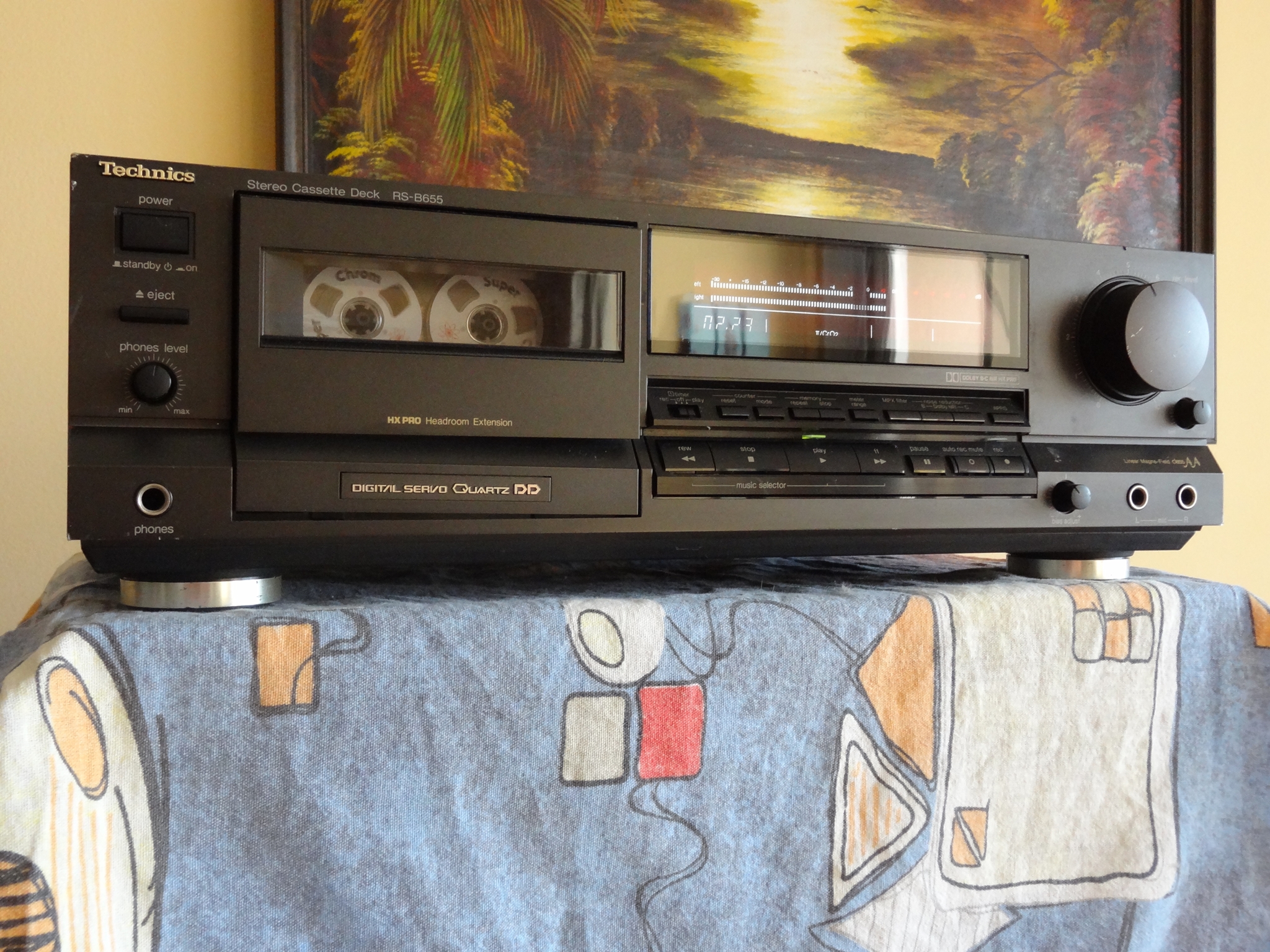
Technics decks have always had a certain cult popularity in these regions—more so than other mainstream brands like Sony, TEAC, or Aiwa. Their combination of design, technology, build quality, and sound had a magical way of captivating people in the Balkans, and owning a Technics deck was often a matter of prestige.
Indeed, among all manufacturers, Technics managed to create products that looked and felt more premium than their price would suggest. And perhaps that was true until the early 1980s, when Japan’s Hi-Fi industry began to face a crisis. Throughout the 1980s and 1990s, in my experience, Technics components (not just decks) were a true reflection of their price—on a scale from one to five, I would rate them a three, maybe a four at times—good quality for the money, nothing more, nothing less. However, their design was often a perfect ten, as were their useful features, which allowed them to find a great formula for success in the market.
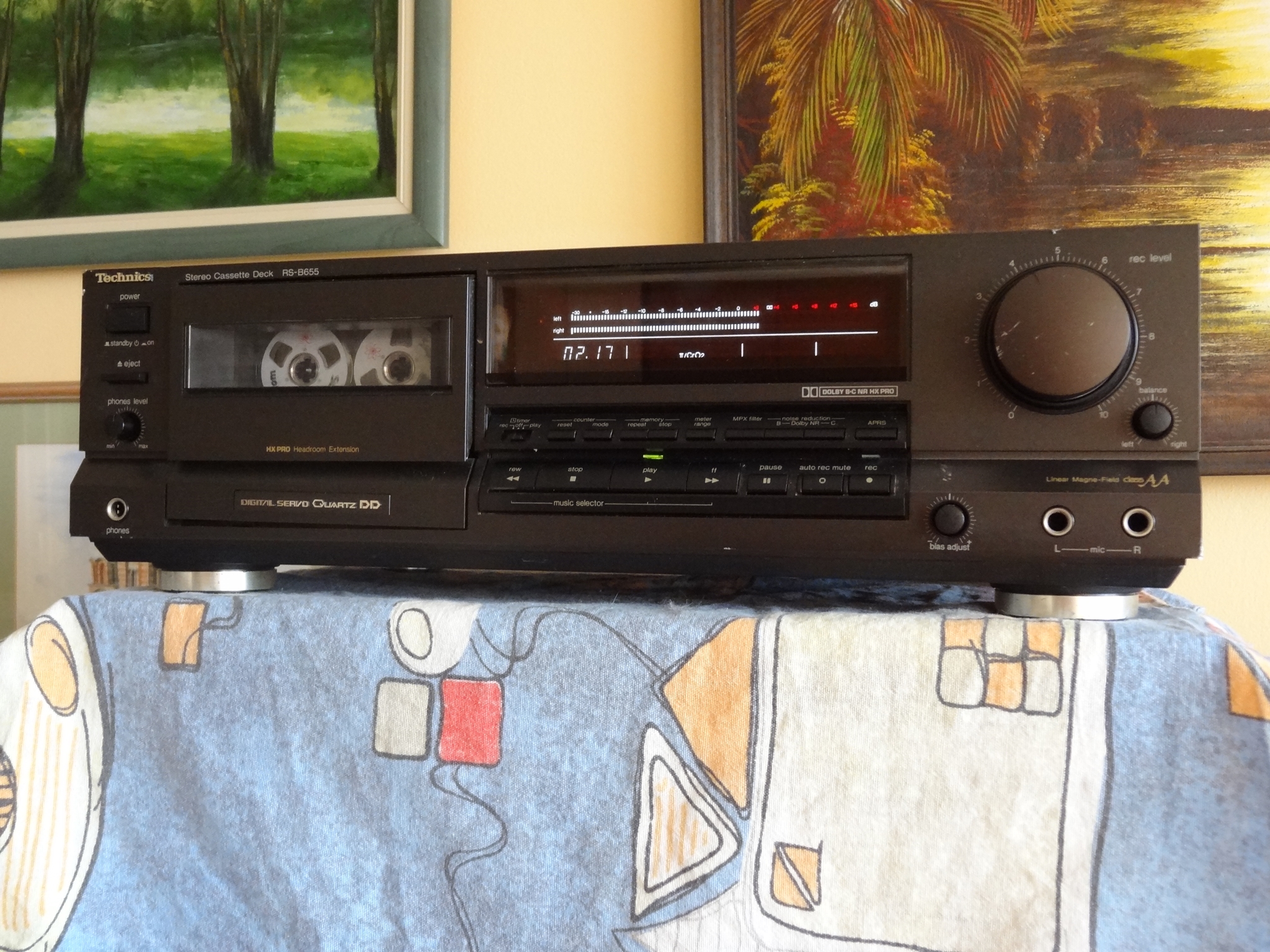
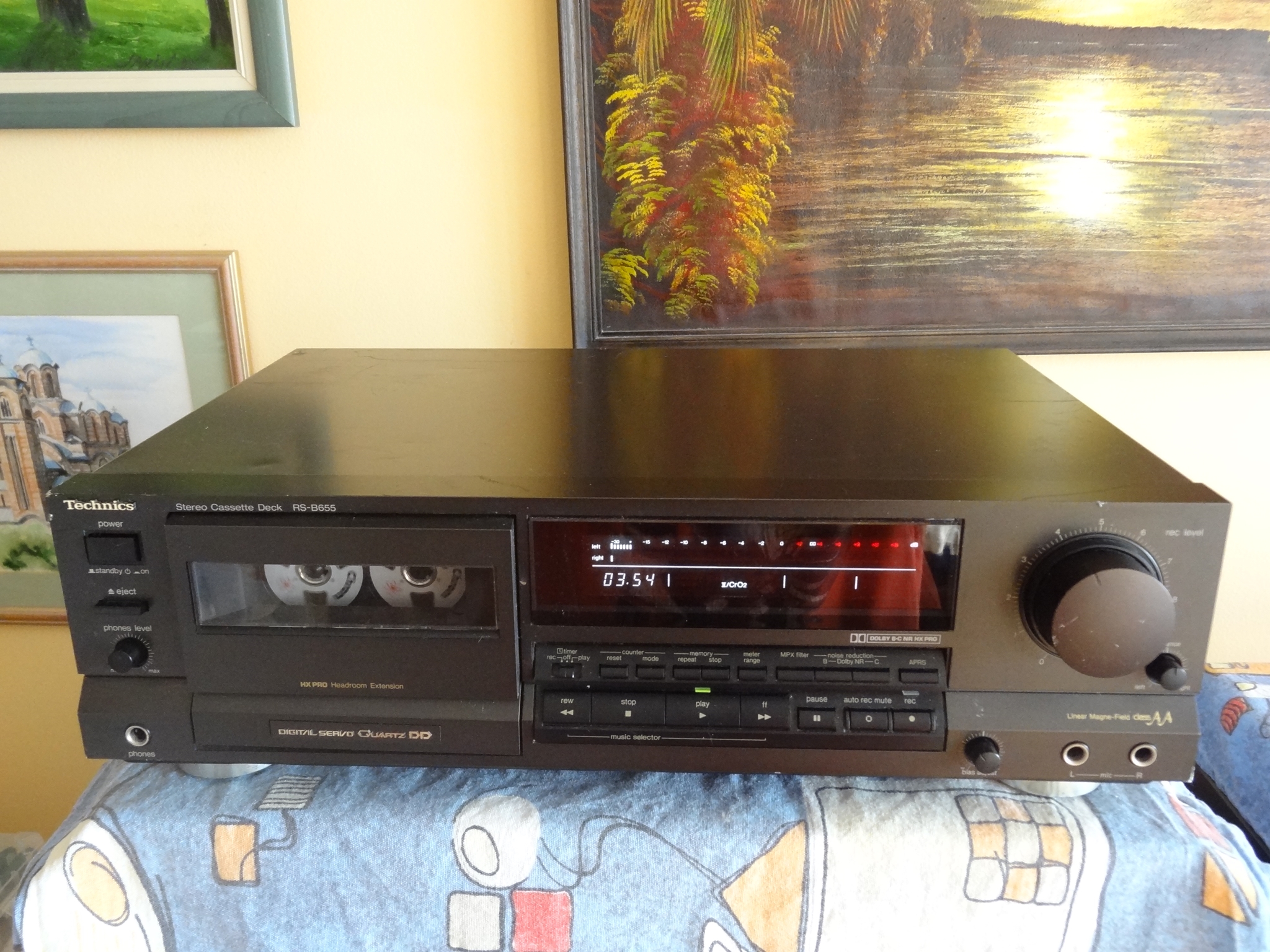
The RS-B655 model falls in the middle of the lineup—below it were the RS-B555 and 405 (later 465), while above it were the 755 and 905, followed later by the legendary RS-B965. Interestingly, the entire series uses a relatively simple and inexpensive ALPS transport, but starting from the RS-B555 model and up, all of them feature a direct-drive capstan motor, which is a rarity in the mid-range category of two-head decks.
Moreover, among the many manufacturers that used this very popular and more or less identical mechanism (Yamaha, Fisher, Pioneer, Harman/Kardon…), only Technics insisted on using a direct-drive (DD) motor, whereas others opted for a standard DC motor, a modest flywheel, and a belt-driven system.
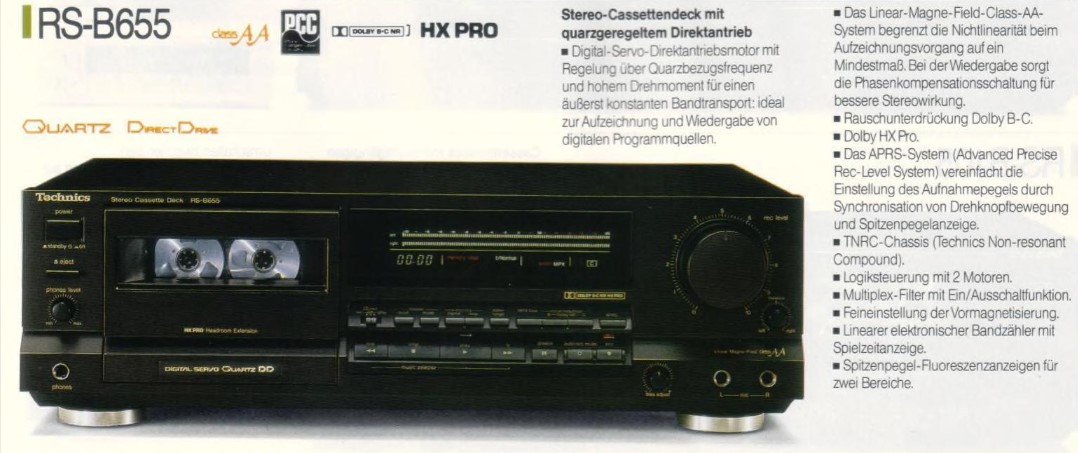

The price of the RS-B655 was 700 DEM (around 350 EUR). The RS-B755 is a three-head deck, while the RS-B655, compared to the RS-B555, differs in that it features quartz speed stabilization—something I’ve never actually seen as a real advantage in practice—as well as a phase compensation circuit for playback. This was a significant innovation in Technics decks, first introduced in the previous generation of top models before eventually making its way into the mid-range category.
The Phase Compensation Circuit prevents phase shifts during the recording process, resulting in cleaner sound and a slightly wider soundstage—at least in theory. The RS-B655 also has a slightly more advanced display.
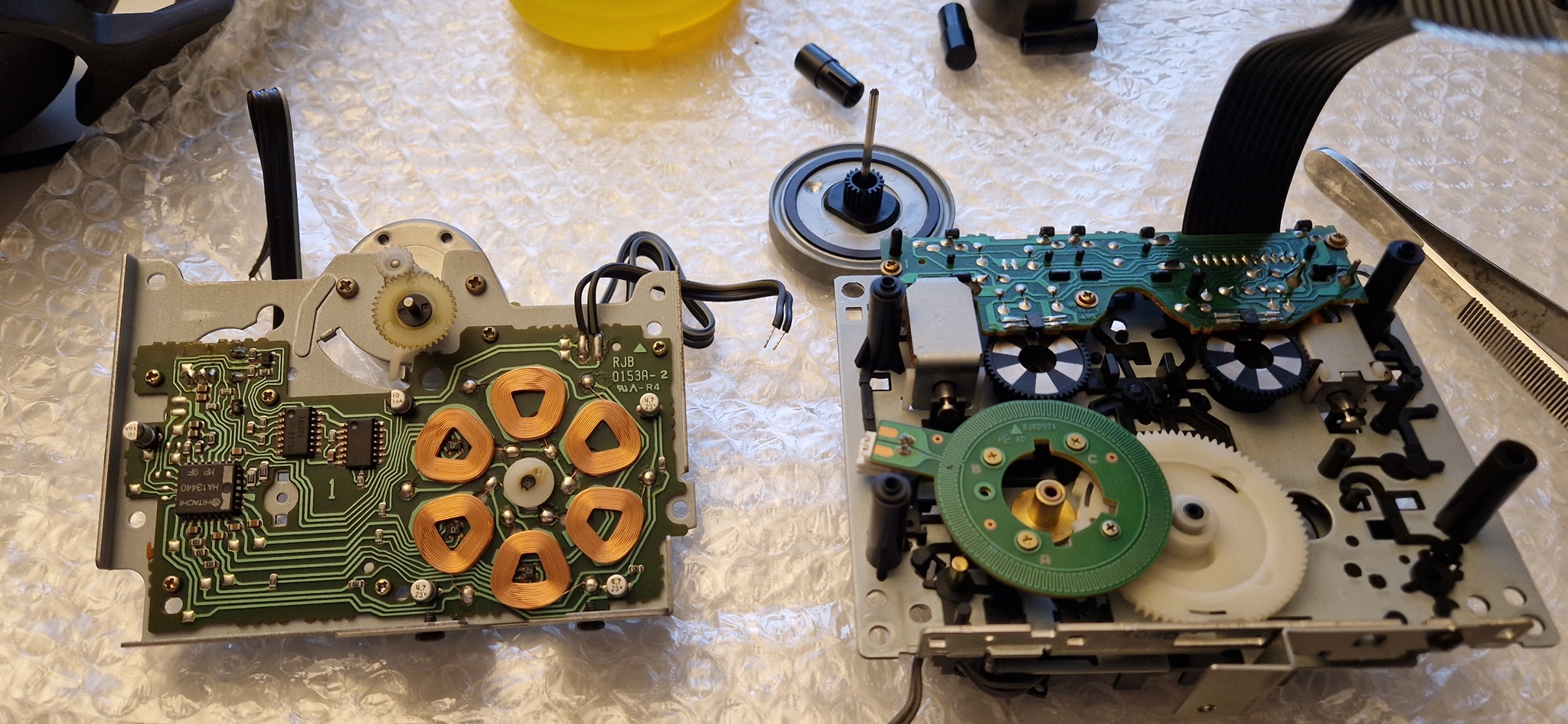
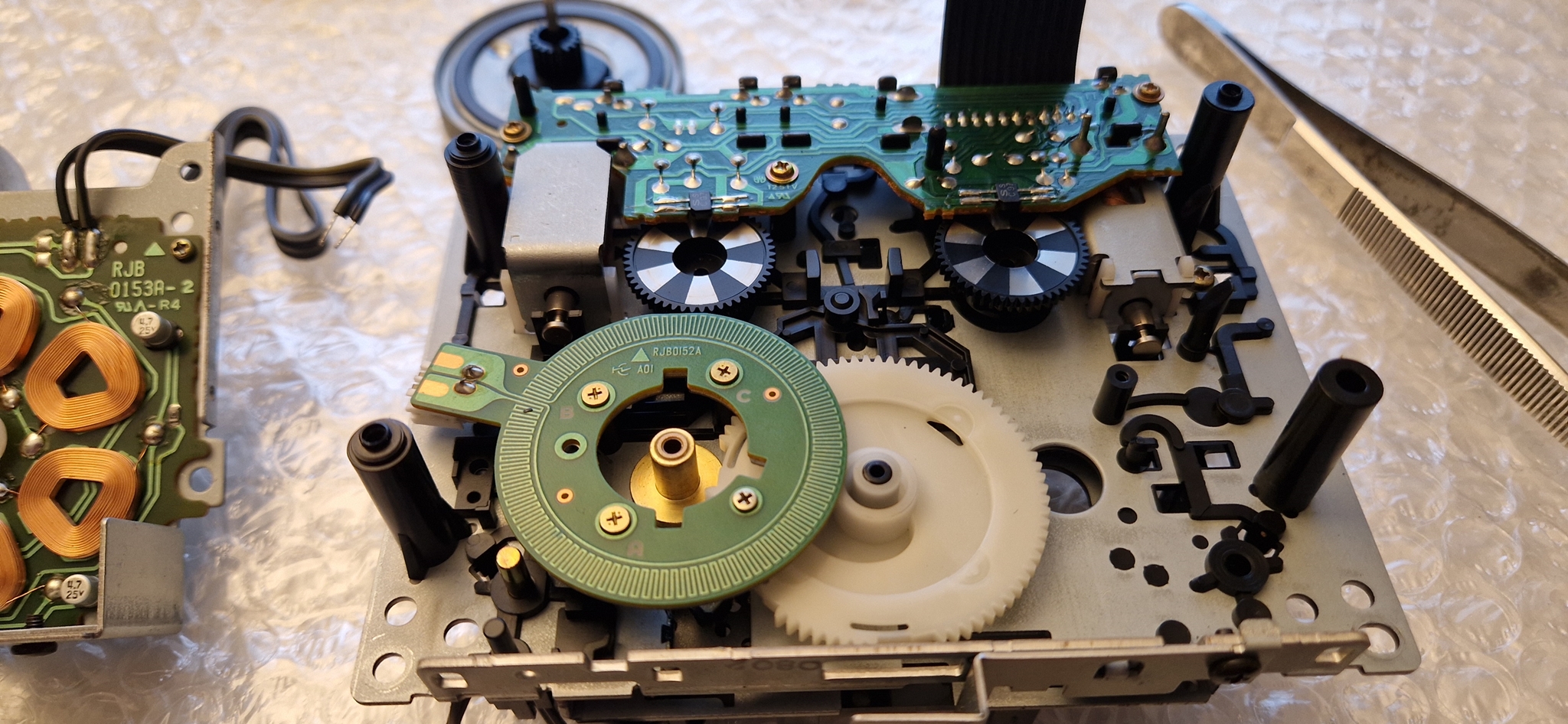
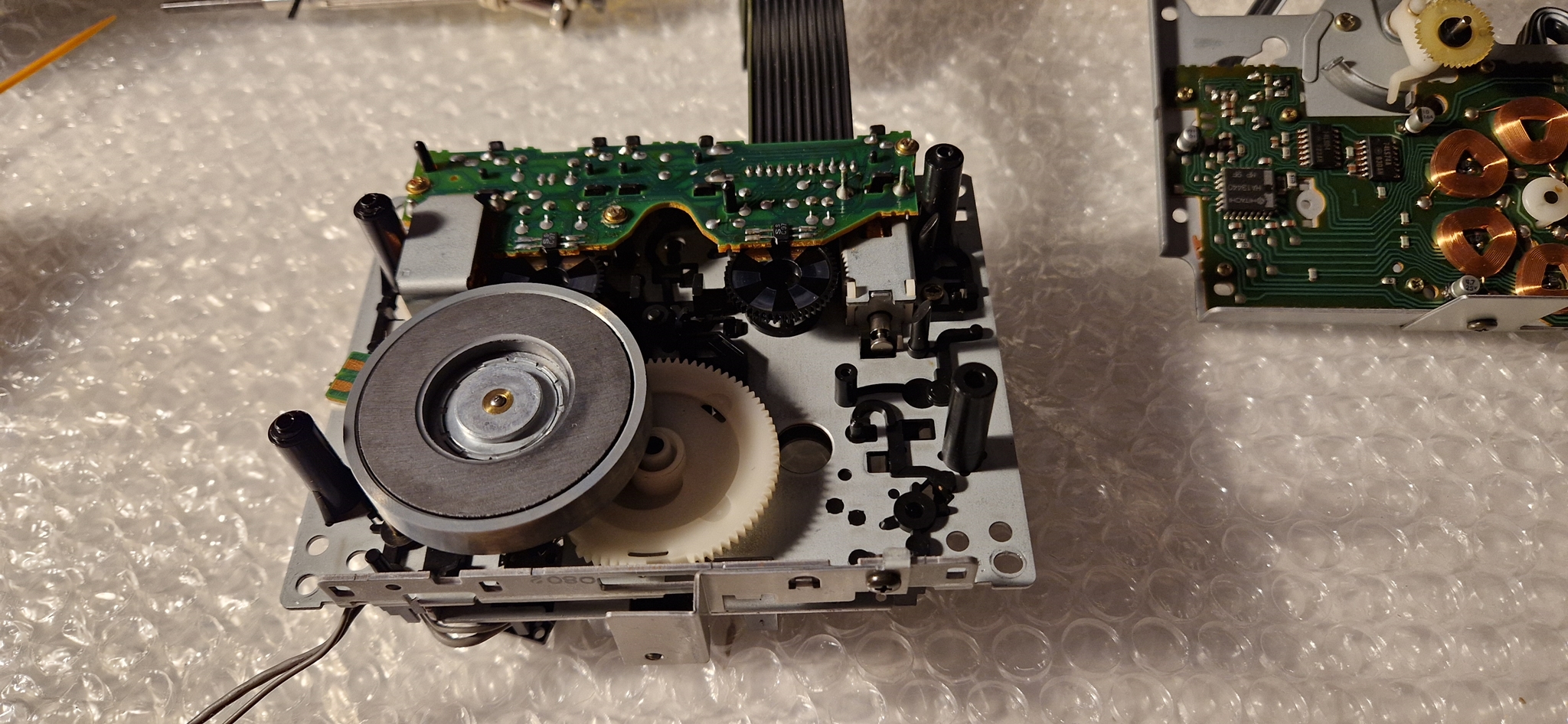
As I mentioned, the RS-B655 mechanism is a rather inexpensive design, but it still features two motors, a cast metal head base, two electromagnets, and a servo gear driven by the main motor. Everything relies on gears, and the only consumable parts are the rubber pinch roller and the brake band rubbers. A joy to maintain.
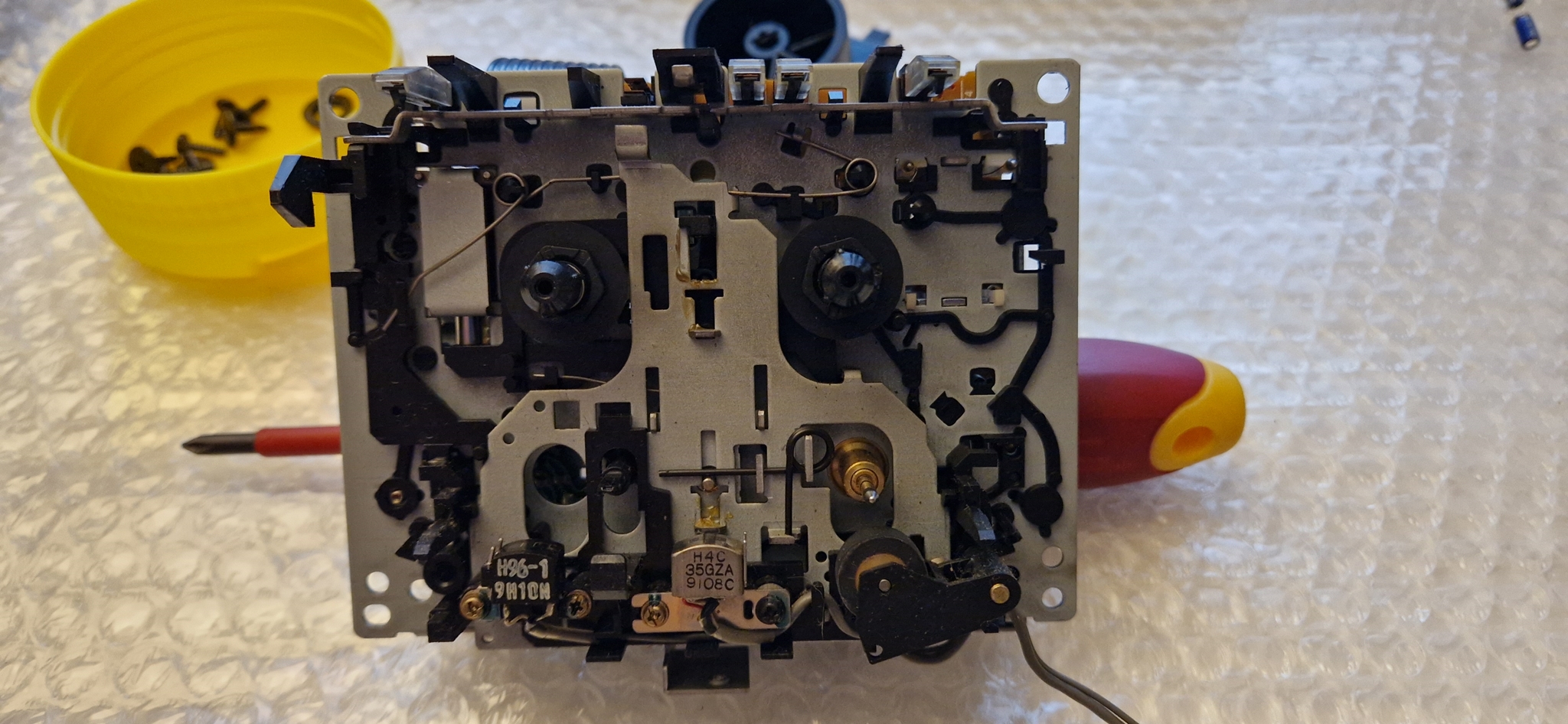
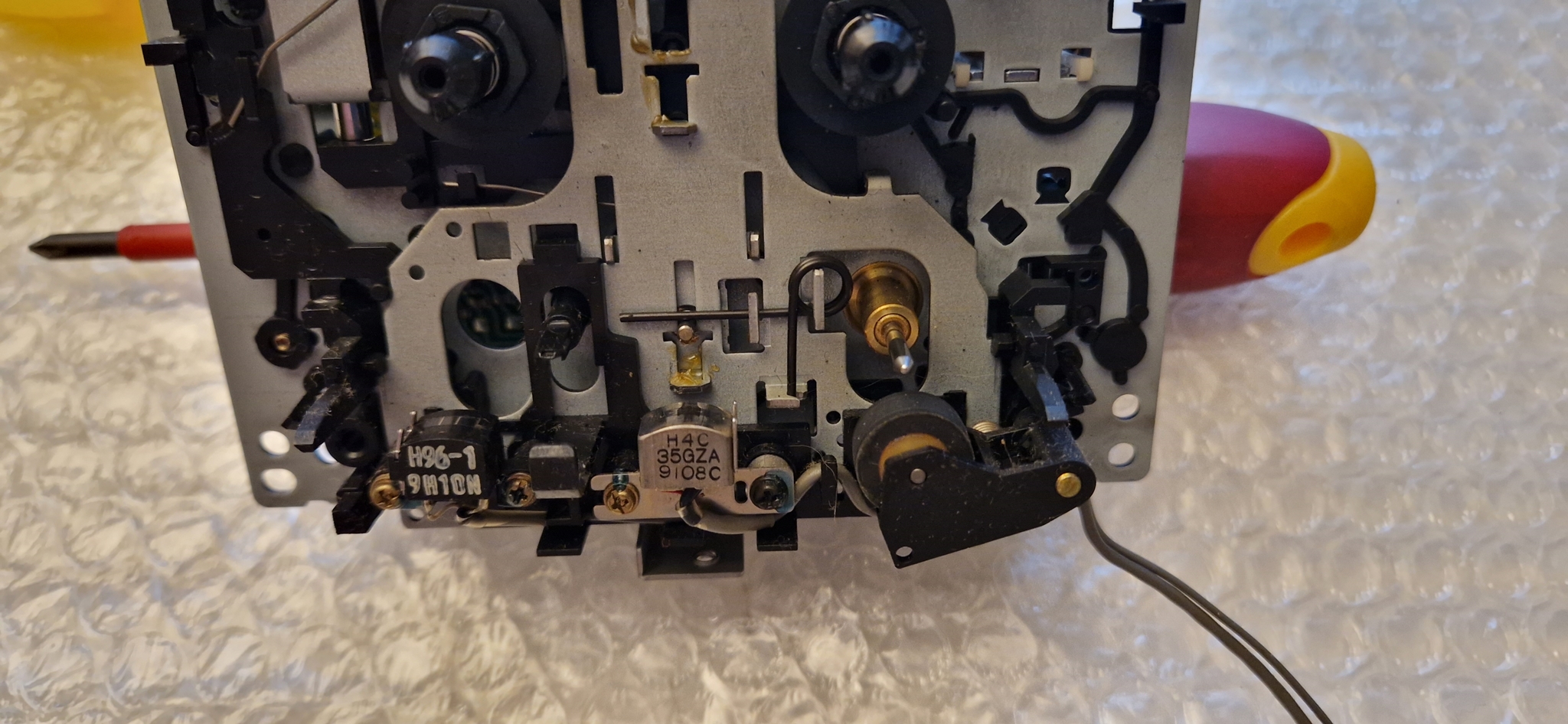
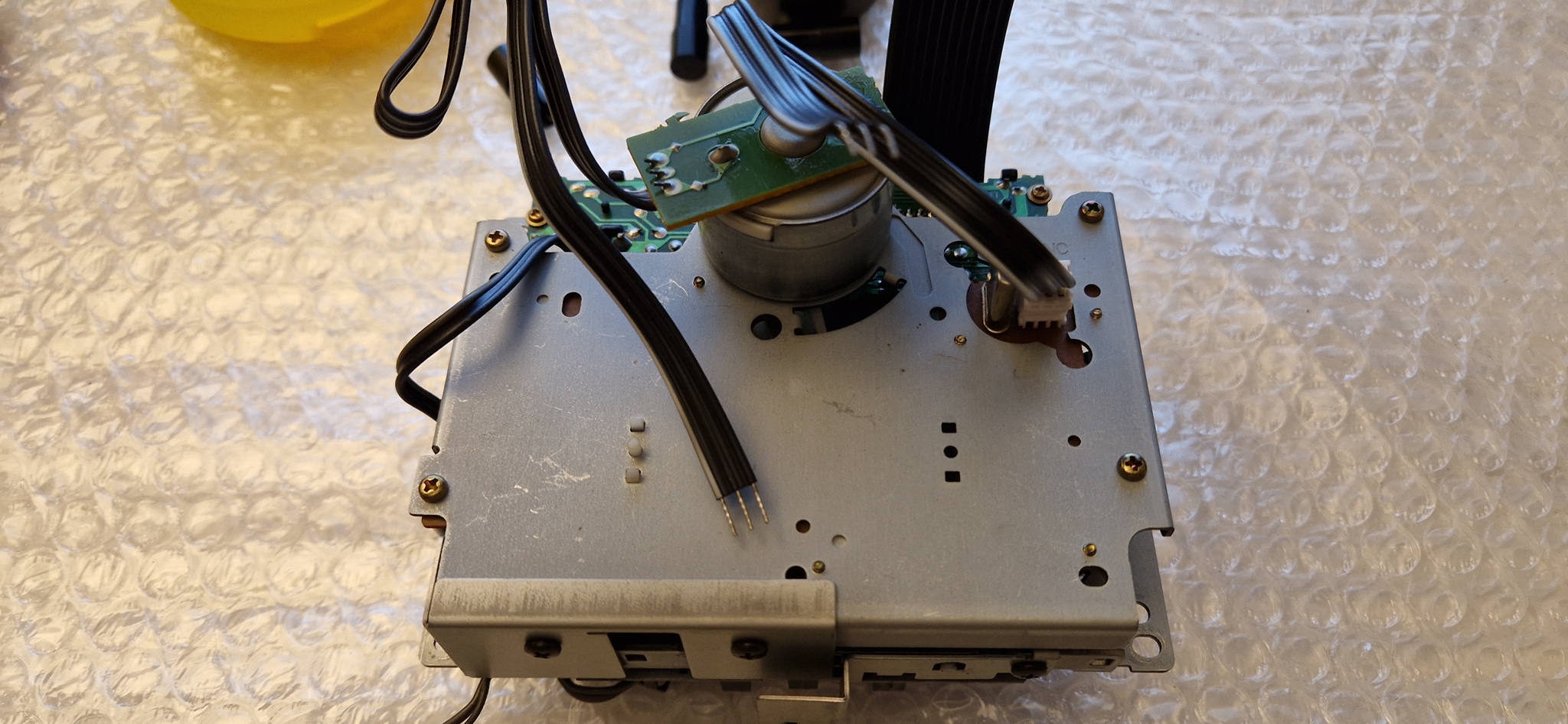
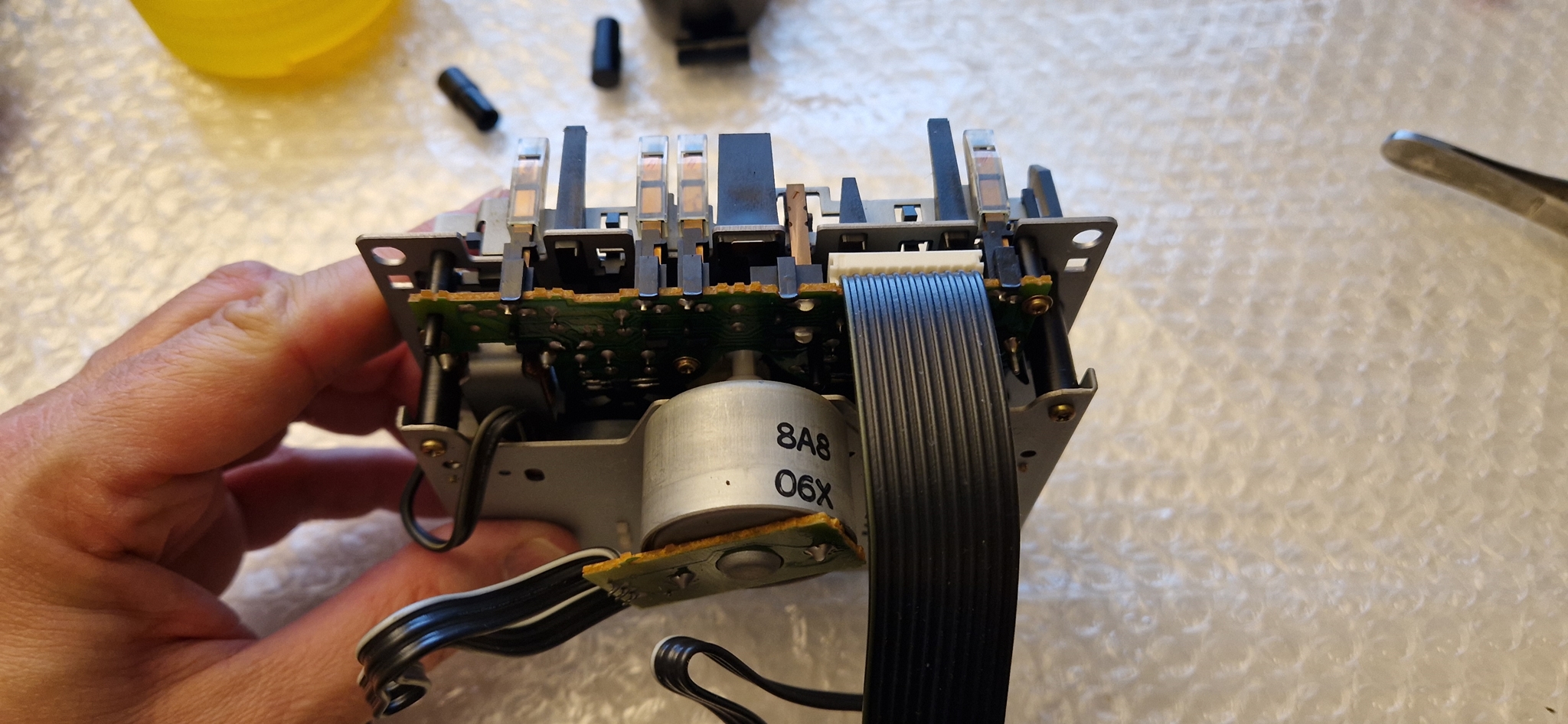
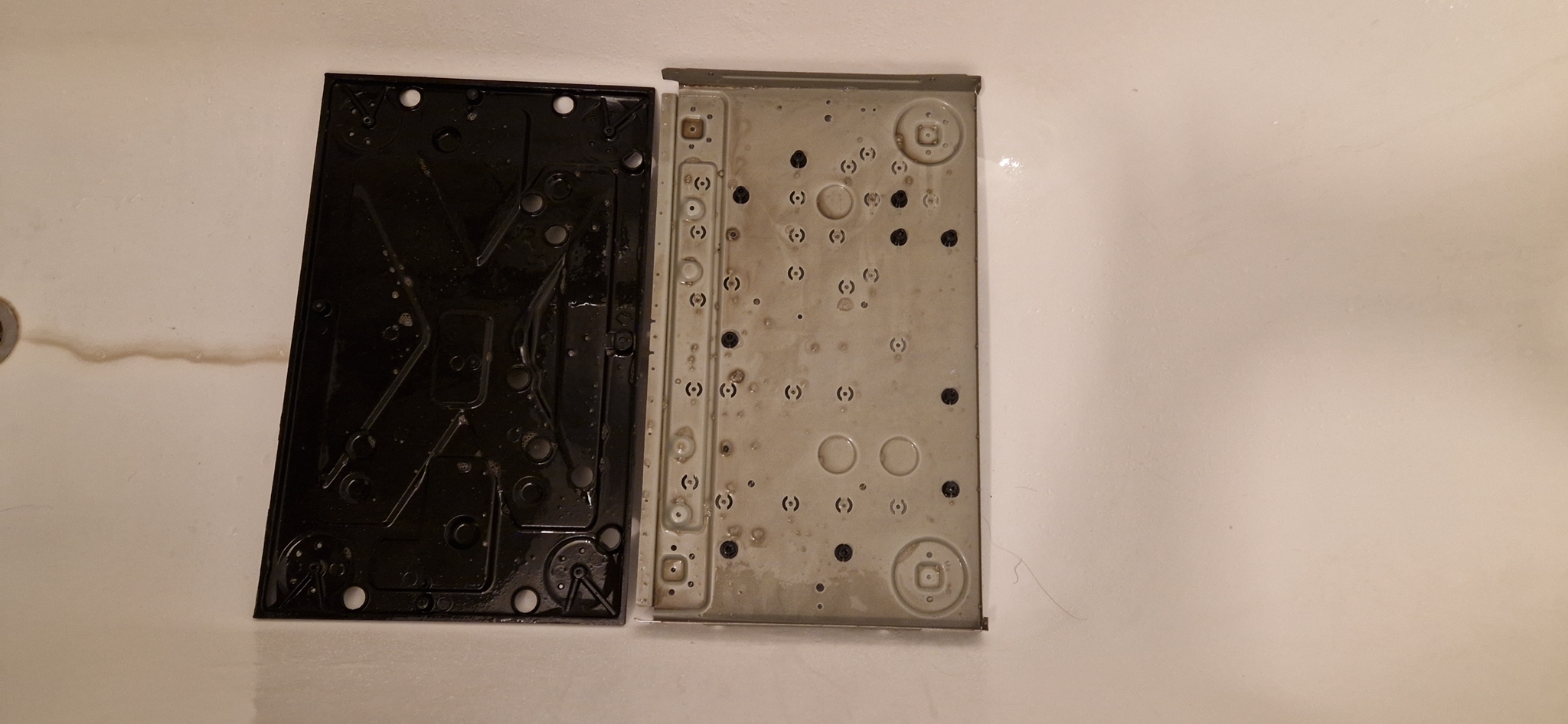
What’s nice is the anti-vibration plate underneath the deck’s chassis. It’s made of some kind of anti-resonant plastic, which was also used in later models of Technics cassette decks. To me, it really seems to dampen the deck’s base and has its practical value.
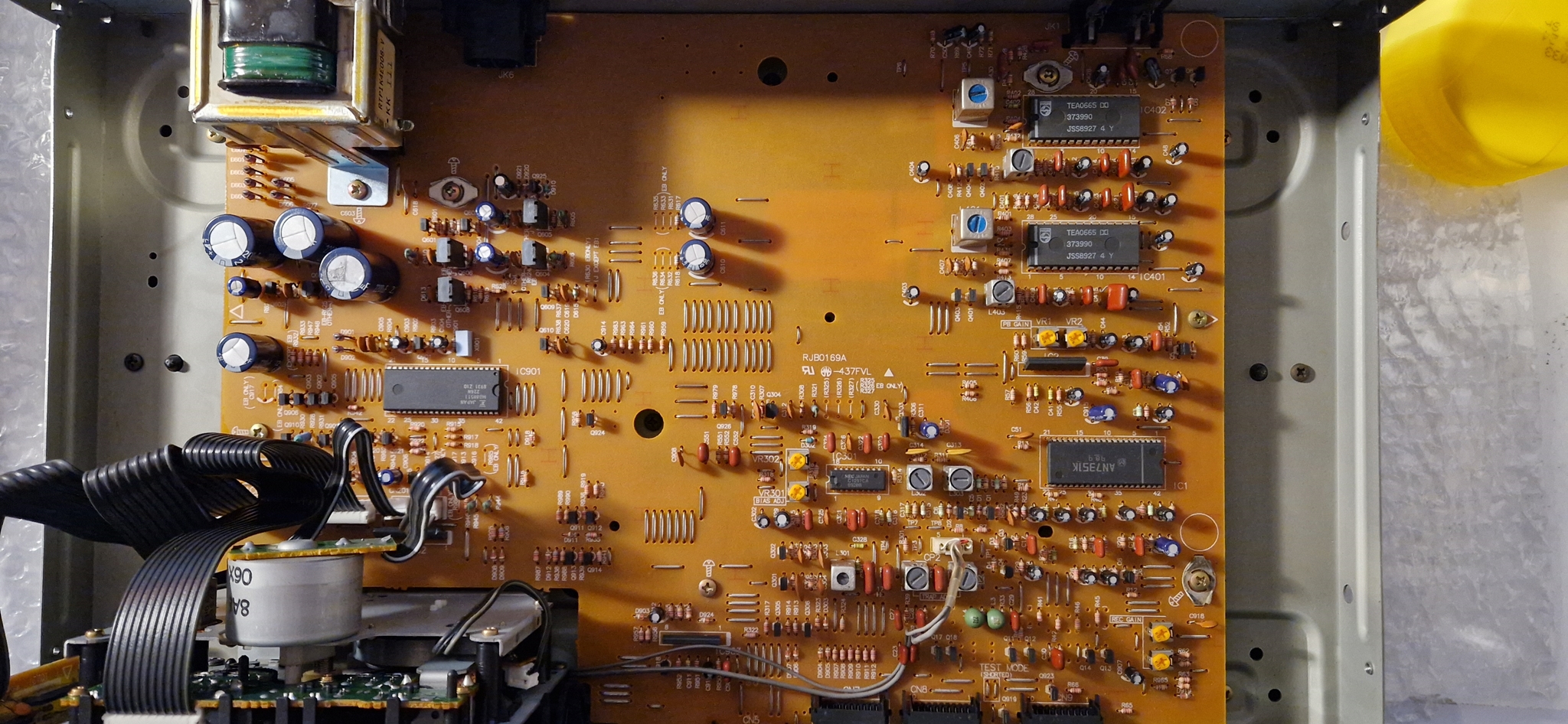
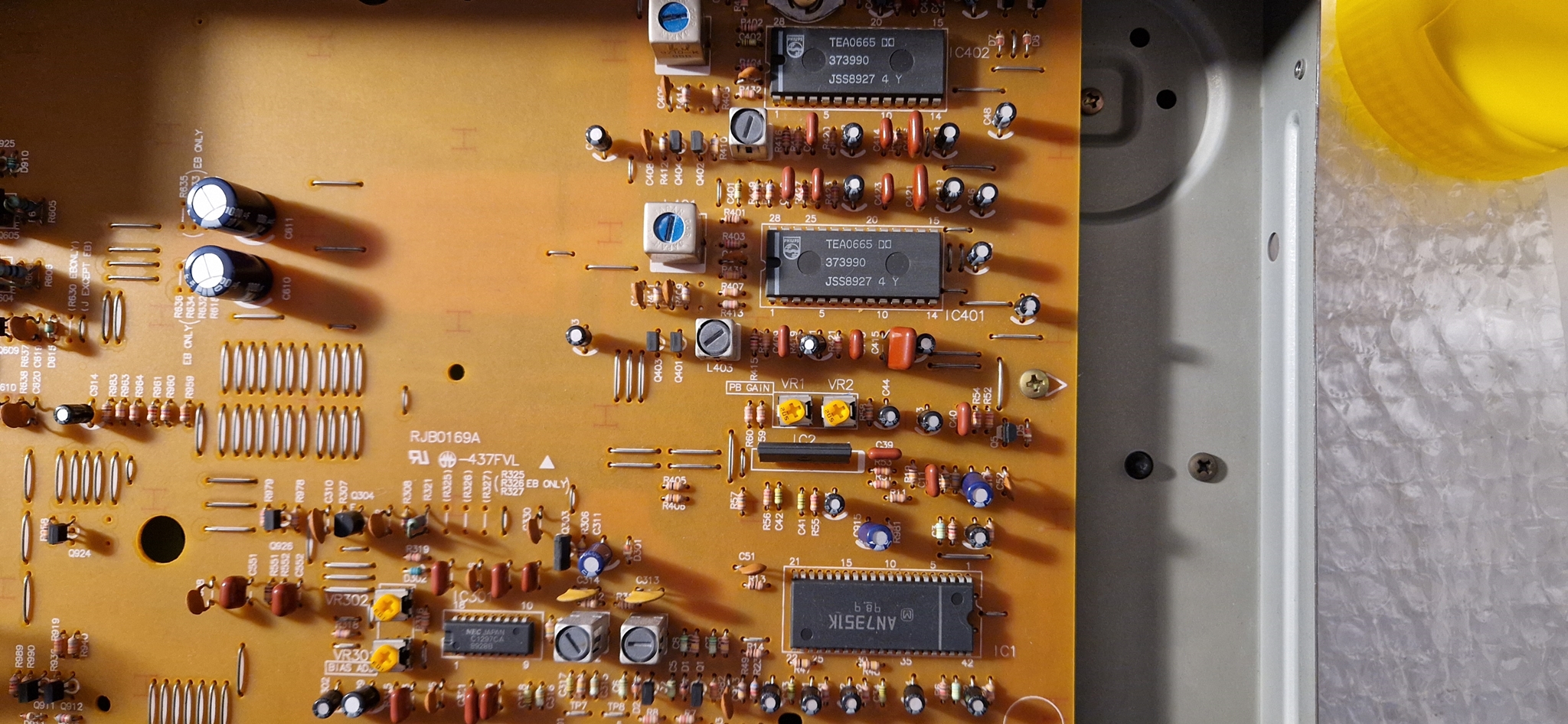
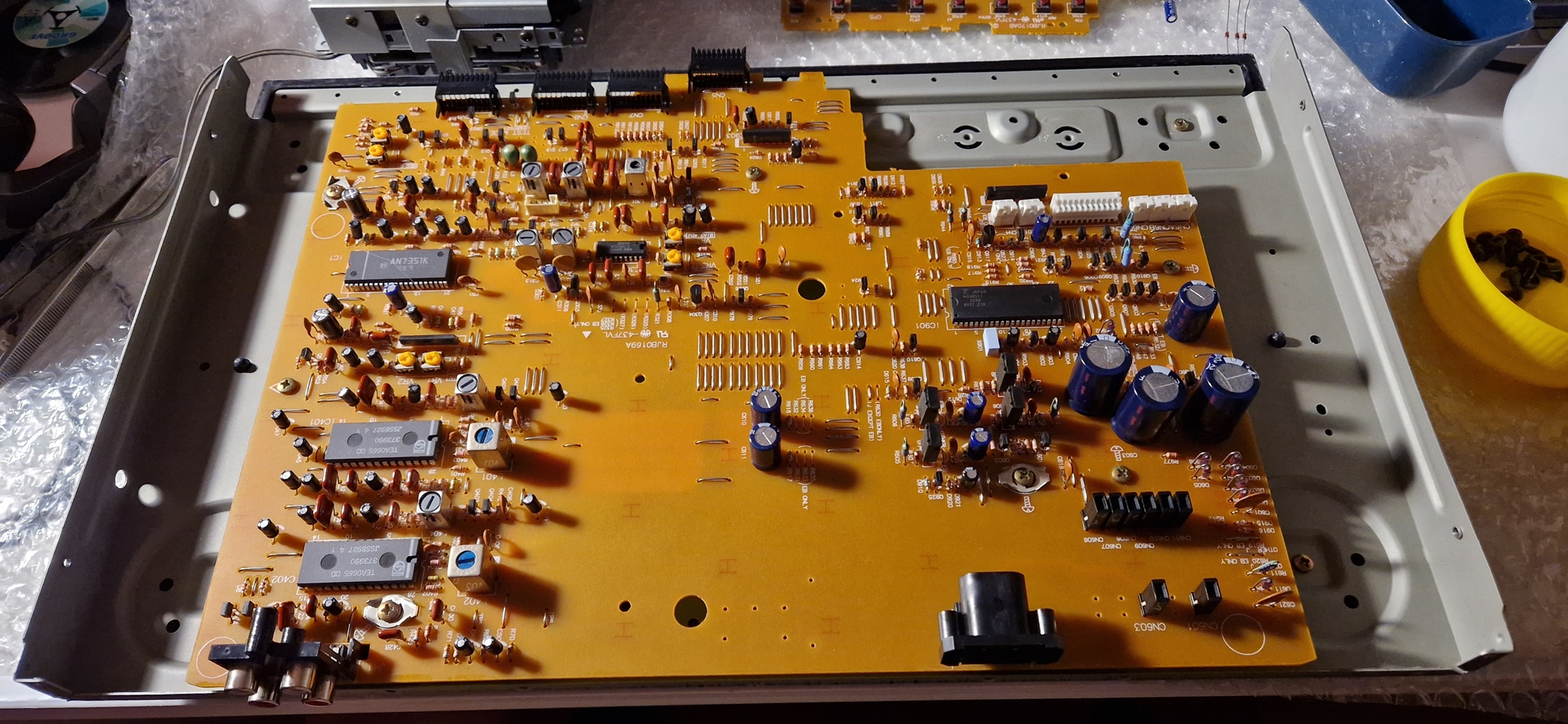
The electronics are based on Matsushita ICs (Technics, Panasonic, National, and Quasar were all brands of this company), specifically designed for cassette decks. Sonically, these ICs weren’t top-tier, but they weren’t bad either—somewhere right in the middle. Thanks to them, the number of components was reduced, making the main circuit board look neat and clean.
By the way, I should mention that the two AI tools I tested (ChatGPT and ClaudeAI) made mistakes when describing the RS-B655. The first one defined it as a three-head deck with a Closed Loop Dual Capstan system (likely confusing it with the RS-B965, as it also claimed it had a DD motor), while the second identified it as an auto-reverse deck. ChatGPT also placed the 655 in the wrong quality class, giving it a class or two higher than it actually belongs. When I pointed out that the information was incorrect, both models apologized and accepted my corrections, making adjustments. However, when I opened a new ChatGPT session, it repeated the exact same mistakes but then charmingly started asking me about my experience with this deck—whether I owned it, listened to cassettes, or recorded them, if I played around with variable bias, etc.—it really felt like talking to an acquaintance.
That being said, this is a harmless example of how AI is not yet quite what it is advertised to be or what people expect—it confidently provides answers that, in this case, contain hallucinations. While most AI-generated responses are excellent, useful, and accurate, you should always maintain a bit of skepticism and try to verify the results using other, non-AI sources, especially for information that is crucial to your inquiry. Apologies for the digression.
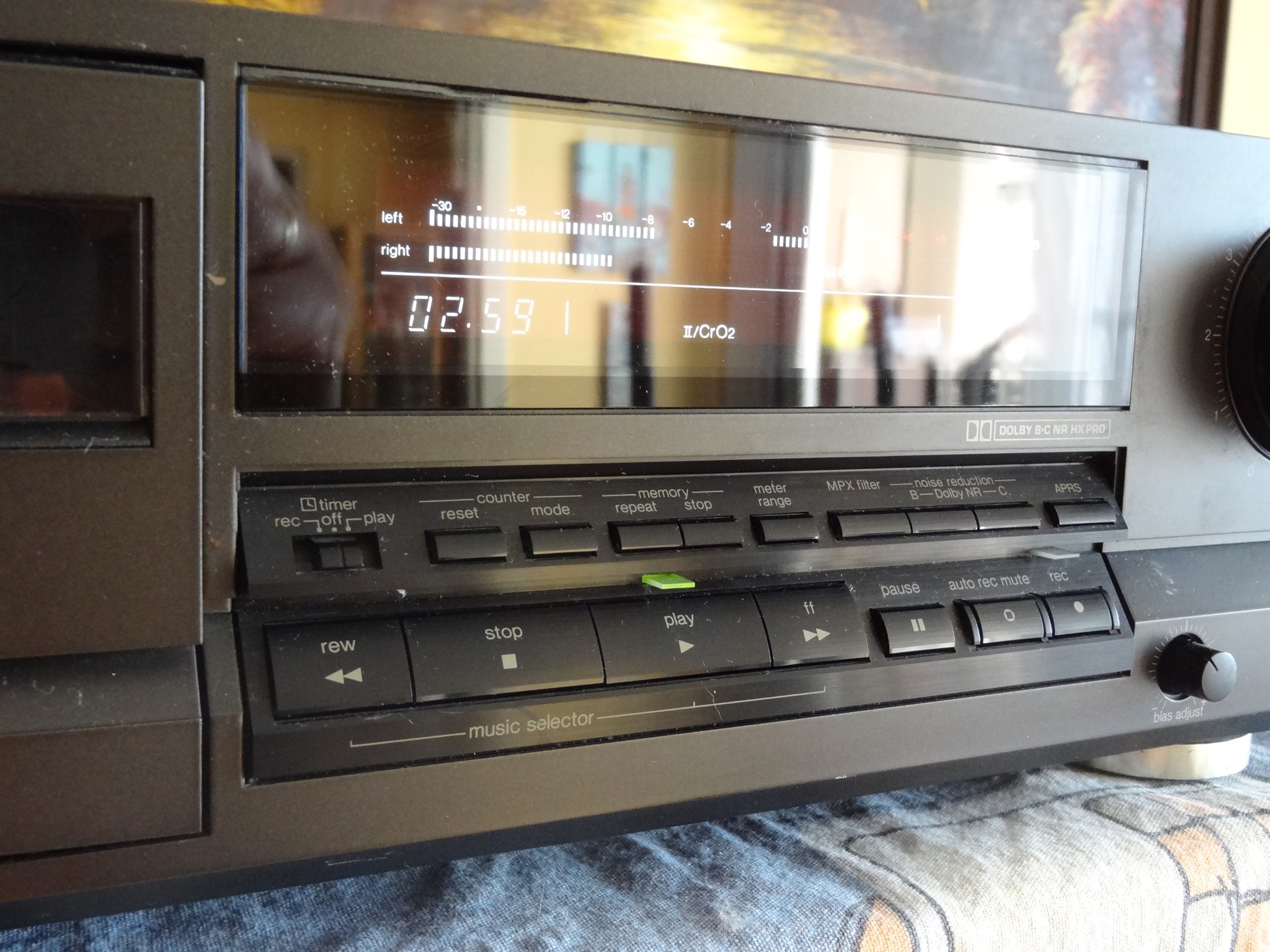
In terms of features, the RS-B655 is quite well-equipped: it has a counter with two modes—pseudo-real-time and a classic digital mode. The latter is not highly accurate, as it traces its roots back to old RS-M models (such as the 280), and it features three digits and a rotating dash instead of four digits, which would have been more convenient.
The peak meters and display are excellent, something Technics has always been known and appreciated for. The peak hold function works flawlessly, and the meters themselves are very fast—both in reaching peak levels and in turning off after the signal level drops.
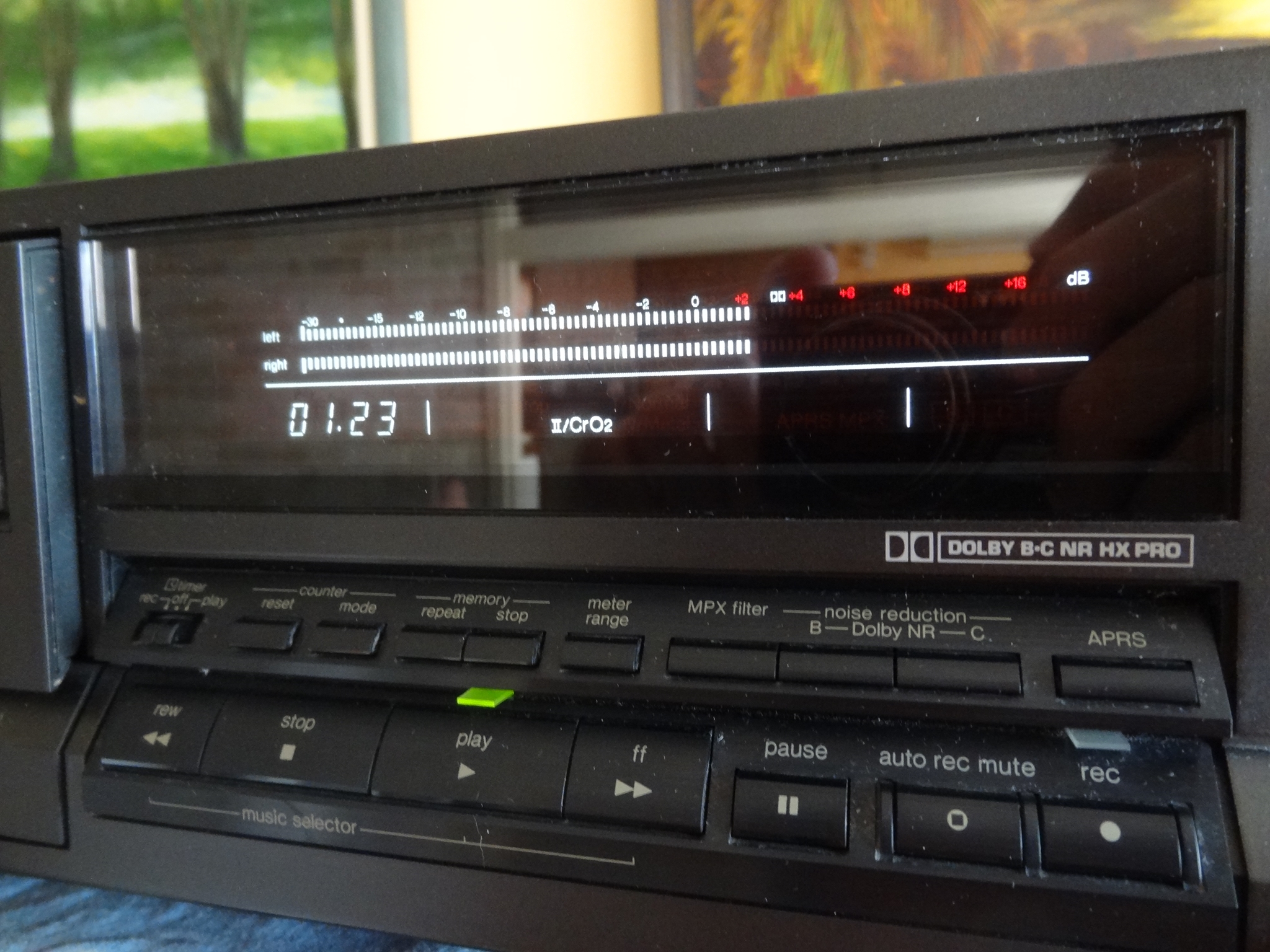
An additional useful feature is APRS (Advanced Precise Recording System), which helps determine the optimal recording level. It works by previewing a selected music segment, where the peak levels are held at the highest achieved value. Then, using the recording level potentiometer, the levels are adjusted to the optimal maximum value (e.g., +3 dB). A similar system was also implemented in the Akai DX-49 deck.
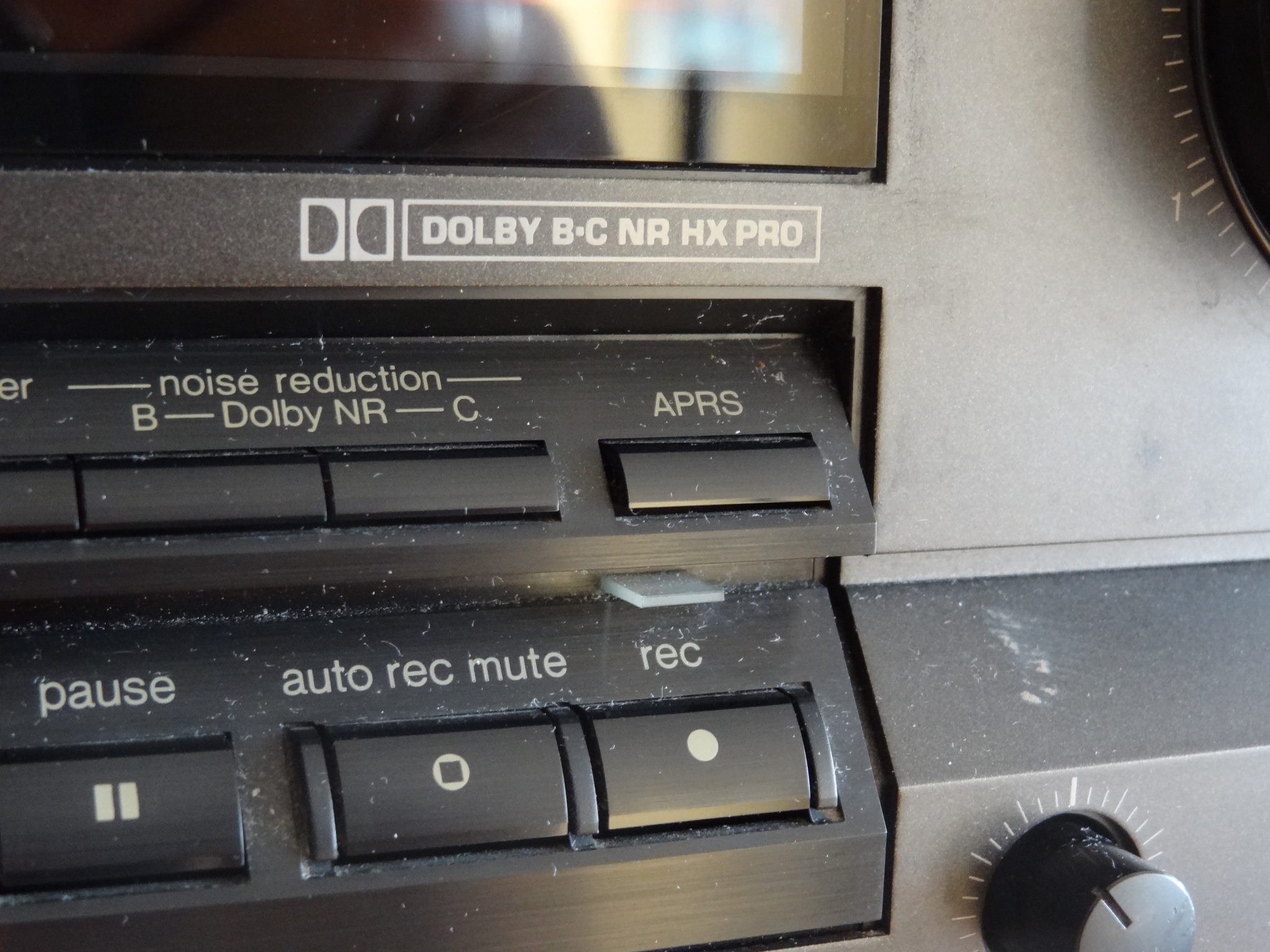
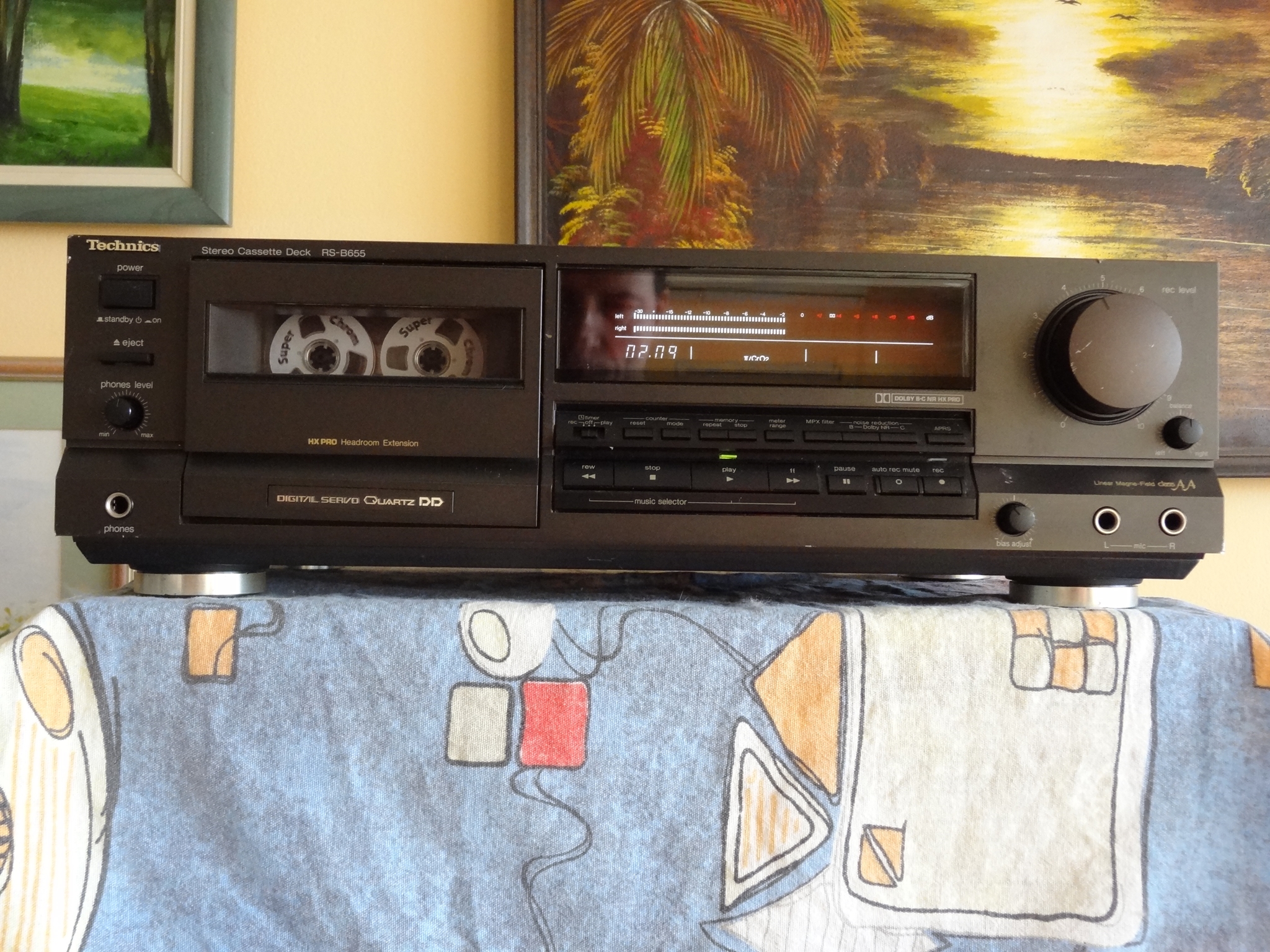
The recording level potentiometer is large and provides a pleasant feel under the fingers. The deck also features variable bias, though there are no additional tools for calibration.
A convenient feature is that the display and peak meter allow for range adjustment, where you can select one of two ranges (xxx specify). The peak meters work beautifully, as Technics has always been known for having some of the most elegant displays and meters in the industry—just think of the various models from the mid-1980s.
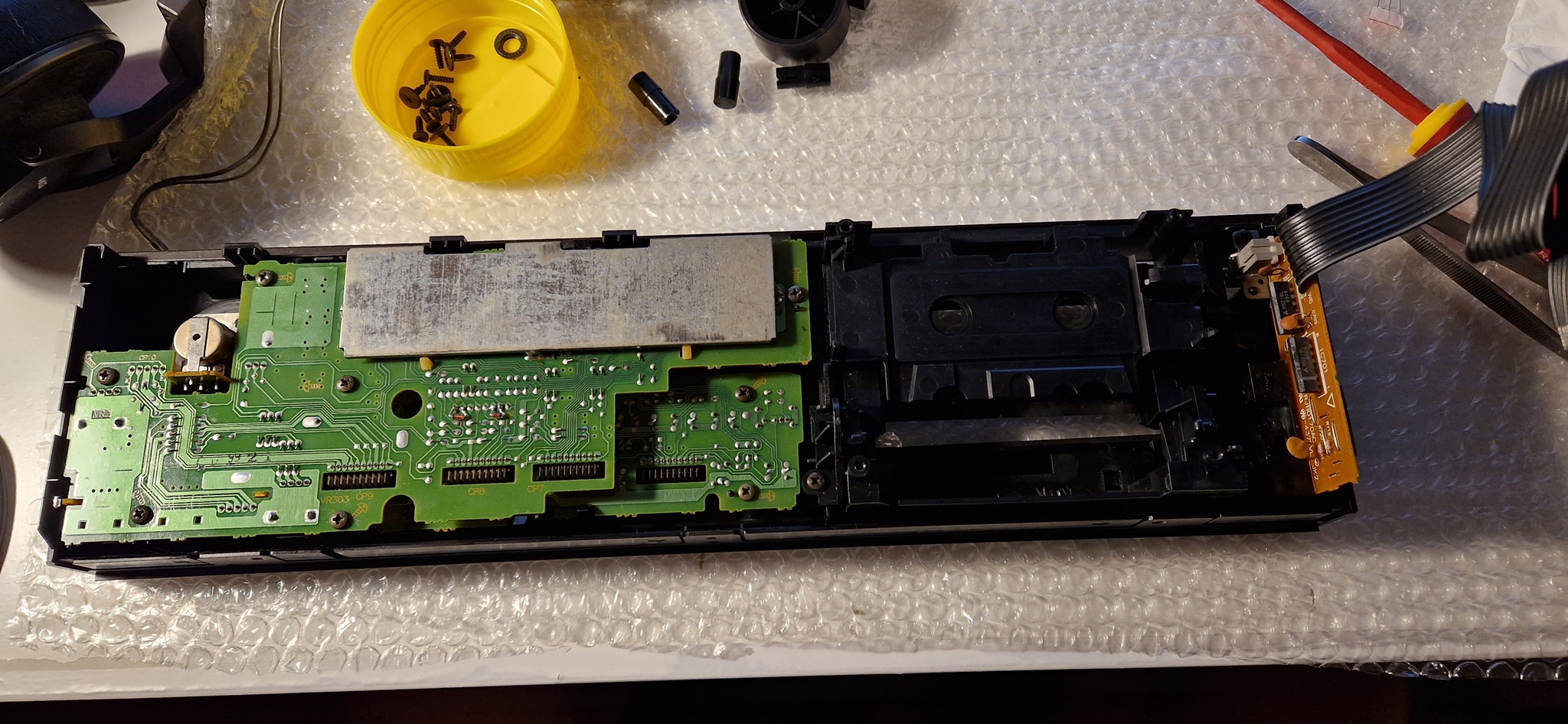
One drawback is that the cassette compartment is not illuminated, making it difficult to see the tape position in low-light conditions. However, with today’s various LED solutions, this can be relatively easily fixed for those who like to tinker.
Although they require minimal maintenance, RS-B655/665/755/765 decks, as well as the lower-tier 555/565 models, are not immune to specific failures. One of the more common issues is a partial failure of the gear on the rewind/fast-forward motor—a crack can form, causing increased play between certain teeth, which leads to excessive noise during operation, especially when rewinding.
This can be fixed by gluing and modifying the gear, but if the degradation continues, the only solution is to buy a new one—which is available on the market.
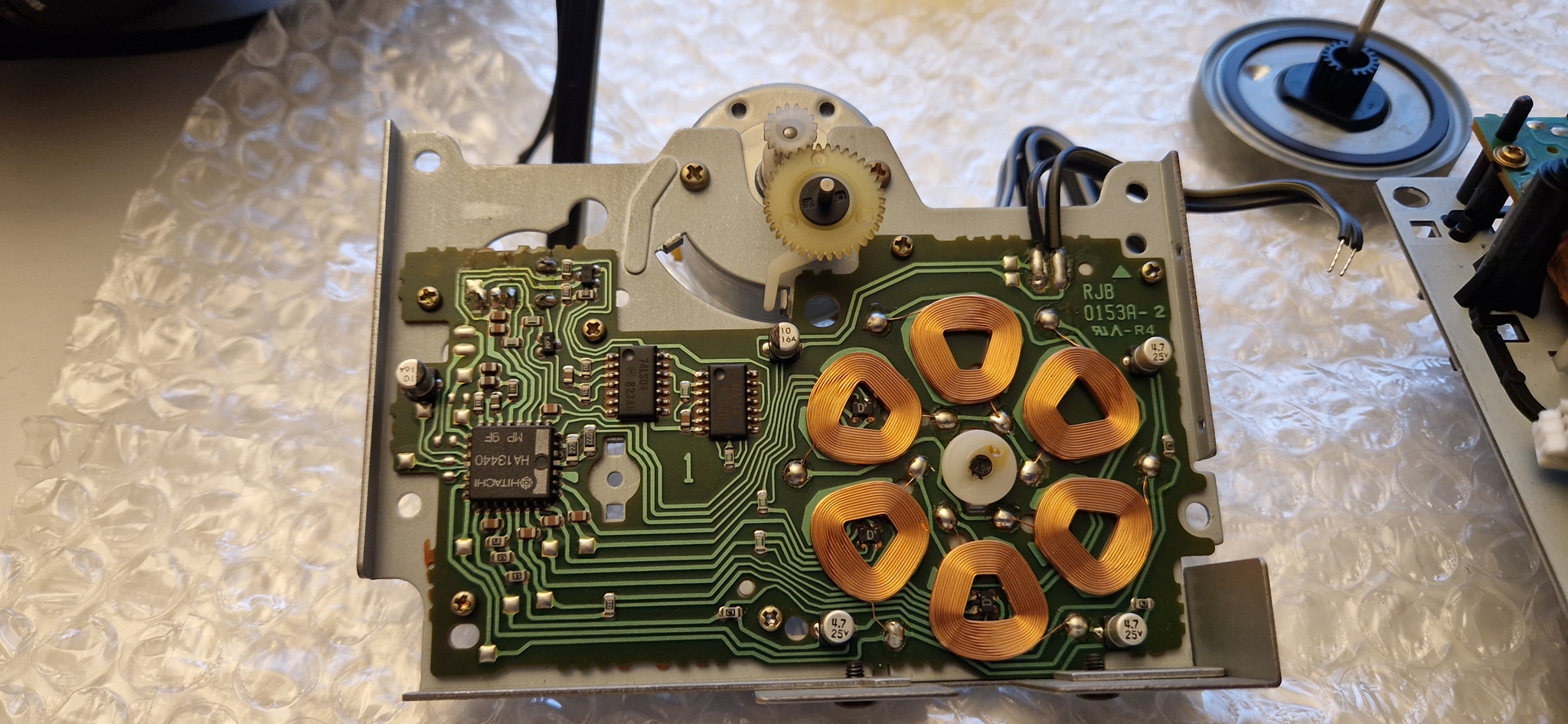
In the image above, you can see a few SMD electrolytic capacitors. I haven’t replaced them because I’ve never encountered a DD motor in this type of ALPS mechanism that failed due to them (unlike in TASCAM and JVC decks).
Another common issue is the deck reacting chaotically to front panel commands—pressing the stop button might start rewinding, the play button might trigger recording, the rewind button could activate pause, and so on.
This happens because most of the buttons are wired in a serial chain and function as a series resistor. The processor determines which command was pressed by reading the resistance at a specific pin. When the buttons develop oxidation or patina, their resistance changes, causing the processor to misinterpret commands.
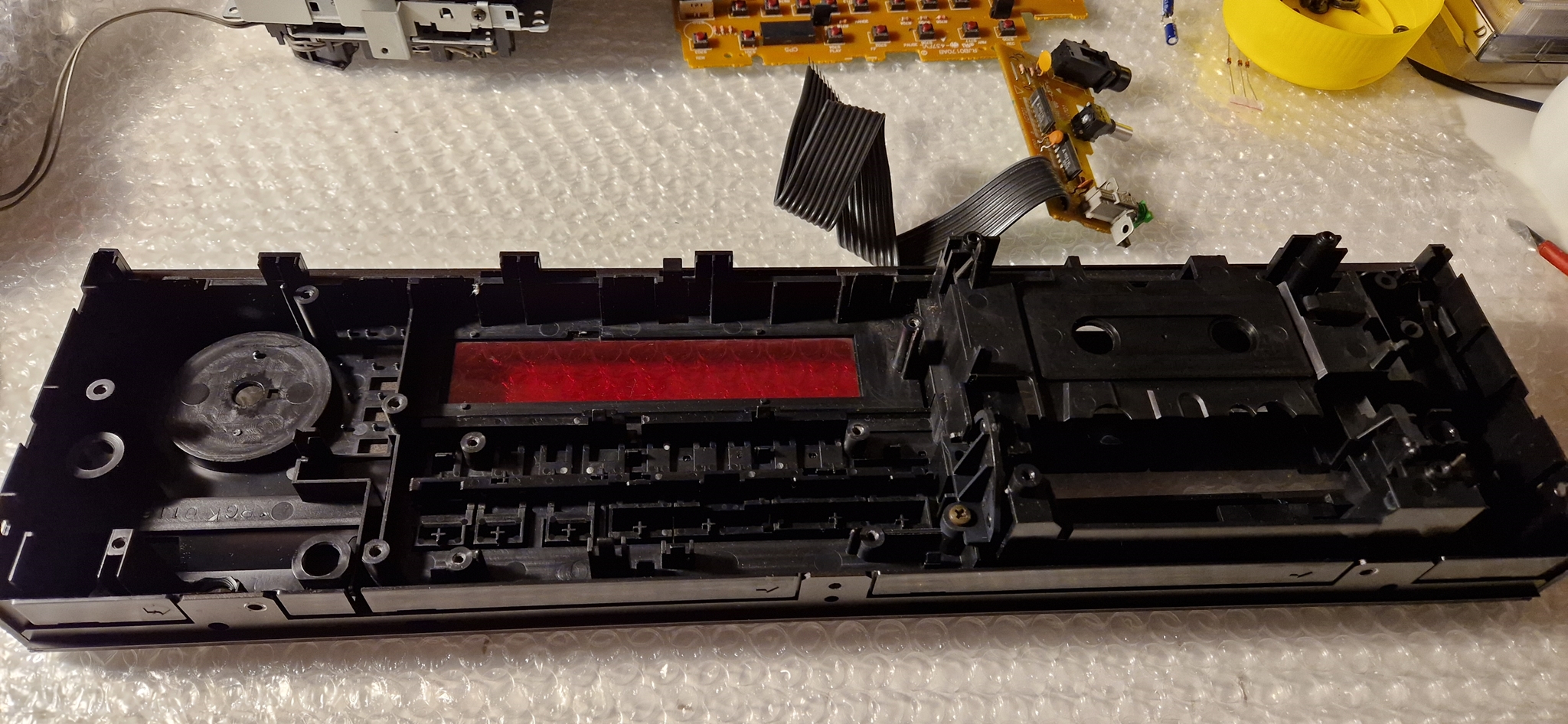
The only real solution to this is to replace all the front panel buttons—ideally, all of them. It’s a bit of a bigger job, but it’s the only long-term fix.
When I disassembled the deck, my initial impression turned out to be correct—judging by the heads and pinch roller, the RS-B655 had very little usage. The pinch roller was in such good condition that it really wasn’t time to replace it yet.
However, the device was quite dusty—or rather, it was filled with smog more than dust, requiring a thorough disassembly and cleaning.
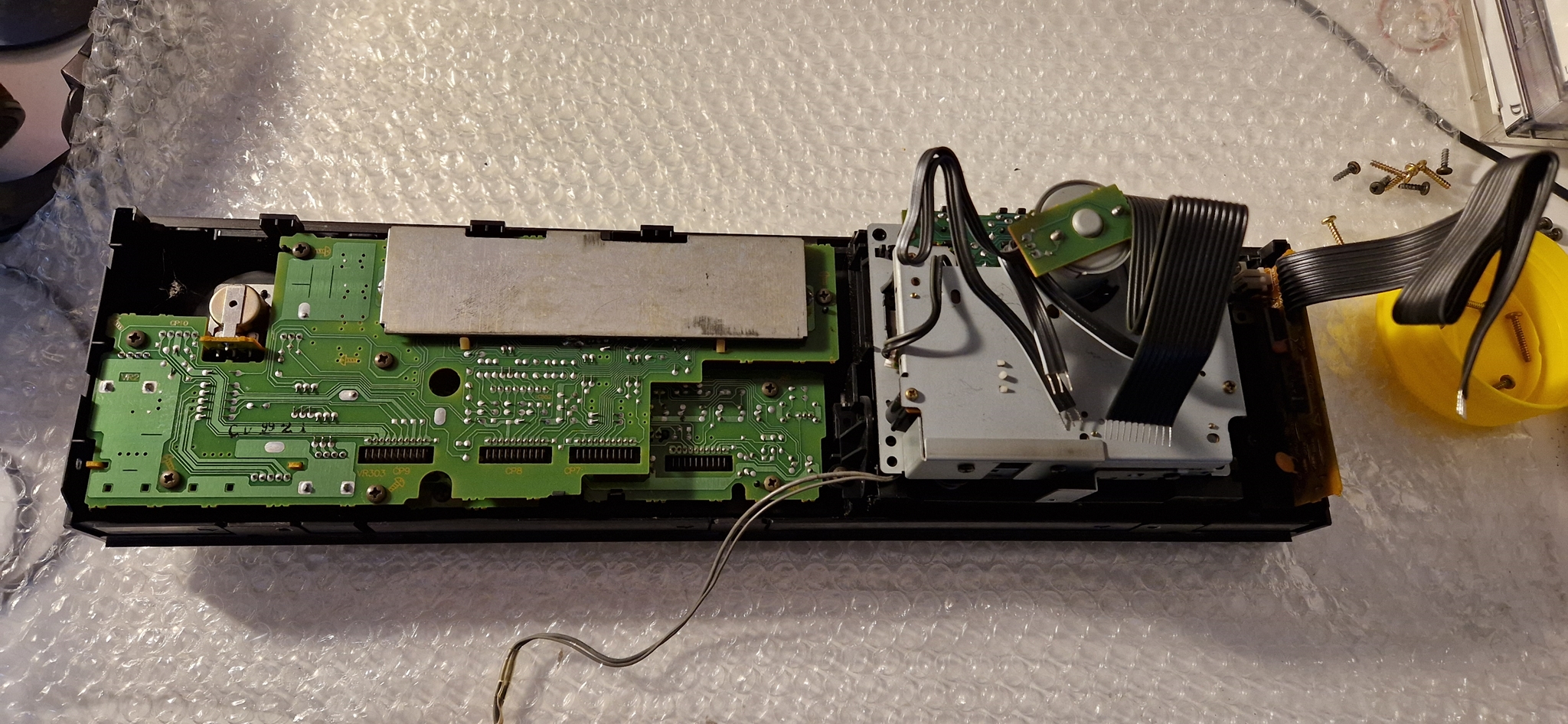
I partially disassembled the transport, cleaned it, lubricated the DD motor’s flywheel, the roller holder, and its shaft. The rest of the deck was fully disassembled and thoroughly washed, including the main circuit board. The vertical boards (headphone amplifier, display board, and control button board) were only cleaned, not washed.
In its unmodified state, the Technics RS-B655 sounds pseudo-neutral… I will explain this term later. The sound image is well-defined, with good detail both when playing recordings made on other decks and its own. The high frequencies are non-aggressive, and the HX Pro circuit does a solid job, although sibilants and the upper extremes can sometimes sound a bit artificial. The dynamics are solid, but they could be better.
All of this would be quite acceptable for a cassette deck in this price range, if it weren’t for the bass: it’s overblown like a big balloon, somewhat spilling into the mid-bass region, encroaching where it shouldn’t, but on the other hand, it has a clear limit and doesn’t go deep enough or with enough detail, not even for a deck in a lower class than the RS-B655. In addition, it lacks definition. It reminds me of some of the more modern Bluetooth and wired headphones that you can only listen to with heavily modified tone controls, so the poor bass doesn’t completely ruin the experience. However, the situation with the Technics deck is still better.
For listeners who do not have audiophile pretensions, for those with small speakers that lack bass and don’t mind that the low-end frequencies are hidden and out of reach for their system, the RS-B655 might be the perfect deck. But for the sensitive ear, this is unacceptable because it takes the life out of the music you’re listening to.
I may be too harsh on poor Technics, considering that I’ve had the chance to experience many top-tier decks, so my standards are quite high. The RS-B655 isn’t bad; it’s a mid-range deck and sounds like one—as I mentioned before, Technics has always been a brand where you get “as much money, as much music”, so the 655 is no exception. To be clear, even the famous RS-B965 has its flaws (especially in the bass), so it’s not surprising that the RS-B655 is similar in this regard.
I was curious to see how the RS-B655 would fare in a showdown against another dual-head deck—the Harman/Kardon TD-4500, which is from the same period but cost more than twice as much.
But, this is not the end of the story…
To be honest, I wouldn’t have known about the modification of some decks from this series if it weren’t for my friend Csaba from Senta, who pointed it out to me and implemented it on one unit, then shared his experience with me regarding the sound. Thank you, Csaba! The modification itself is partially based on one proposed by Alex Nikitin, former head of development at Creek, now better known as ANT Audio, while the second part (replacing the electrolytic capacitors) is Csaba’s original idea.
The modification consists of two parts. Of course, it can be taken further, by changing the operational amplifiers, then the 4066 circuit, and so on, but I decided to stick with the basic version that Csaba suggested.
So, the modification includes the following steps:
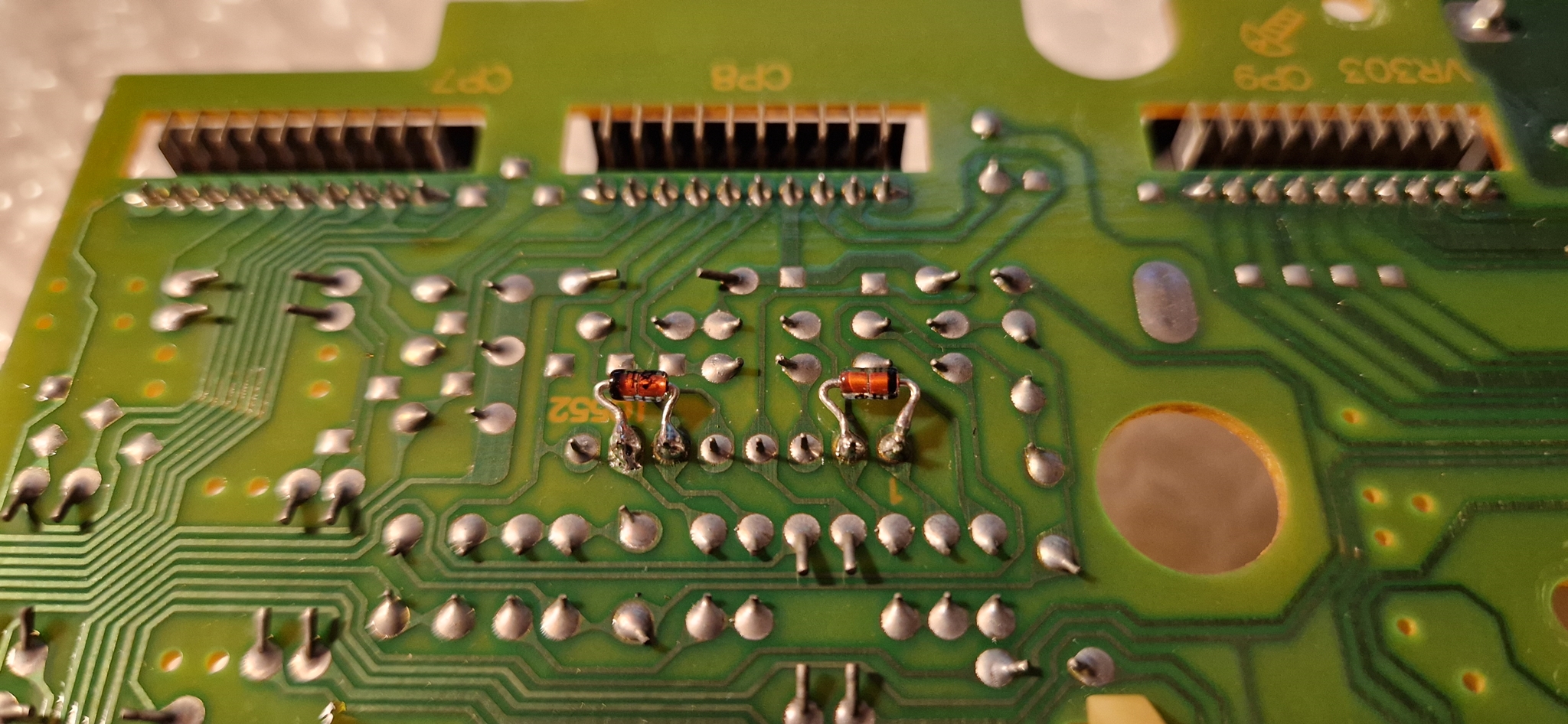
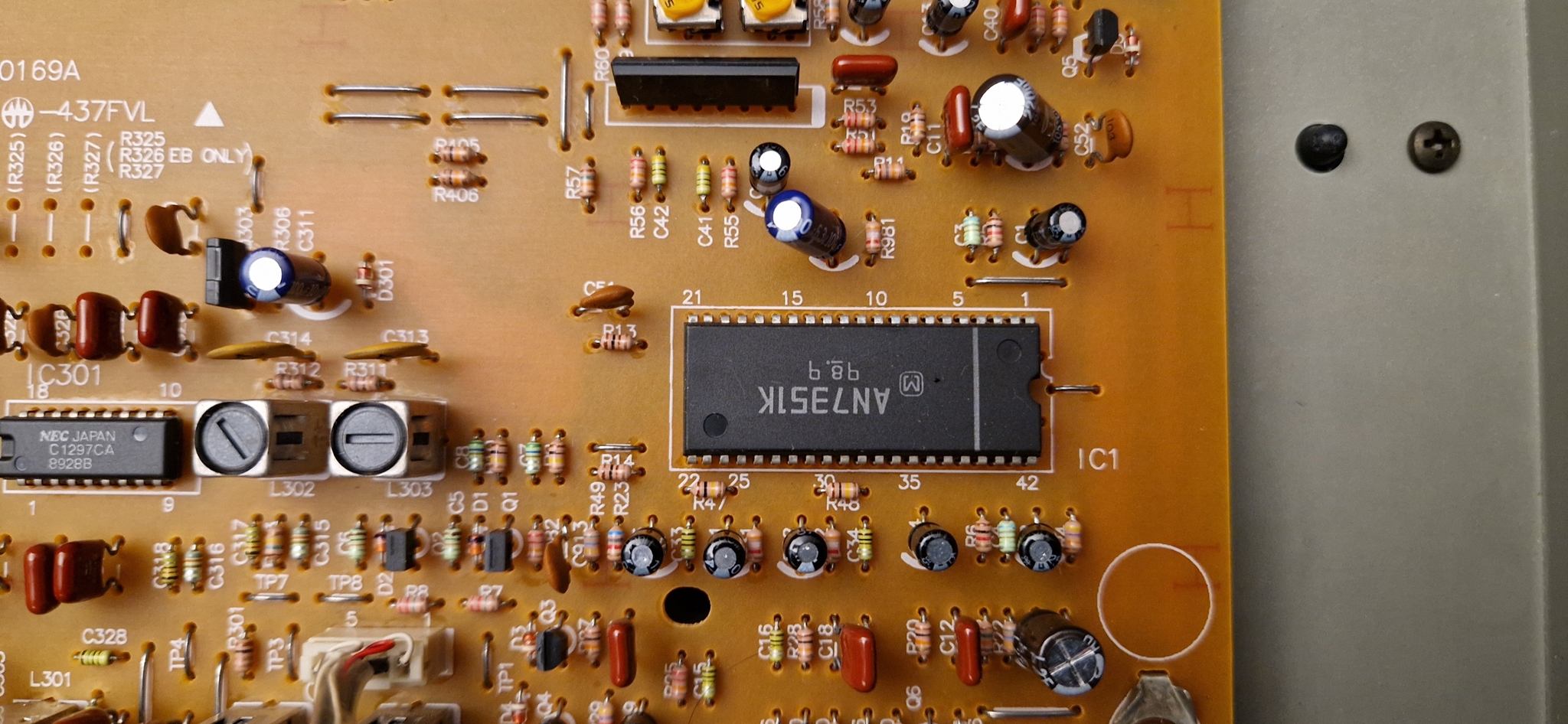
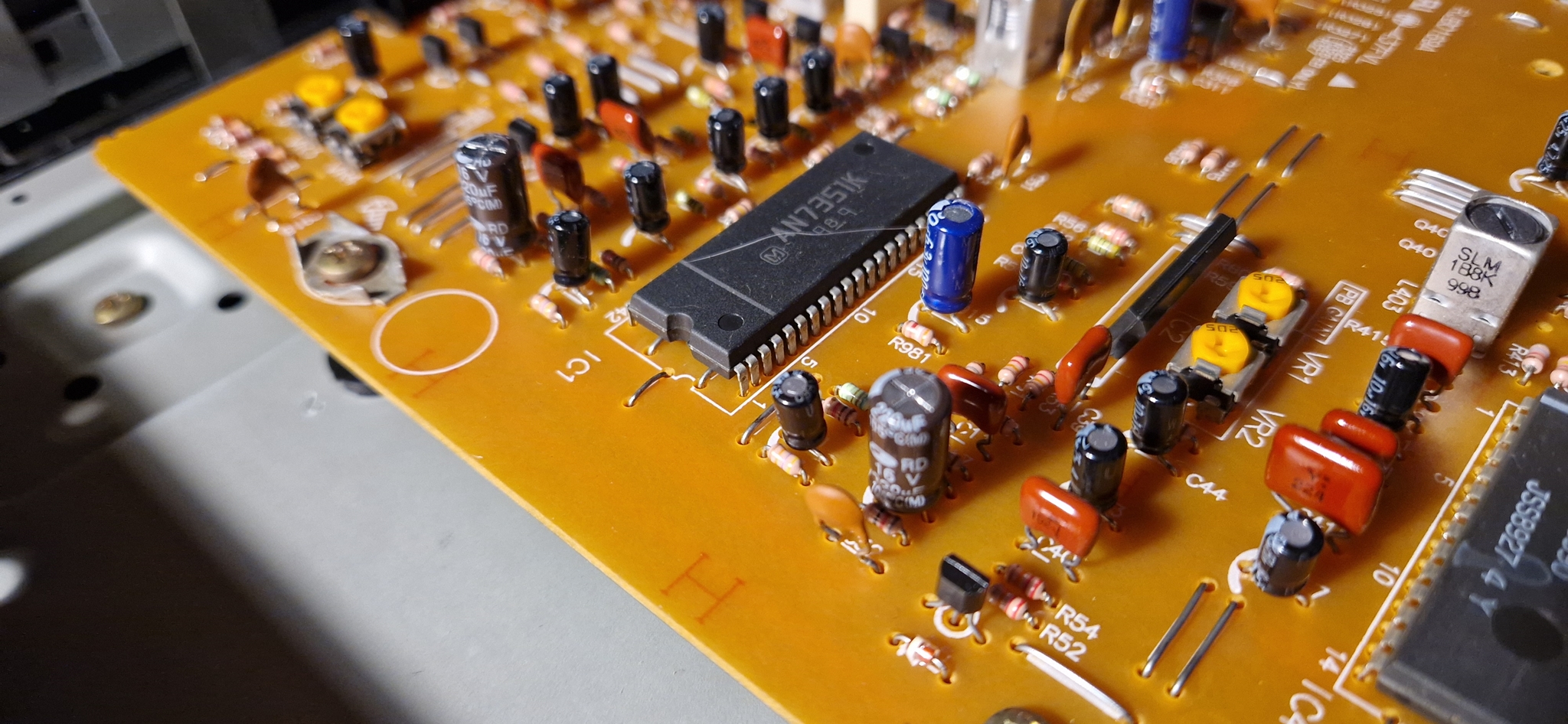
And that’s it—simple, right?
After the modification, the difference in sound is immediately noticeable. The bass is no longer “balloon-like” and, at least for me, irritating; it’s now firmer, tighter, and somewhat punchier, instead of being too soft and diffuse. Although it still doesn’t reach the very bottom, this is now a completely different story, and the deck sounds like a different model compared to before the modification.
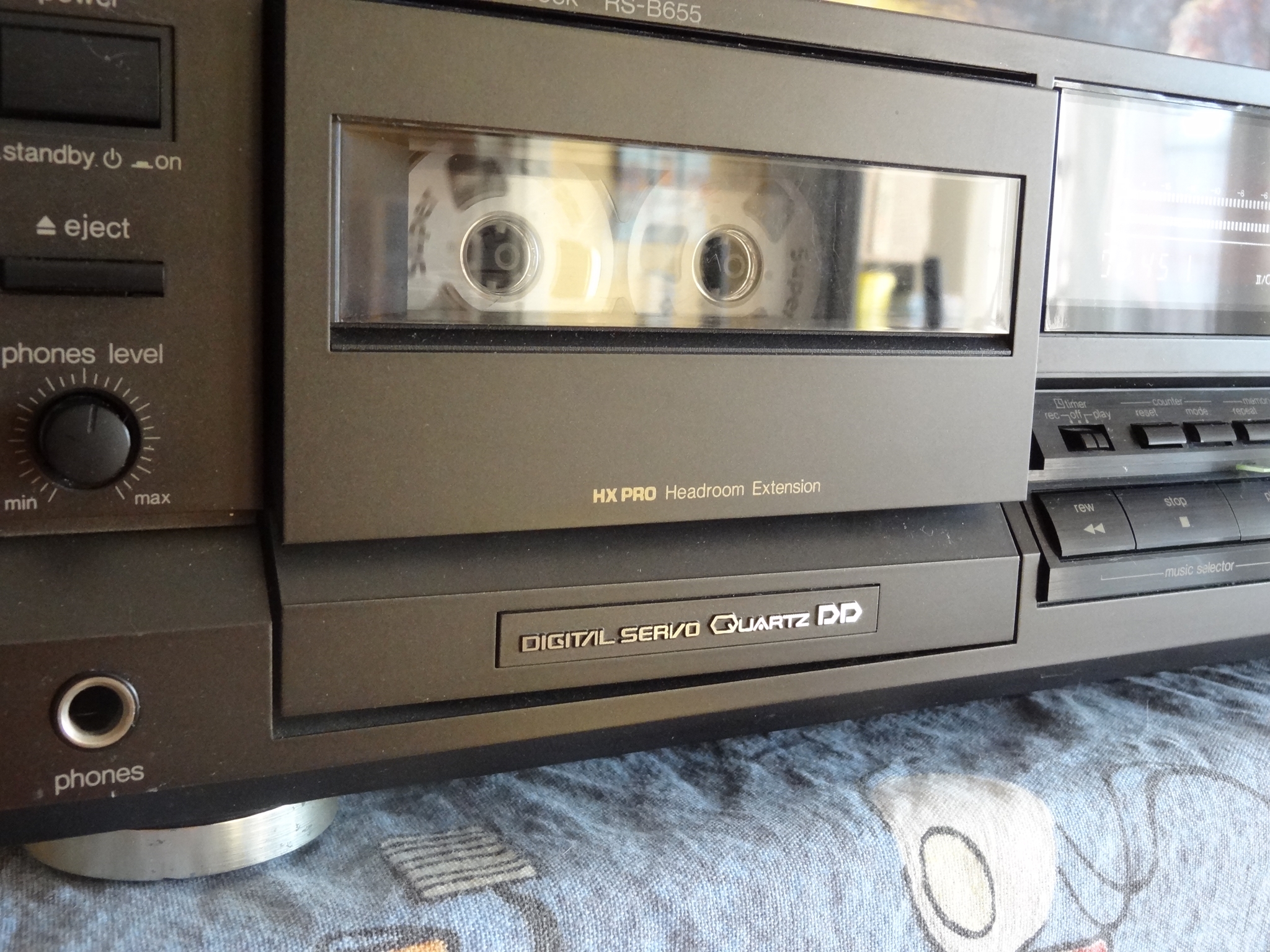
However, perhaps due to the change in the bass, or maybe not—the upper mids and highs have become cleaner and somehow more transparent. The impression is that another thin veil has been lifted from those fine tones, and they are now more audible. The sound itself is even more neutral. Although there are still occasional shortcomings in reproducing sibilants, this is completely in line with the class of device to which the RS-B655 belongs.
I can say that I’m really positively surprised by the changes in sound after such a simple and inexpensive modification. The improvement is quite significant.
The Technics RS-B655 is a solid machine—the mechanism isn’t anything special, but among the cheaper ones, it’s one of the best—thanks to the Direct Drive motor, of course.
Maintenance is simple, and the machine itself is attractive with a very nice display, one of the best types that were used in cassette decks.
The factory sound is quite mediocre and doesn’t live up to the reputation of top models, but with a simple modification, it can be significantly improved. For the money it costs on the local market and with a bit of work, the RS-B655 represents one of the best purchases in its category.
© 2026 Zoki Audio – Hi-Fi Equipement Reviews. Powered by WordPress
