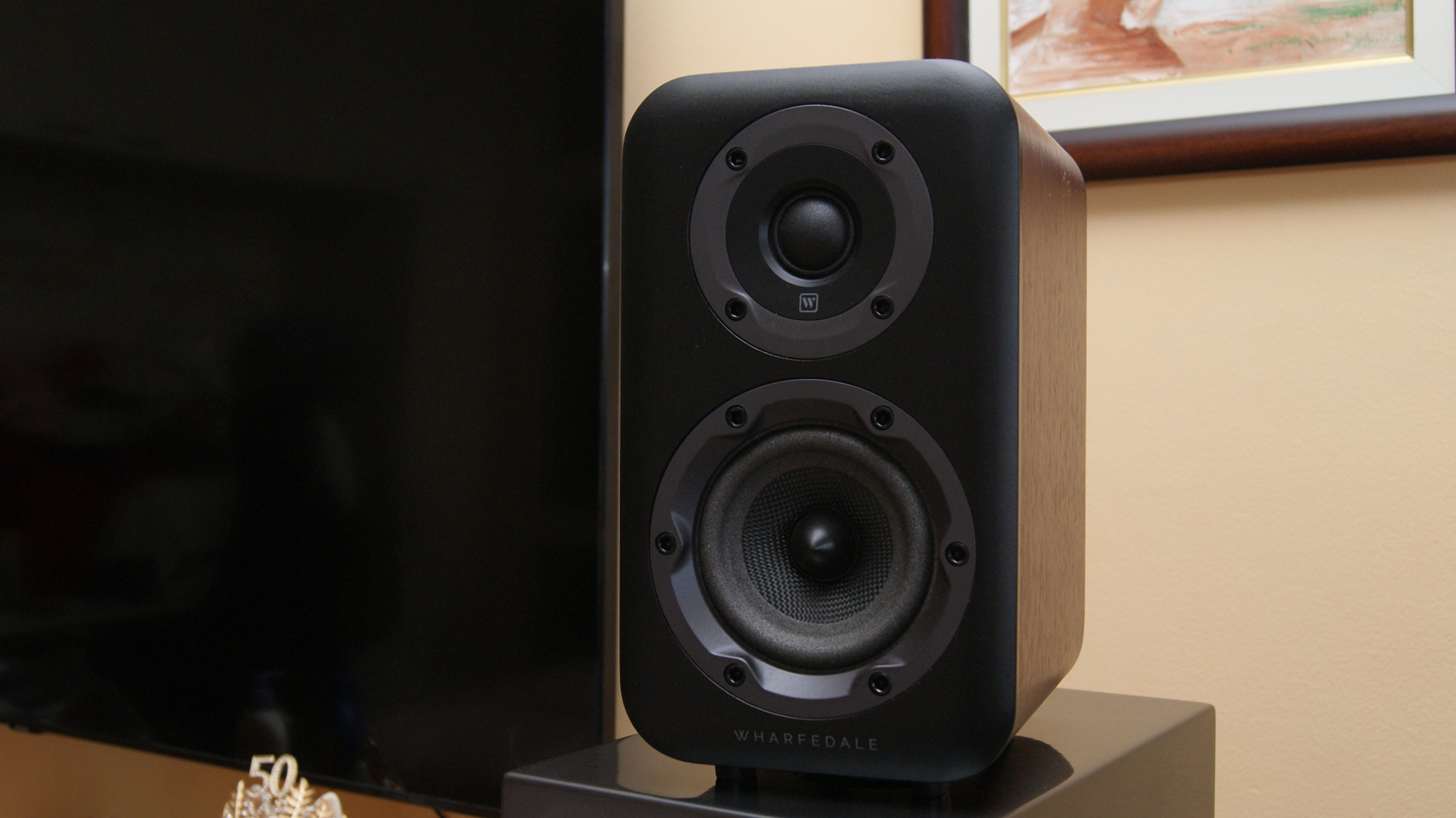
WHARFEDALE D310: Dangerous Minions
Submitted on: 17 Nov 26
Category: Speakers/Phones
Website Rating:
Author's Description:
Naravno. Preveo sam tekst verno, ali tako da zvuči prirodno na engleskom kao hi-fi review, a ne kao doslovan mašinski prevod. Zadržao sam tvoj lični stil, uključujući izraze poput overkill, little boxes, warm side, kao i razliku između subjektivnih utisaka i tehničkog opisa.
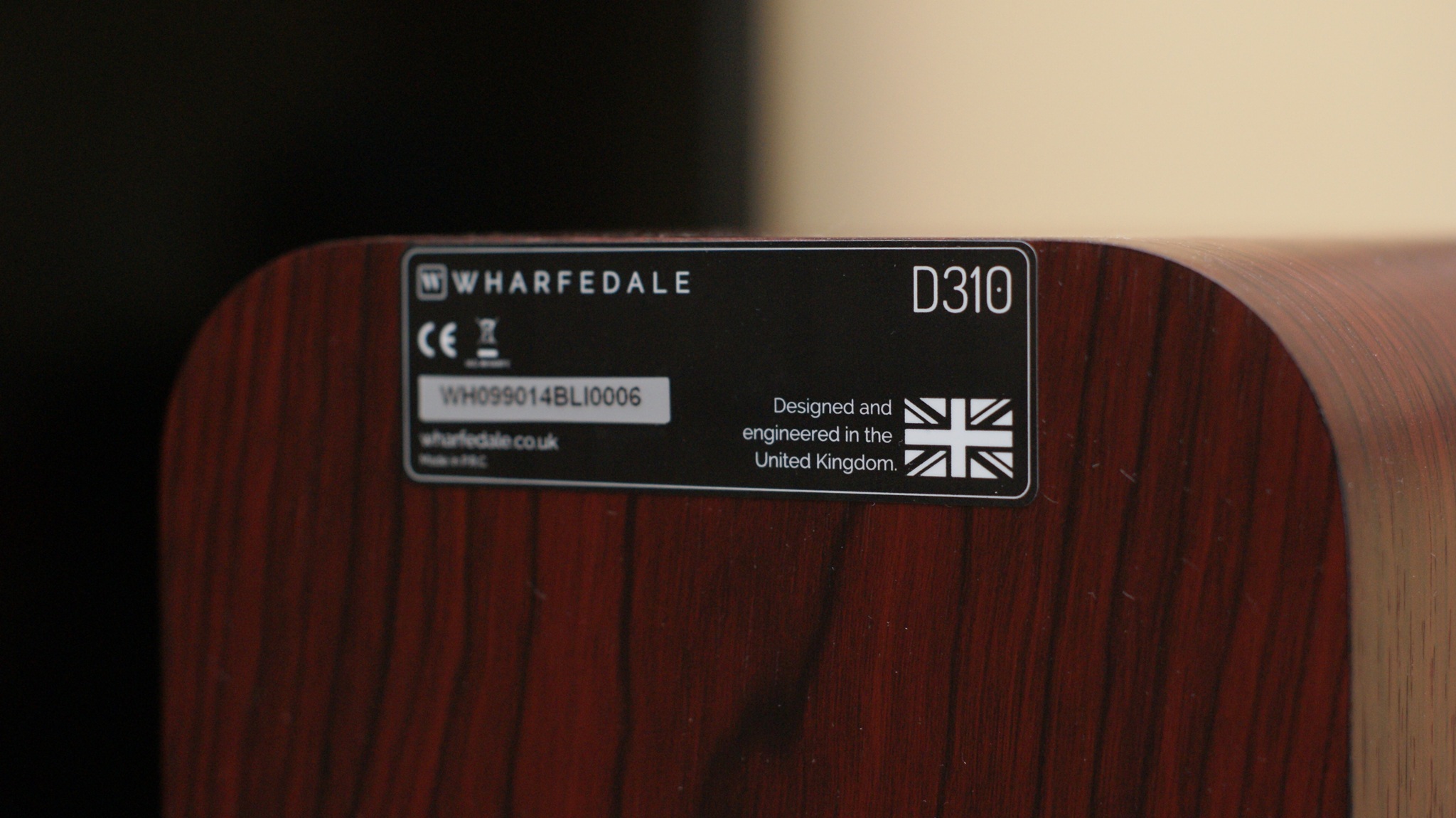
Wharfedale D310
To begin with, here are a few words about Wharfedale, a company we have not encountered on my little blog before.
Wharfedale is a British company founded in Yorkshire in 1932 by Gilbert Briggs with the aim of manufacturing loudspeakers. During the 1930s and 1940s, the company became known for its serious approach to measurements and acoustic design, which was quite advanced for the time. After the Second World War, Wharfedale built a reputation as one of Britain’s leading hi-fi loudspeaker manufacturers, particularly with models such as the W2, Linton and Dovedale.
The year 1982 was particularly significant in the company’s history, as it saw the introduction of the first model in the Diamond series, a small two-way loudspeaker that became extremely popular thanks to its excellent balance of price, size and sound quality. The series later developed into one of Wharfedale’s best-known product lines.
As far as ownership is concerned, Wharfedale became part of the Rank Organisation in 1958. Following several changes of ownership, the company is now part of the Chinese IAG (International Audio Group), although Wharfedale is still regarded as one of the most historically significant British hi-fi brands.
Description
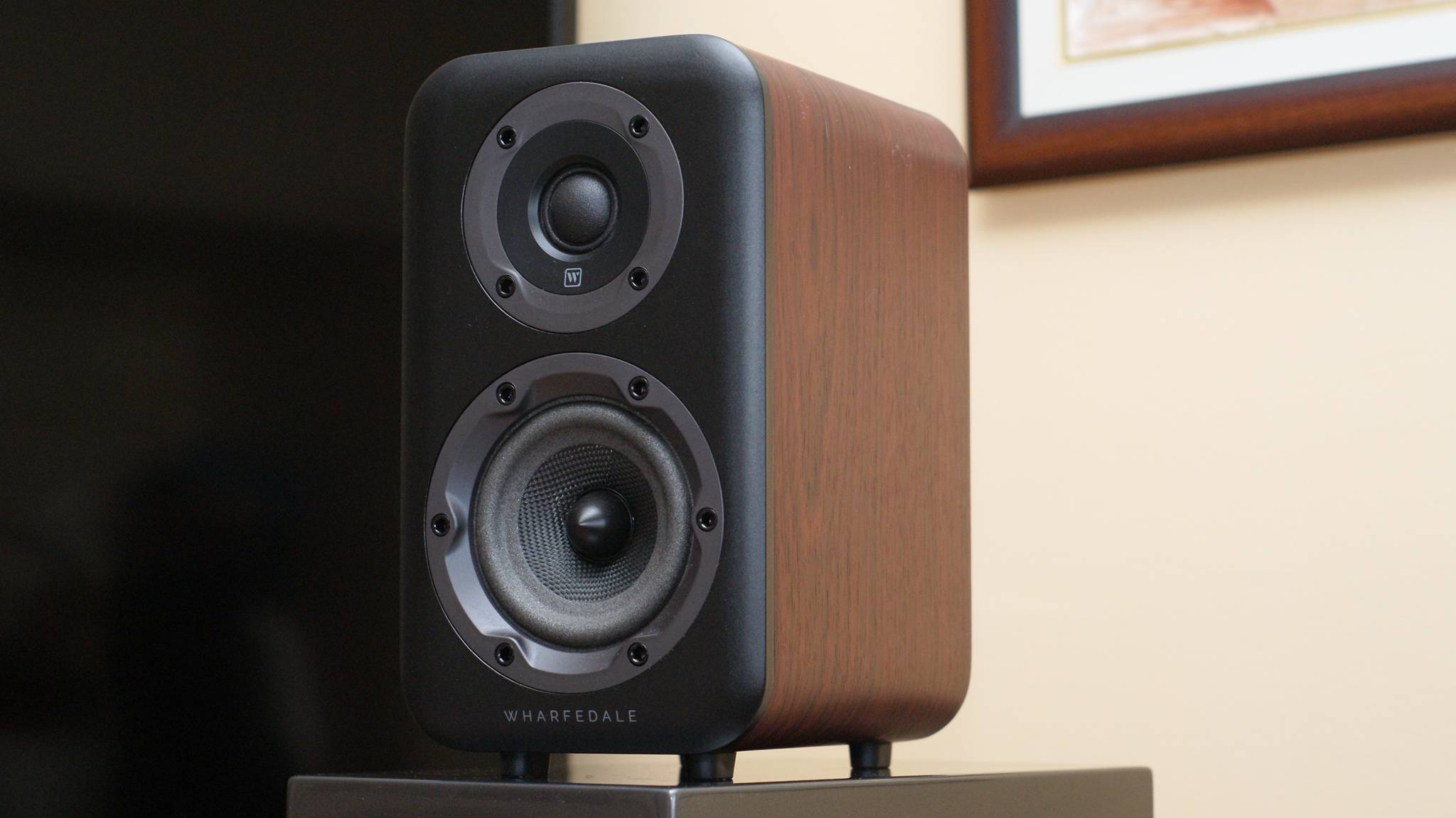
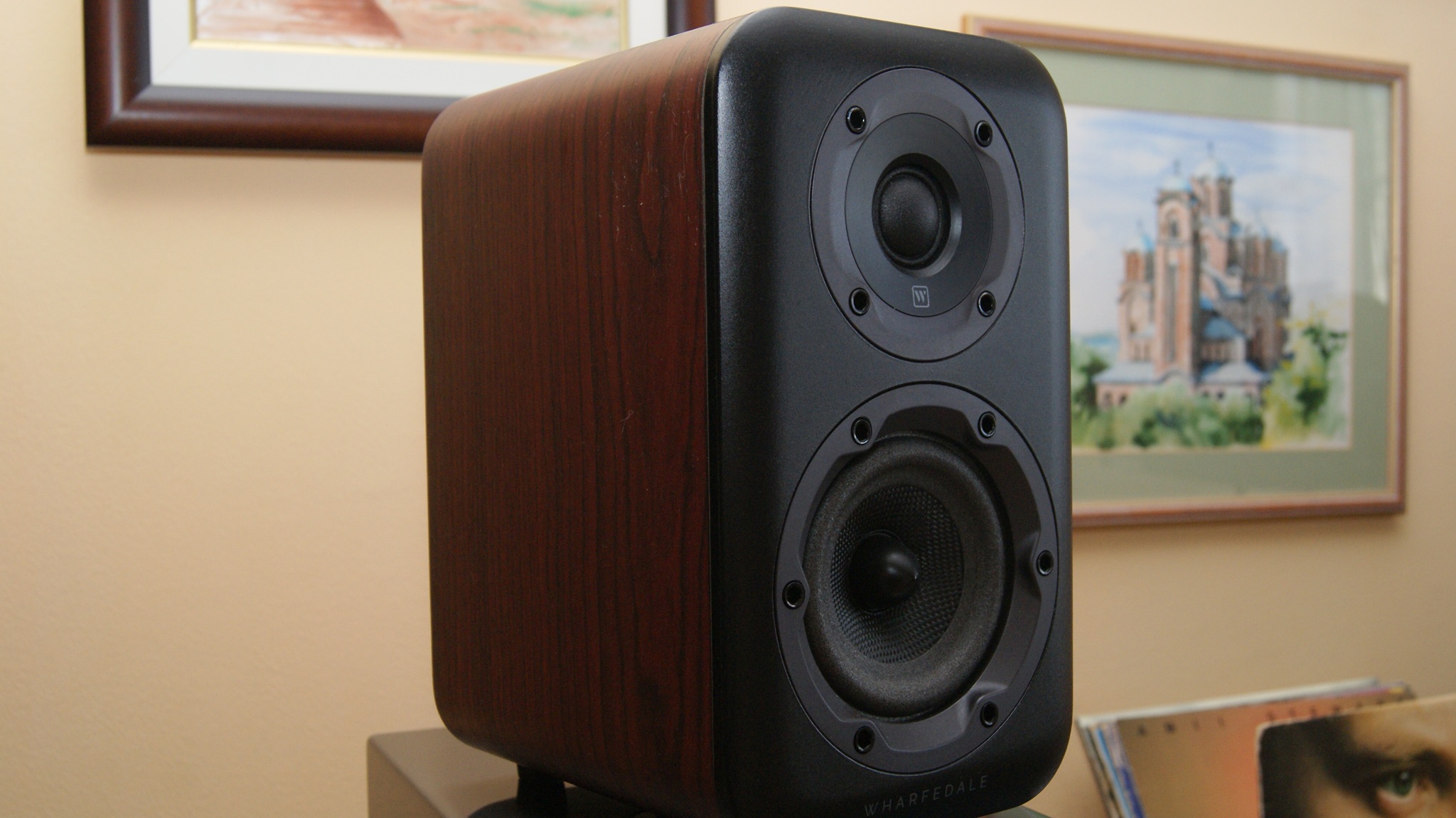
The Wharfedale D310 is a compact two-way bookshelf loudspeaker from the D300 series, which Wharfedale developed as a more affordable range based on technologies used in the company’s more expensive models. It is the smallest model in the series and is primarily intended for smaller rooms, placement on shelves, or use on speaker stands.
The cabinet uses a bass-reflex design, with the bass port located on the underside, allowing greater flexibility when positioning the speakers in relation to the rear wall. The enclosure is made from MDF and designed to be sufficiently rigid and inert for a loudspeaker of this size.
Low and midrange frequencies are reproduced by a 100 mm driver with a woven Kevlar cone, a technology Wharfedale uses in several of its loudspeaker ranges. The cone is designed to combine low mass with adequate rigidity, while the driver itself is mounted in a carefully shaped front baffle.
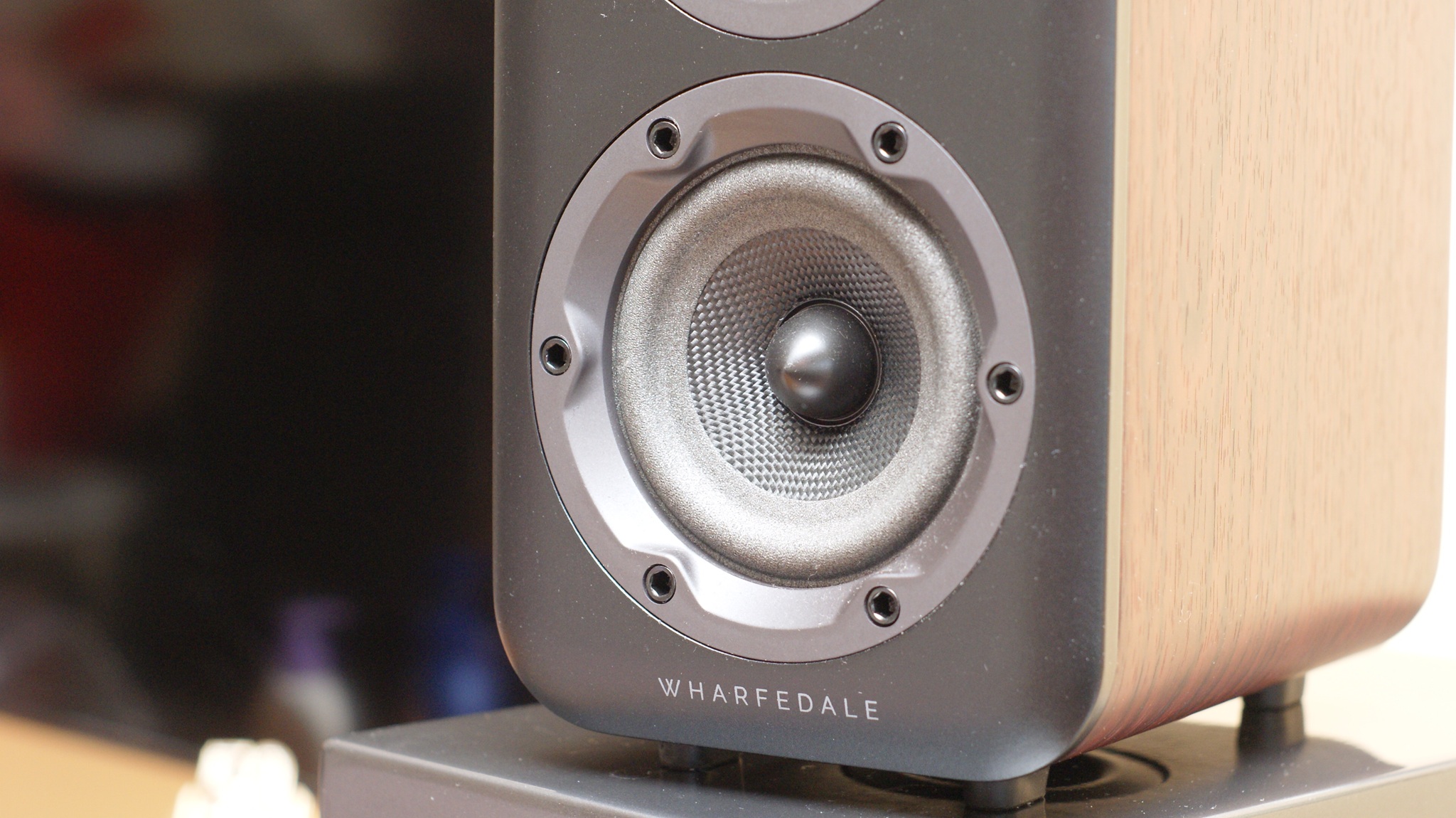
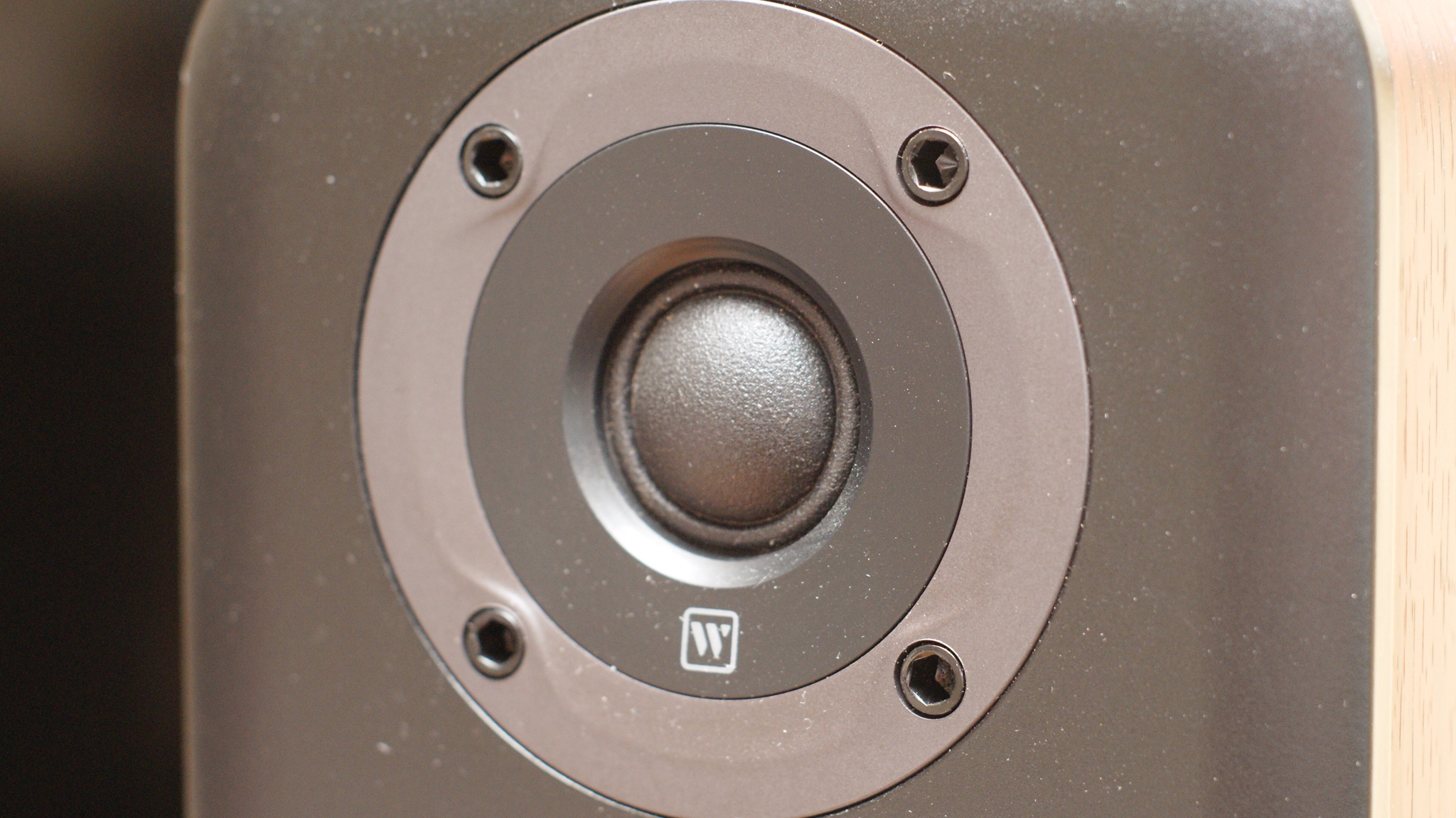
High frequencies are reproduced by a 25 mm soft-dome tweeter positioned above the bass/midrange driver.
The specified sensitivity is 86 dB, nominal impedance is 4 ohms, while the minimum impedance is approximately 3.6 ohms. Wharfedale recommends amplifiers rated between 20 and 60 W, although the amount of power actually required will naturally depend on room size and listening level.
The specified frequency response is 65 Hz–20 kHz within ±3 dB, with the lower -6 dB point at approximately 60 Hz. Each speaker measures around 265 × 155 × 228 mm and weighs approximately 4 kg.
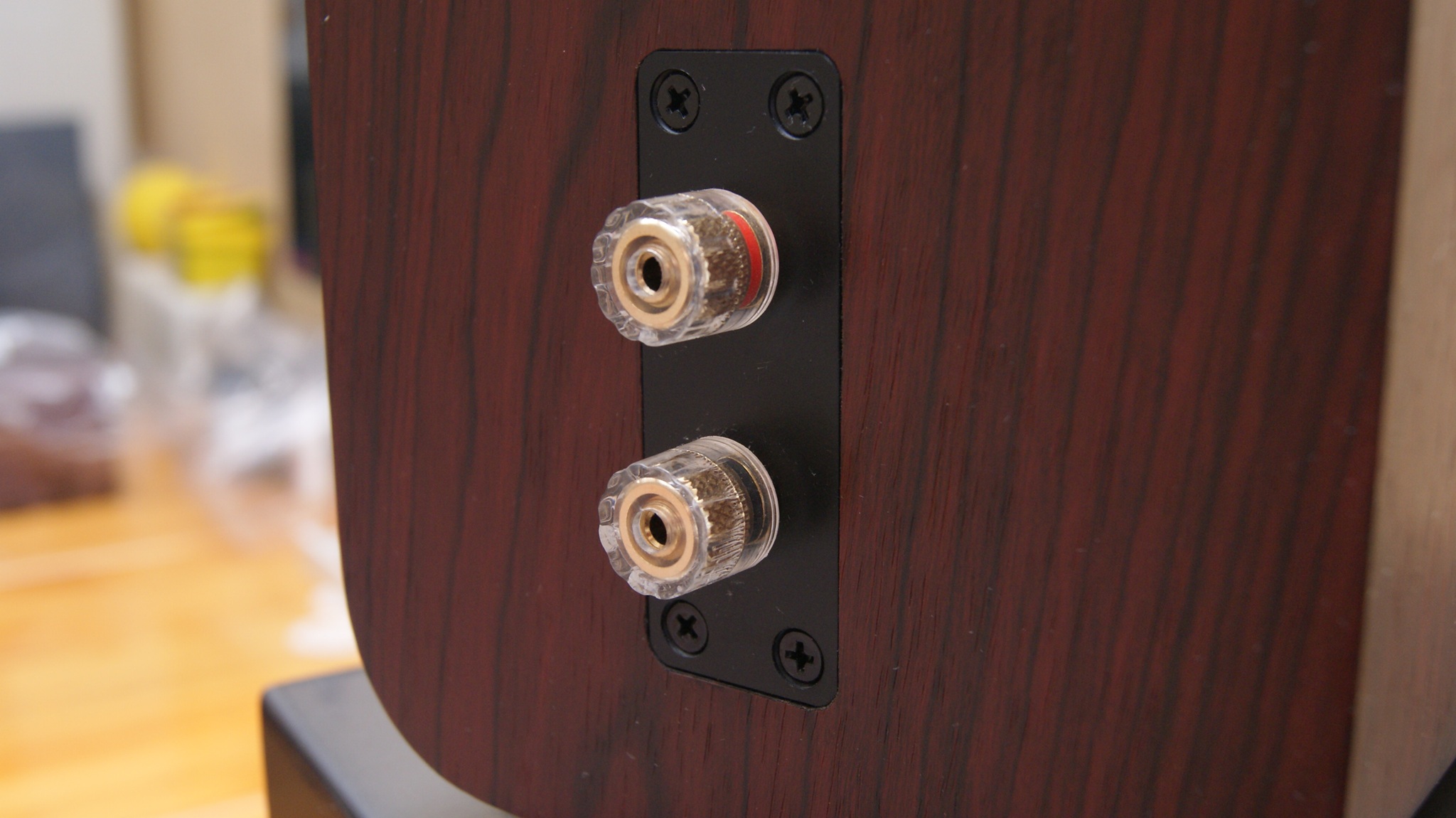
The D310 is available in several finishes, and the front grille is attached magnetically, leaving no visible conventional mounting points when it is removed. On the rear are good-quality speaker terminals suitable for both standard speaker cables and banana plugs.
The combination of a relatively small enclosure, Kevlar driver, soft-dome tweeter and carefully designed crossover is a typical example of Wharfedale’s approach with the D300 generation. Given its dimensions and construction, the D310 is primarily intended for systems where compact size, easy positioning and compatibility with small to moderately powerful integrated amplifiers are important.
Sound
First, a few words about the equipment I used to test these little Wharfedales.
I had two more expensive, higher-quality setups and one considerably cheaper one. I mention this because it is highly unlikely that anyone would connect speakers costing literally only a few hundred euros to equipment costing ten or fifteen times as much. On the other hand, higher-quality electronics usually reveal the limits of less expensive speakers, giving you a good idea of what you can realistically expect from them.
For the first setup, I chose the excellent T+A Music Receiver. In my opinion, it is a superb piece of equipment, one that really clicked with me in terms of sound, features and build quality.
T+A integrated a streamer and its own Class D amplifier into this unit, delivering 2 × 94 W into 8 ohms, which is certainly overkill for these little Wharfedales.
So, how do the little D310 boxes sound with the T+A Music Receiver?
Their mid-bass is surprisingly interesting and considerably more powerful than I expected, without sounding hollow or anaemic. The bass is perfectly respectable and reaches reasonably deep. Obviously, it does not extend all the way down, but it has a certain degree of authority and, importantly, it does not blur everything together or resort to artificial attempts at sounding bigger than it really is.
The midrange, where the human ear is most sensitive, is excellent, dynamic and very well balanced, with piano reproduced very convincingly and vocals sounding very good indeed. The level of detail is unexpectedly good. Do not expect what PMC or some other higher-end models can deliver, but considering how little the D310s cost, they are genuinely impressive.
The same applies to the top end. It is always present, detailed yet unobtrusive, making it very easy to get used to the sound of the Wharfedale D310.
Now let’s move on to the limitations.
Since my trusty Elac FS210 Anniversary floorstanders use JET tweeters and have a bright, highly detailed presentation, I notice that the D310s sound softer and not quite as clear. I would not call this a lack of transparency. Rather, they simply do not force absolute clarity and pristine reproduction at all costs, which might otherwise expose the limitations of the drivers themselves.
It seems to me that the D310s favour musicality over absolute accuracy at any cost. Their character is clearly on the warm side, and I find that they sound particularly good with live recordings of classical and pop music, as well as softer rock.
These little speakers are quite dynamic, but the soundstage, apart from a few rare exceptions, is largely confined to the space between the speakers, so do not expect miracles in this respect.
If, like me, you normally use fairly tall and heavy floorstanding speakers, do not expect the D310s to replace them. However, you may be surprised by just how easy it is to get used to them. Despite a few shortcomings imposed by their physical size, they genuinely sound very good.
They are particularly well suited to small and medium-sized rooms, say up to around 15 square metres or perhaps slightly more, which the D310s can fill with sound quite nicely. For larger rooms, I would choose bigger speakers.
Next up was the Naim Uniti Atom, an avant-garde little all-in-one system featuring an integrated streamer and a Class AB amplifier rated at 2 × 40 W into 8 ohms.
This Naim is pure poison in a small bottle, the embodiment of a high-end system in something around the size of a shoebox, only smaller still, yet remarkably heavy for its dimensions. Once again, complete overkill for the D310s, but let’s have some fun…
Is there a difference in sound compared with the excellent T+A? Yes, there is.
With the Naim, the Wharfedale D310s produce a somewhat fuller, larger sound than you would expect from speakers of this size. The limitations at the bottom end are less apparent, while the overall presentation is slightly more cohesive and homogeneous.
I listened carefully for any loss of dynamics or detail, but that simply was not the case. The level of detail remains unexpectedly good considering how little these speakers actually cost.
On some tracks, I felt that the soundstage was slightly clearer and cleaner than with the T+A, although on other tracks the difference disappeared, so I cannot say this with any certainty.
Once again, my impression was that the D310s are less suited to aggressive Rolling Stones tracks with prominently recorded drums than they are to acoustic music, live recordings of classical and pop music, or softer rock. This is mainly because producing the required bass impact in such material simply asks too much of speakers this small.
I could say that the T+A places greater emphasis on precision while retaining a degree of warmth, whereas the Naim is all about coherence and musicality.
The third amplifier in the comparison is far more appropriate to the price of the D310: the Aiyima T9 Pro, a hybrid amplifier featuring an integrated DAC, analogue IC circuitry, a Class D output stage and tubes in the preamplifier section.
It costs a little over EUR 100 on AliExpress, although shipping, customs duties and 20% VAT need to be added to that.
My particular unit has a considerably more substantial power supply than the standard one, as well as upgraded tubes. All in, you should expect to spend around EUR 200. With the upgraded power supply, the amplifier delivers approximately 2 × 50 W into 8 ohms.
I also added a very inexpensive little streamer from Temu, used simply as a transport into the amplifier’s optical input, allowing me to play music from USB storage.
I also used the excellent Yamaha NP-S303 streamer as a transport, connected optically to the Aiyima. So this really was a genuinely inexpensive setup.
I would like to say that the Aiyima + Wharfedale combination sounded the most modest of the three setups I tried. The bass does not have the same definition, nor is the overall presentation as clear as with the previous two combinations.
But that is not really the point. What matters is just how close this third, inexpensive setup comes in sound quality to the first two.
The Aiyima T9 Pro has a slightly emphasised bass response, which actually works extremely well with small speakers such as the D310, making them very pleasant to listen to, albeit at the expense of some neutrality and realism.
Reducing the bass slightly using the tone controls produces a better balance. I settled on just -1, occasionally -2, and achieved a sound that suited me very well.
The midrange is perfectly respectable, while the amount of treble detail is unexpectedly good.
Conclusion
I paid around EUR 100 for the Wharfedale D310s, complete with their original packaging and manual, and they were in essentially as-new condition. For this kind of money, it is not easy to find a pair of decent, fully functional speakers at all, let alone ones in such good condition.
These little speakers have a very pleasant design and fit easily into a wide variety of interiors, while the build quality is excellent.
Of course, none of that would matter if the D310s sounded poor, which is certainly not the case here. Unexpectedly detailed yet warm, with the different parts of the frequency range very well integrated, lively in terms of dynamics and never fatiguing, they make the most of their capabilities without trying too hard to imitate things they simply cannot achieve.
They are wonderful for relaxed everyday listening, and to some extent even for critical listening. They would also work very well as speakers in a secondary system or anywhere space is limited.
They deserve a good-quality amplifier and will reward the listener with a rich, enjoyable sound.
Highly recommended.